

“I don’t have time” is the number one excuse. We hear it constantly. But data crushes this myth. Research shows four 30-second sprints can torch the same calories as a half-hour jog.
Your schedule is packed. We get it. This guide delivers maximum return on your time investment. We’re cutting through the noise with evidence-based protocols used by top performers.
Forget long gym sessions. Effective strength building happens with targeted effort. Training major muscle groups twice weekly beats a once-a-week approach. You can achieve this in short, powerful bursts.
We prioritize efficiency over duration. Our framework uses HIIT and circuit training to compress an hour’s benefits into 15 minutes. This approach fits any environment, requiring minimal equipment.
This isn’t theoretical. It’s a practical system for professionals who optimize everything—including their health. You’ll get actionable strategy, not just inspiration.
Key Takeaways
- Short, intense exercise sessions can be as effective as longer workouts for calorie burn.
- Training major muscle groups twice per week is optimal for strength and muscle growth.
- High-Intensity Interval Training (HIIT) delivers significant health benefits in minimal time.
- Workouts can be designed for any location with little to no equipment.
- Consistency with a well-structured plan is more important than workout duration.
- These strategies are backed by scientific research and used by successful entrepreneurs.
- The focus is on creating a sustainable system that integrates with a demanding professional life.
Understanding the Power of a Quick Workout
The true power of a condensed workout lies not in its brevity, but in its strategic intensity. We prioritize maximum return on time invested—your body responds to stimulus quality, not session length.
Benefits of a Short, Intense Session
High-intensity intervals create an afterburn effect known as EPOC. Your metabolism stays elevated for hours post-exercise, burning additional calories.
This approach delivers cardiovascular benefits equivalent to longer moderate training. You achieve similar heart rate adaptations in a fraction of the time.

Mental and Physical Health Gains
The mental health improvements are immediate. Exercise releases endorphins that boost mood and reduce stress within minutes.
Physical adaptations include:
- Improved insulin sensitivity
- Increased bone density
- Enhanced cardiovascular capacity
Completion psychology matters. Finishing a 15-minute workout builds momentum, while longer sessions often get postponed.
Your body achieves superior results when you give full effort during brief, focused exercise.
Fitness Routine for Busy People: Expert-Approved Strategies
Professional guidance reveals how brief, targeted efforts yield lasting results. We distill insights from top trainers who specialize in time-efficient protocols.
High-Intensity Interval Training and Tabata Insights
HIIT stands as the ultimate time-compression tool. Sarah Gawron from Solace New York emphasizes maximum effort during work periods.
“Give everything during those twenty seconds,” she advises. “There’s zero time for loafing if you want real metabolic impact.”
The Tabata protocol delivers astonishing efficiency. Eight rounds of 20-second all-out work followed by 10-second rest periods create a complete session in just four minutes.
Rest intervals serve strategic purposes. Focus on controlled breathing to lower your heart rate between intense bursts.
Incorporating Yoga and Weightlifting for Balance
Alex Silver-Fagan, Nike master trainer, champions fast vinyasa flows. These sequences provide cardiovascular benefits while building functional strength.
Denzel Allen recommends compound movements for full-body efficiency. Goblet squats and kettlebell swings work multiple muscle groups simultaneously.
This balanced approach prevents injury while maximizing each minute. Aim for 3-4 sessions per week for optimal adaptation.
| Approach | Time Commitment | Primary Benefits | Expert Recommendation |
|---|---|---|---|
| HIIT | 15-20 minutes | Metabolic boost, cardiovascular health | 2-3 times weekly |
| Tabata | 4 minutes active | Maximum efficiency, EPOC effect | 1-2 times weekly |
| Yoga & Strength | 20 minutes | Mobility, injury prevention, balance | 2 times weekly |
Successful integrating fitness with busy schedules requires this strategic combination. Each modality serves distinct purposes within your weekly plan.
Building Strength and Endurance in Minutes
True muscular development stems from quality stimulus, not quantity of time. We focus on compound movements that deliver maximum impact through strategic execution.
Efficient Strength Training Techniques
Compound exercises like squats and lunges engage multiple muscle groups simultaneously. This approach maximizes fiber recruitment in minimal time.
Denzel Allen emphasizes technique over weight:
“Technique trumps the amount of weight. Being strong for life means we need to check our ego and not allow the weight to dictate how we move.”
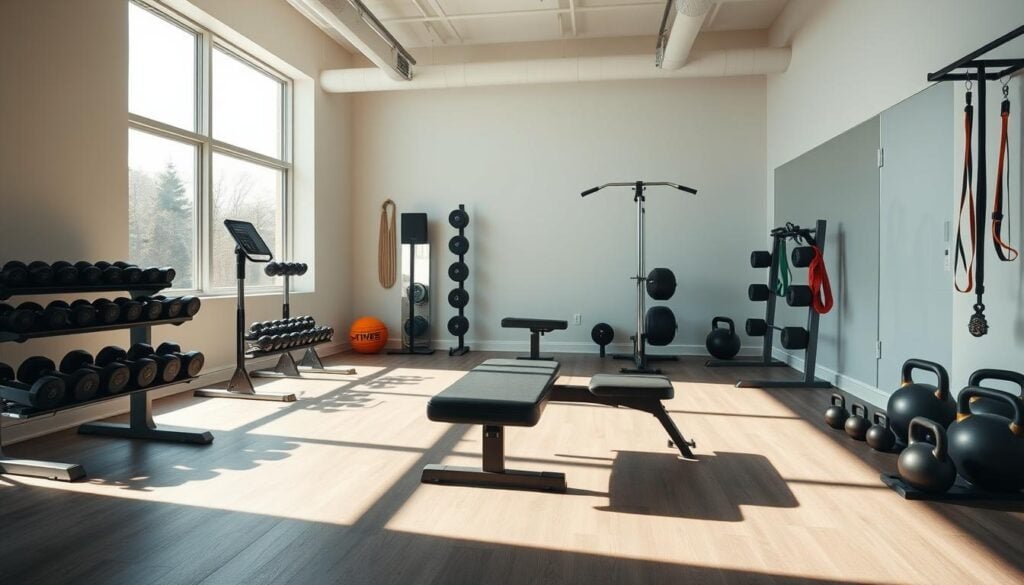
Research confirms muscle growth occurs with lighter weights when proper form is maintained. Katherine Mason’s time-under-tension principle—eight to sixteen counts per rep—ensures adequate intensity.
Prioritizing Form to Prevent Injury
Movement quality determines long-term success. We prioritize controlled execution over heavy loading to prevent injury and ensure sustainable progress.
Key movement patterns form the foundation:
- Squats and deadlifts for lower body strength
- Push-ups and rows for upper body development
- Lunges for balance and unilateral strength
Master bodyweight variations before adding external resistance. This builds neuromuscular patterns that protect against injury when progressing to heavier weights.
Adapting Your Workout to Fit Your Busy Schedule
The most sustainable training approach adapts to your circumstances rather than demanding you adapt to it. We build systems that thrive across environments because real-world schedules rarely accommodate fixed locations.
Environmental flexibility eliminates the primary barrier to consistency. Your regimen should function equally well in a hotel room, home office, or corporate gym.
Home, Gym, and Outdoor Alternatives
Home workouts remove commute time entirely. Bodyweight exercises like push-ups and squats deliver serious training stimulus using only floor space.
Gym access expands exercise variety but isn’t mandatory for results. Treat facility time as an enhancement option, not a requirement.
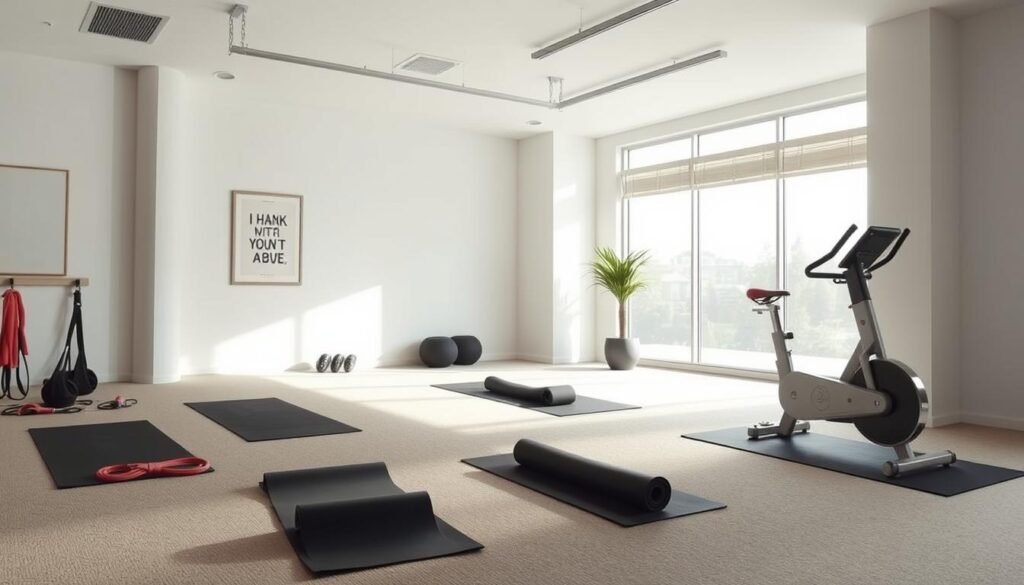
Outdoor training provides psychological benefits beyond physical adaptation. Natural environments reduce stress while offering varied terrain for functional movement.
Travel fitness demands zero equipment dependence. Master bodyweight progressions to maintain consistency regardless of location changes.
Schedule adaptation means matching workout timing to your energy patterns. Some perform best with morning sessions before decision fatigue sets in.
The key is removing friction from execution. If your routine requires specific equipment, you’ve built failure points that will break consistency.
Adaptation also means workout length flexibility. When a 15-minute session gets compressed to 10 minutes, adjust exercise selection rather than skipping entirely.
Conclusion
The evidence confirms what successful entrepreneurs already practice: efficiency trumps duration in physical training. We’ve built a framework that delivers maximum stimulus in minimal minutes.
Your weekly structure should include 3-4 training sessions with adequate rest days. Recovery periods are when real adaptation occurs, not during the exercise itself.
Track your progress objectively. Document performance metrics and take monthly photos. Small gains compound into significant results over time.
The mental benefits often appear before physical changes. Improved clarity and reduced stress manifest within days of consistent effort.
Implementation starts with action, not perfect planning. Schedule three 15-minute workouts this week and execute. Momentum builds from doing, not overthinking.
FAQ
How can I build muscle with only 15 minutes a day?
We focus on compound movements like squats and lunges that engage multiple muscle groups simultaneously. By maximizing intensity and minimizing rest periods, you stimulate growth effectively. Strength training in short bursts, when done correctly, yields significant results.
Is a quick workout better than a long session for weight management?
Absolutely. High-Intensity Interval Training (HIIT) elevates your heart rate rapidly, burning more calories in less time. This approach also creates an “afterburn” effect, where your body continues to consume energy at a higher rate during recovery.
What’s the minimum equipment needed for an effective home routine?
You need very little. Bodyweight exercises are highly effective. For progression, a set of adjustable dumbbells or resistance bands adds versatility. The key is intensity and proper form, not a fully equipped gym.
How often should I train each week for optimal progress?
We recommend 3 to 4 times per week. This schedule allows for adequate recovery, which is crucial for muscle repair and preventing injury. Consistency with sufficient rest days drives better long-term outcomes than daily, exhaustive workouts.
Can these short exercises genuinely improve my mental health?
Yes. Intense physical activity releases endorphins, which can dramatically improve your mood and reduce stress. The discipline of sticking to a schedule also builds mental resilience, translating directly to better focus in your work life.
How do I prevent injury when moving quickly through exercises?
Prioritizing form over speed is non-negotiable. We advocate for mastering movements at a slower pace first. Proper technique protects your joints and muscles, ensuring your training is sustainable and effective over time.