
We built this guide for proprietors who need concrete outcomes, not abstract concepts. Every task we outline is designed to drive measurable visibility where it counts most—in the digital results pages your potential customers use every day.
Online visibility is no longer a luxury. Consider this: a overwhelming 81% of people research companies online before making a purchase. If your enterprise is invisible in these searches, you are actively missing opportunities.
Our approach cuts through the theoretical clutter. We provide actionable steps backed by real-world data. There is no fluff and no generic advice that wastes your valuable time.
We concentrate on what genuinely moves the needle for enterprises with a physical presence. This includes optimizing your Google Business Profile, ensuring consistent contact information, creating strategic content, and managing reviews that convert browsers into buyers.
This is a systematic playbook. Each section builds upon the last, forming a complete strategy that works for a single storefront or multiple locations. The companies winning in the current landscape aren’t using magic; they are methodically executing the fundamentals we detail here.
Key Takeaways
- This guide provides a direct, actionable plan for improving online visibility.
- Being found in digital searches is critical, as most consumers research online first.
- Our advice is based on data and real-world results, not just theory.
- Focus on core areas like your business profile, information consistency, and customer reviews.
- The strategy is built step-by-step, making it manageable for any size operation.
- Success comes from consistent execution of proven fundamentals.
Understanding the Fundamentals of Local SEO
We often see enterprises wasting resources by treating neighborhood-focused visibility like national campaigns. This fundamental misunderstanding leads to poor results and missed opportunities.
Importance of Local Visibility and Search Intent
Google dominates the search landscape with nearly 90% market share. Their algorithm for location-based queries relies on three core factors: proximity, relevance, and prominence.
Search intent separates successful campaigns from failures. When users search for services “near me,” they want immediate options with directions. They’re ready to act.
Consider this conversion power: 76% of consumers who conduct these searches visit a business within 24 hours. This represents the highest-intent traffic available.
How Local SEO Differs from Standard SEO
Traditional optimization targets broad audiences with informational content. Location-based strategies focus on customers ready to transact in specific geographic areas.
The Map Pack—those three listings with a map—captures most clicks in local searches. Mobile users especially rely on these immediate results.
| Aspect | Local SEO | Standard SEO |
|---|---|---|
| Primary Focus | Geographic proximity and immediate action | Domain authority and content depth |
| Key Ranking Factors | Proximity, Relevance, Prominence | Backlinks, Content Quality, Technical SEO |
| User Intent | Transactional and navigational | Informational and commercial |
| Primary Results Display | Map Pack and Business Profiles | Organic listings and featured snippets |
Understanding these differences prevents wasted effort. You cannot rank in local results using broad optimization tactics alone.
Getting Your Business Set Up for Local SEO Success
The most common failure point we observe isn’t poor execution, but a flawed foundation from the very start. Your operational model dictates your entire strategic approach. We see four primary categories for any enterprise.
A single-location business with a customer-facing address is the simplest case. You need one verified profile with your actual location visible. This provides maximum visibility in map-based results.
Single Location vs. Multiple Locations
Multiple physical locations require individual profiles. Each must have a unique address and phone number. Attempting shortcuts here risks having your listings filtered or suspended by search platforms.
Service Area Considerations
If you provide services across a geographic area without a storefront, you have options. You can hide your address and define your service area. However, this often reduces your prominence in local pack results.
For enterprises with multiple service areas, avoid territorial overlap. The algorithm typically filters duplicates, showing only your most prominent location. Accuracy in this setup phase prevents costly ranking penalties later. Even home-based operations benefit from showing a physical address for search visibility.
Claiming and Verifying Your Google Business Profile
A staggering statistic reveals a massive opportunity most competitors are ignoring. Only 35% of small enterprises have claimed their Google Business Profile. This isn’t just a profile; it’s your command center for appearing in Search and Maps.
Steps to Claim Your GBP Listing
Claiming your listing establishes ownership. You gain control over how customers see your operation. This includes your hours, contact details, and photos.
Search for your business name on Google. If a listing exists, you’ll see an option to “Claim this business.” Follow the prompts to confirm you are the rightful owner. If no listing exists, you can create one directly.
Verification Methods and Best Practices
Verification is not optional. Without it, you cannot update critical information or respond to reviews. It locks you out of performance insights.
Google typically sends a postcard to your business address. Other methods include phone, email, or instant verification. Choose the fastest available option.
We see enterprises delay this for weeks, losing customers. Complete verification within 48 hours. For multiple locations, use Google’s bulk verification process.
After verification, your Google Business Profile becomes active. You can now fully manage your public presence and drive more traffic.
Optimizing Your Google Business Profile Details
Proper categorization represents one of the highest-impact, lowest-effort optimizations available to businesses. Many enterprises focus on visible elements while overlooking foundational settings that determine search visibility.
Selecting the Primary and Secondary Categories
Your primary category tells Google exactly what your business does. Choose the most accurate match for your core services. This single selection determines which searches trigger your profile in results.
Secondary categories expand visibility without diluting your primary focus. A 2023 study showed businesses with multiple relevant categories rank higher. Don’t leave category slots empty if legitimate options exist.
Enhancing Business Descriptions, Photos, and Q&A
Your business description offers premium real estate for natural keyword inclusion. Describe who you are and what you do in 750 characters or less. Focus on your services and why customers choose you.
Photos drive engagement and conversions. Businesses with high-quality images outperform competitors with sparse visual content. Show your storefront, team, and services.
The Q&A section isn’t just for customers. Proactively add frequently asked questions to control the narrative. This surfaces information that converts browsers into customers.
62% of consumers avoid businesses with incorrect information online. Complete every field in your profile—hours, phone number, website, and attributes. Incomplete profiles signal low credibility to both customers and Google’s algorithm.
Creating an Effective Website for Local SEO
We observe a critical disconnect in digital strategy execution. While 81% of consumers research companies online before purchasing, only 40% of small businesses maintain a dedicated website. This gap represents either massive opportunity or permanent disadvantage.
Your website functions as your digital storefront. It proves legitimacy to skeptical customers and provides the detailed information search algorithms require. This asset serves as the central hub connecting all your digital presence.
Homepage and Core Navigation Optimization
Homepage optimization begins with immediate clarity. Visitors should understand your services, location, and contact methods without scrolling through generic stock photos. Ambiguity here causes immediate bounce rates.
Your navigation structure requires intuitive design. Organize pages logically—Services, About, Contact—keeping menu items under seven. This creates scalability as your business expands.
| Navigation Element | Effective Approach | Common Mistake |
|---|---|---|
| Main Menu Items | 5-7 clear categories | Overloaded dropdowns |
| Service Pages | Dedicated page per service | Single crowded page |
| Contact Information | Footer on every page | Hidden contact page |
| Internal Linking | Homepage to service pages | Isolated content silos |
Embedding Maps and Structured Location Data
Embed a Google Map on your Contact page. This simple addition reinforces physical presence and provides strong geographical signals. It answers the “where” question instantly.
NAP consistency remains non-negotiable. Your business name, address, and phone must match your Google profile exactly. Display this information in your website footer across all pages.
Internal linking strategically connects your content. Link from homepage to service pages and location-specific content. This creates clear pathways for users and crawlers alike.
Implementing a Local SEO Audit and Reporting System
The most overlooked component of digital visibility isn’t optimization itself, but the measurement system that validates its effectiveness. We see businesses pour resources into tactics without establishing baseline metrics first.
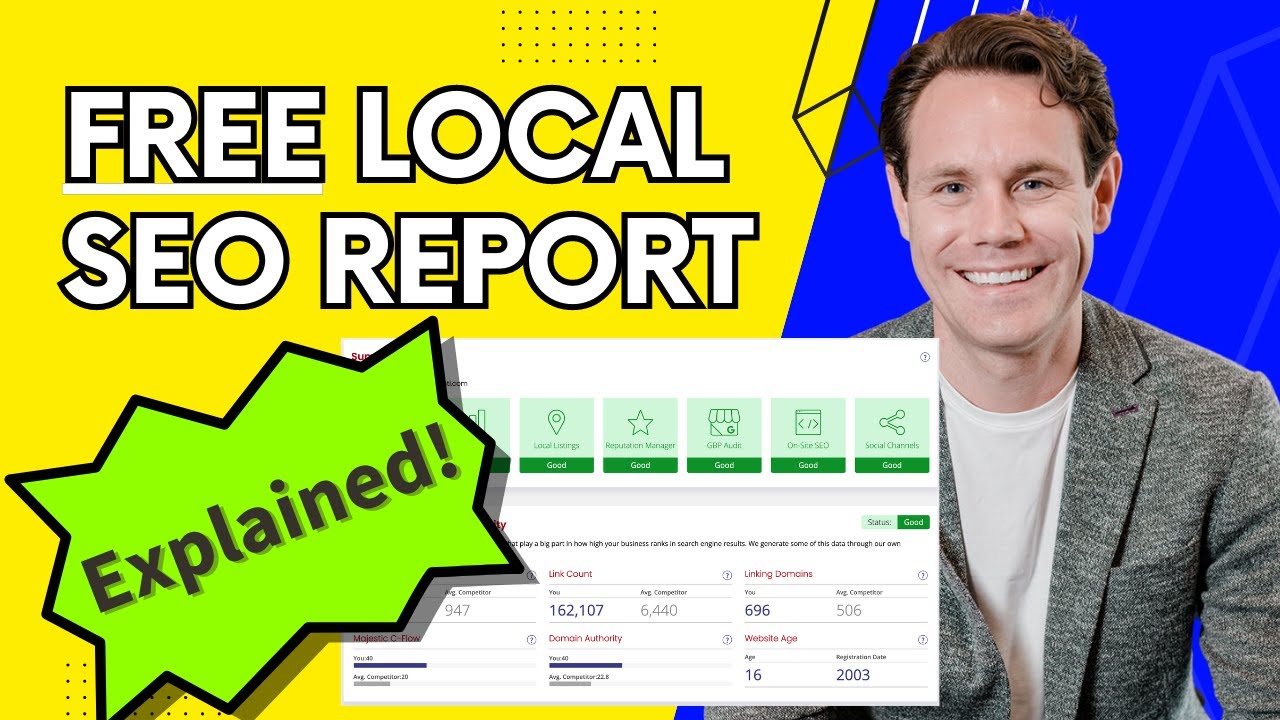
This approach guarantees wasted effort. You cannot prove ROI or identify winning strategies without proper tracking from day one.
Using Tools like Search Console and Rank Trackers
Google Search Console provides essential, free insights into your website performance. It reveals average ranking position, impression counts, and click-through rates.
The tool also flags indexing issues that prevent pages from appearing in search results. Weekly checks catch problems before they impact visibility.
Businesses that dominate don’t guess; they track specific metrics and adjust based on data, not assumptions.
Don’t ignore Bing Webmaster Tools. While Google dominates, Bing captures 10-11% of search traffic. Many operations face less competition there for identical keywords.
Google Analytics 4 completes the picture with user behavior data. It shows which pages drive engagement and convert visitors.
| Tracking Tool | Primary Function | Monitoring Frequency | Key Metric |
|---|---|---|---|
| Google Search Console | Search performance & indexing | Weekly | Average ranking position |
| Bing Webmaster Tools | Bing search visibility | Bi-weekly | Click-through rates |
| Google Analytics 4 | User behavior analysis | Monthly | Conversion paths |
| Local Rank Trackers | Geographic positioning | Bi-weekly | Map Pack visibility |
Generic rank tracking shows average position. Specialized tools reveal how you rank across different geographic points in your service area.
Platforms like BrightLocal display positions across Google, Google Maps, Bing, and Bing Local simultaneously. This eliminates manual checking across multiple platforms.
Establish a consistent monitoring schedule. Review ranking reports bi-weekly to spot trends. Analyze traffic patterns monthly to understand what drives results.
Improving On-Site Content and Metadata for Local Searches
The difference between a click and a scroll often comes down to a few lines of text most businesses ignore. Your title tag and meta description act as a direct sales pitch within the search results. They must convince users your page is the solution.
We see this fundamental error consistently. Companies pour resources into their website but neglect the elements that drive traffic to it. Every page deserves a strategic approach.
Title Tags, Meta Descriptions, and URL Structures
Think of your title tag as a headline. It must be under 60 characters and include your primary keyword and location. Emergency Plumber Austin | 24/7 Service” performs far better than a generic welcome message.
Your meta description expands the pitch within 160 characters. It should naturally include keywords, your unique value, and a call to action. This snippet directly influences your click-through rate.
Metadata might seem technical, but it’s actually your sales pitch in search results.
URL structure provides clarity for both users and search engines. A clean, descriptive URL like “yourbusiness.com/austin-plumbing-services” is far more effective than a string of numbers and symbols.
| Element | Effective Approach | Ineffective Approach |
|---|---|---|
| Title Tag | Keyword + Location | Generic “Welcome” message |
| Meta Description | Value proposition | Auto-generated snippet |
| URL | Clean, descriptive path | Complex parameter strings |
Crafting Page Content for Search Intent
On-page optimization means aligning your content with user intent. Your H1 headline should precisely match what people are searching for. If they seek the “best pizza in Brooklyn,” your H1 should reflect that.
Place keywords strategically in the first paragraph, subheadings, and throughout the content. Avoid awkward stuffing that destroys readability. The goal is natural integration.
A critical mistake is optimizing only the homepage. Every service page targeting a specific search term needs its own optimized title, description, and focused content. Tools like Yoast SEO provide real-time feedback to simplify this process.
Developing Location-Specific Landing Pages
Many enterprises treat multi-location visibility as a simple replication task. This fundamental error leads directly to filtered search results and missed customer connections. Each physical address demands its own dedicated web presence.
These specialized pages serve a critical dual function. They provide essential content for customers, like unique hours and parking details. Simultaneously, they signal to search algorithms your legitimate presence in that specific location.
Custom Content for Each Business Area
A template-based approach fails completely. Simply swapping a city name creates duplicate content that Google penalizes. Every page requires 100% unique text and media.
Structure is key. Start with the business name and address. Include an embedded map, a unique description of that location‘s features, and clear calls-to-action. This consistency helps users and crawlers alike.
For service-area businesses, demonstrate genuine local knowledge. Mention neighborhoods, landmarks, or common local issues. This proves you authentically serve the area.
Link each Google Business Profile directly to its corresponding location page. This creates a powerful signal of legitimacy. Avoid creating thin gateway pages; Google prioritizes substantial value over keyword-stuffed doorways.
Incorporate keyword variations naturally. Target distinct search queries for each page. Finally, add local business schema markup. This structured data provides search engines with explicit details about each location.
Conducting Targeted Local Keyword Research
Targeted keyword research transforms your content from a hopeful guess into a strategic asset. We see too many enterprises creating pages based on internal jargon, not the actual phrases customers type into search bars. This foundational step ensures every piece of content you produce has a clear purpose and audience.

Finding High-Value, Localized Search Terms
Start with a simple manual search. Type your core service plus your city into Google. Analyze the results page carefully. The Map Pack listings reveal which keywords competitors use in their profiles. The “People also ask” and “People also search for” sections are goldmines for uncovering natural language variations.
Focus on terms signaling immediate intent. Phrases like “emergency plumber near me” indicate a user ready to buy. Informational queries like “how to fix a leaky faucet” are valuable for blog posts but won’t drive immediate sales.
Competitor analysis is crucial. Tools like Semrush’s Organic Research show which keywords actually send traffic to rival businesses. This exposes gaps in your own strategy. Don’t ignore keywords with seemingly low search volume. A phrase like “pediatric dentist accepting new patients Brooklyn” might have low volume but extremely high conversion potential.
Create a keyword map. Assign specific terms to specific pages on your site. Your homepage targets broad terms, while service and location pages target more specific phrases. This prevents internal competition and creates a logical structure for both users and search engines.
Ensuring Consistent NAP and Local Citations
We see more businesses fail from simple data mismatches than from complex technical errors. Your name, address, and phone number must be identical everywhere online. Search engines use this information to verify your legitimacy.
Inconsistent listings confuse algorithms and potential customers. They dilute your ranking power. A single variation like “St.” versus “Street” can undermine your entire visibility strategy.
Auditing Existing Listings for Consistency
Begin with a thorough audit of your online presence. Scan major directories like Yelp and industry-specific platforms. Identify every mention of your business.
Tools like Semrush’s Listing Management automate this process. They crawl dozens of sites to find your citations. This saves hours of manual work.
You will find two types of errors. Some listings are on platforms you control. Others are on third-party sites like local blogs. Each requires a different fix.
For platforms you own, push uniform NAP details across all directories at once. For external mentions, send polite emails requesting updates. Most site owners comply quickly.
62% of consumers avoid companies with incorrect contact details. This isn’t just about search rankings. It’s about losing real customers who find the wrong phone number or address.
Standardize everything before you begin. Decide on abbreviations, suite numbers, and punctuation. A single source of truth prevents future headaches.
Enhancing Website Performance with Core Web Vitals
Technical performance remains the silent killer of digital visibility strategies. We see businesses create excellent content that never reaches its audience because their website fails basic user experience metrics. Google’s Core Web Vitals provide the definitive measurement system for this critical aspect.
These metrics evaluate loading speed, interactivity, and visual stability. Search engines now penalize pages that deliver poor experiences. Mobile users especially abandon sites taking over three seconds to load.
Optimizing Page Speed and Mobile Responsiveness
Begin with Google PageSpeed Insights or GTmetrix. These tools identify specific bottlenecks like oversized images or render-blocking code. Address the highest-impact issues first.
Compress images before uploading using tools like TinyPNG. Remove unnecessary plugins and scripts that slow down your website. Enable browser caching for repeat visitors.
Mobile responsiveness is non-negotiable. Most local search happens on smartphones. Your page must adapt perfectly to smaller screens.
Focus optimization efforts on high-traffic pages first. Improving Core Web Vitals here impacts the most users and delivers the biggest ranking boost from search engines.
Building Local Backlinks and Citation Opportunities
We consistently find that authentic local relationships produce more sustainable results than artificial link acquisition tactics. The most valuable connections come from genuine community participation.

Strategies for Earning Local Links
Local link building operates differently than traditional approaches. You’re targeting community-specific sources that signal geographic relevance. A backlink from a chamber of commerce or regional news site carries significant weight.
Use competitor analysis tools like Semrush’s Backlink Gap to uncover opportunities. This reveals which sites link to your competitors. Focus on getting your NAP information placed on relevant local platforms.
Sponsor community events and participate in business roundups. These activities generate valuable backlinks while building real-world visibility. As this comprehensive guide demonstrates, relationship-building precedes successful outreach.
Avoid low-quality tactics like purchased directory links. Google penalizes these practices, potentially undoing months of legitimate work. Build authority through consistent, community-focused engagement.
Leveraging Online Reviews and Social Proof
Customer feedback has evolved from simple testimonials to powerful ranking signals that directly impact your visibility. Google’s algorithm now treats reviews as genuine votes of confidence, weighing quality, quantity, and recency in positioning decisions.
The social proof impact is undeniable. Research shows 99% of consumers read reviews before choosing a business. Your management of this feedback directly affects conversion rates and search performance.
Requesting, Monitoring, and Responding to Reviews
Build a systematic process for requesting reviews. Ask satisfied customers immediately after positive experiences. Use your google business profile dashboard to generate direct review links that eliminate friction.
Responding to every review isn’t optional—it’s strategic. Google confirms reply activity strengthens your presence. Failing to respond signals disengagement to both customers and algorithms.
Handle negative feedback professionally within 48 hours. Acknowledge concerns, apologize when appropriate, and offer private resolution. For positive reviews, personalize responses to show genuine appreciation.
Monitor feedback across platforms using tools that consolidate review management. This ensures you catch new comments quickly and maintain your business reputation effectively.
Advanced Strategies: AI Overviews and Google Maps Optimization
The landscape of digital discovery is shifting dramatically beneath our feet. Google now generates AI summaries for queries like “best pizza near me,” often appearing above the traditional Map Pack. These AI Overviews represent the newest frontier in how customers find businesses.
Utilizing AI-Generated Summaries and Map Pack Insights
AI Overviews pull information from multiple sources. Your Google Business Profile description, services list, and customer reviews are primary data points. These search engines also synthesize information from trusted third-party platforms.
To optimize for this new reality, ensure your profile is comprehensive. List all services explicitly and maintain a steady stream of detailed reviews. Structured data becomes critical, providing machine-readable information that AI systems confidently cite.
Maintain consistent, accurate listings across platforms like Yelp and TripAdvisor. Google’s AI doesn’t just pull from your owned properties—it cross-references multiple sources. Sparse profiles with minimal information get excluded from these valuable summaries.
Optimization for Google Maps extends beyond your Business Profile. Ensure your website links to Google Maps and embed maps on location pages. Accurate geographic coordinates in your schema markup strengthen your presence. This comprehensive approach ensures visibility across all search interfaces.
local seo checklist 2025: Essential Action Steps
The final phase of any strategic framework involves converting insights into systematic action. We transform comprehensive guidance into practical steps that drive measurable outcomes for your enterprise.

Begin with foundational elements before advancing to complex optimizations. Claim your Google Business Profile and verify its accuracy immediately. Audit your contact information across all platforms for consistency.
Prioritize high-impact activities that deliver rapid returns. A fully optimized business profile with consistent reviews outperforms intricate website tweaks. Allocate resources to tasks with the strongest ROI first.
Establish recurring schedules for maintenance activities. Request customer feedback weekly and monitor profile changes bi-weekly. Conduct comprehensive audits monthly to maintain accuracy.
Track specific metrics to quantify progress. Monitor Map Pack positioning for target queries and traffic from geographic searches. Measure phone calls and direction requests from your business listing.
Use this framework for quarterly evaluations. Identify gaps and update outdated information systematically. Maintain the standards that earned your initial visibility.
Focus on consistent execution rather than sporadic perfection. Sustainable results emerge from disciplined application over time. Businesses that implement methodically outperform those pursuing temporary optimization bursts.
Conclusion
True competitive advantage in location-based marketing emerges from consistency, not complexity. The businesses dominating neighborhood search results execute fundamentals methodically while competitors chase temporary fixes.
Every action in this framework delivers measurable outcomes. Improved Map Pack rankings mean greater visibility. Optimized profiles build immediate trust with potential customers. Strategic content drives qualified traffic that converts.
Start with your highest-leverage opportunity today. If your foundation needs work, prioritize verification and accuracy. For established operations, focus on content and community engagement. The compounding effect of sustained effort separates market leaders from perpetual followers.
Remember that 76% of people searching nearby visit a business within 24 hours. This represents your most valuable audience—ready to act with high intent. Systematic implementation transforms theoretical knowledge into tangible growth.
Use this roadmap as your guide. Execute one section at a time, measure progress monthly, and adjust based on data. That’s how you build sustainable visibility that serves customers and drives business results quarter after quarter.
FAQ
How quickly can I expect to see results after implementing a local SEO strategy?
We typically see initial improvements in Google Maps rankings within 4-8 weeks, but sustained growth requires consistent effort over 6-12 months. The timeline depends on your industry’s competition and how thoroughly you execute each step of your optimization plan.
What is the single most important factor for ranking well in local search results?
A fully optimized and verified Google Business Profile is the non-negotiable foundation. Without it, your other efforts will struggle. We prioritize this because it directly influences your visibility in the Map Pack and local organic listings.
Is it necessary to create separate web pages for each city I serve?
Absolutely. For service area businesses, location-specific landing pages are critical. They allow you to target localized keywords and provide relevant information, which signals to search engines that you’re a legitimate option for customers in those areas.
How often should I audit my local citations and NAP information?
We recommend a quarterly audit. Inconsistent Name, Address, and Phone Number data across directories can severely damage your rankings. Regular checks ensure accuracy and help you identify new citation opportunities.
Can responding to online reviews actually improve my search rankings?
Yes. Engagement signals quality to Google. Responding to reviews—both positive and negative—demonstrates active management and can increase your visibility. It also builds trust with potential customers viewing your profile.
What role do Core Web Vitals play in local SEO success?
Page experience is a direct ranking factor. A slow, poorly performing website will undermine your other optimizations. We focus on speed and mobile responsiveness because they directly impact whether a user stays on your site or leaves.