
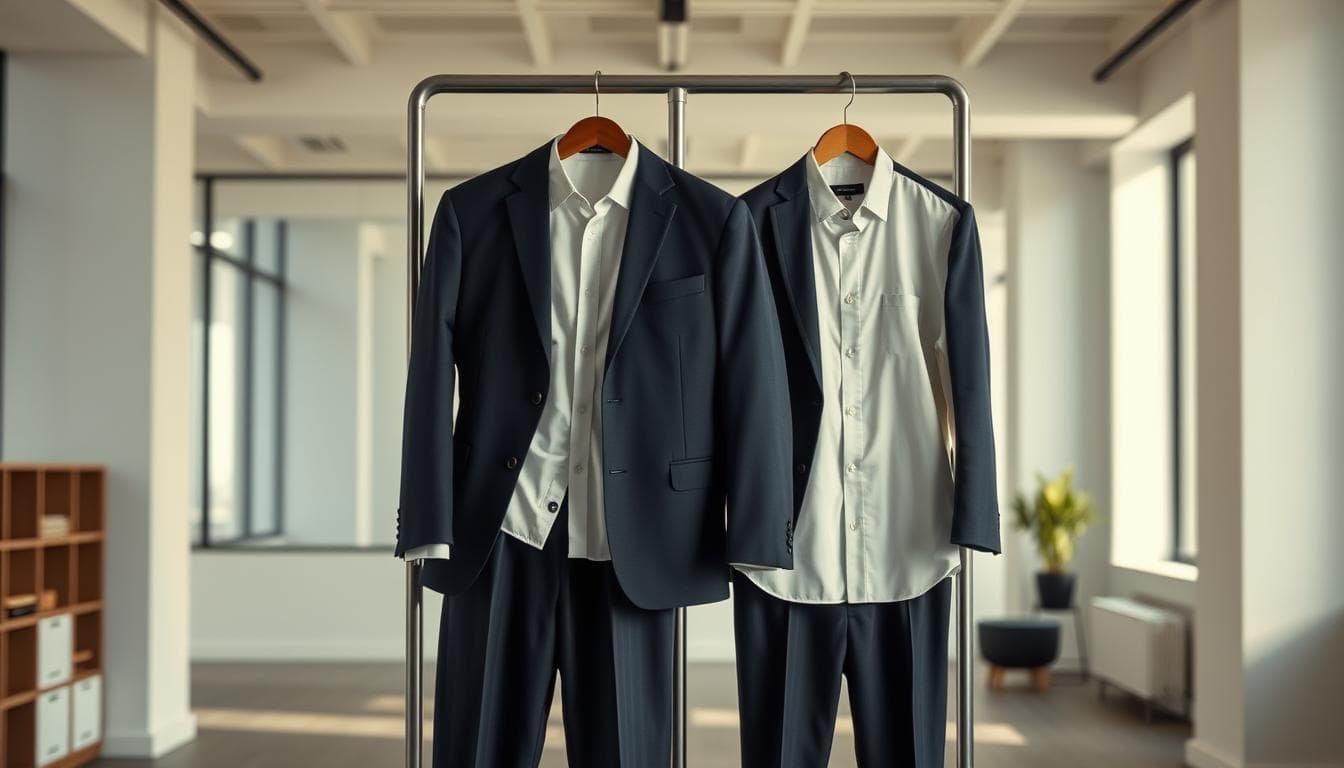
Let’s cut through the fashion noise. Your work clothing should function as a strategic system, not a collection of trendy pieces. We’re talking about measurable returns on your investment—both in time and capital.
The data reveals a startling truth. Professionals waste an average of 30 minutes daily deciding what to wear. That translates to over 180 hours annually—time that could fuel revenue-generating activities instead of closet confusion.
This approach isn’t about minimalism for aesthetics. It’s strategic management for busy professionals who refuse to sacrifice style for efficiency. We deliver an actionable blueprint that transforms your closet from chaotic liability into organized asset.
Think of your clothing as business assets. Every piece must earn its place through versatility and functionality. If an item doesn’t work hard for you, it’s wasting valuable space and capital.
Today we’re sharing proven principles that eliminate decision fatigue. You’ll learn how to reduce clothing expenditures by 60-70% while streamlining your morning routine. This framework prioritizes quality over quantity and results over retail therapy.
Key Takeaways
- Professionals waste 30+ minutes daily on outfit decisions
- A strategic clothing system saves 180+ hours annually
- Reduce clothing costs by 60-70% with intentional selections
- Treat work attire as business assets requiring ROI justification
- Streamline morning routines to reclaim productive time
- Focus on versatile pieces that maximize functionality
- Quality selections outperform quantity purchases long-term
Introduction: Why a Capsule Wardrobe Matters for Work
The data reveals a counterintuitive truth about professional dressing. More options create decision paralysis, not style freedom. We’re tackling the “cluttered closet cycle” head-on.
Psychology confirms this paradox of choice. When you own a lot of clothes, getting dressed becomes a cognitive burden. Your brain wastes energy on trivial selections instead of high-value work decisions.
Overview of Time and Money Savings
Strategic clothing management delivers immediate financial returns. Professionals report reducing expenditures by 60% through intentional purchasing. The savings extend beyond initial costs.
Fewer pieces mean lower dry cleaning bills and eliminated storage expenses. You stop buying mistakes that never get worn. The financial impact compounds annually.
The Impact on Daily Productivity
Reclaiming 30 minutes each morning transforms your workday. This equals 130 hours annually—more than three full work weeks. That time becomes available for revenue-generating activities.
Decision fatigue isn’t trivial. It depletes mental resources needed for critical business choices. A streamlined system protects your cognitive capacity for what truly matters.
We present evidence-backed strategies that convert wardrobe chaos into competitive advantage. The returns measure in both time and performance metrics.
Understanding the Capsule Wardrobe Concept
Professional efficiency extends beyond the office to include how we manage our daily attire choices through proven methodologies. This systematic approach to clothing management has deep roots in practical business thinking.
Definition and Historical Background
The concept emerged years ago when Susie Faux established her London boutique. She created a framework of essential, timeless items supplemented by seasonal pieces. This foundational thinking revolutionized how professionals approach their wardrobe.
Donna Karan’s 1985 “Seven Easy Pieces” collection demonstrated the power of strategic selection. Seven items could create multiple professional looks from office to evening. This operationalized the concept for working professionals.
Evolution into a Modern Lifestyle Choice
Today’s evolution reflects shifting priorities beyond mere fashion. Professionals now embrace strategic consumption that aligns with environmental responsibility. This isn’t deprivation—it’s optimization through minimum inventory.
| Timeline | Key Figure | Contribution | Impact |
|---|---|---|---|
| 1970s | Susie Faux | Foundation of essential items | Established timeless principles |
| 1985 | Donna Karan | “Seven Easy Pieces” collection | Demonstrated professional versatility |
| Present Day | Modern Professionals | Sustainable, efficient approach | Business-minded clothing strategy |
The capsule wardrobe addresses fundamental needs: reducing cognitive load and increasing efficiency. We view this as a business framework where each piece contributes to overall performance.
Benefits of a Capsule Wardrobe for Professionals
The most overlooked productivity hack isn’t digital—it’s hanging in your closet. We’re not discussing fashion theory. We’re presenting measurable returns on your clothing investments.
This approach transforms how you manage your daily appearance. The benefits extend far beyond mere organization.
Reducing Decision Fatigue
Fewer options mean faster decisions. Your brain conserves energy for important work choices.
Eliminating morning outfit stress preserves mental capacity. You gain back cognitive resources for high-value tasks.
Enhancing Personal Style and Confidence
Knowing you look professional removes appearance anxiety. This confidence boost directly impacts performance.
Quality pieces create consistent, polished looks. Your style becomes reliably effective rather than hit-or-miss.
The financial savings are substantial. Professionals report 60-70% reductions in clothing costs.
Better clothes last longer and perform better. One quality item often outperforms ten cheaper alternatives.
Time savings become productivity gains. Reclaiming hours weekly adds up to significant annual returns.
Your Capsule Wardrobe Guide for a Productive Work Life
We’re moving beyond theory to execution—here’s how to construct your strategic clothing system. This approach transforms random purchases into intentional investments.
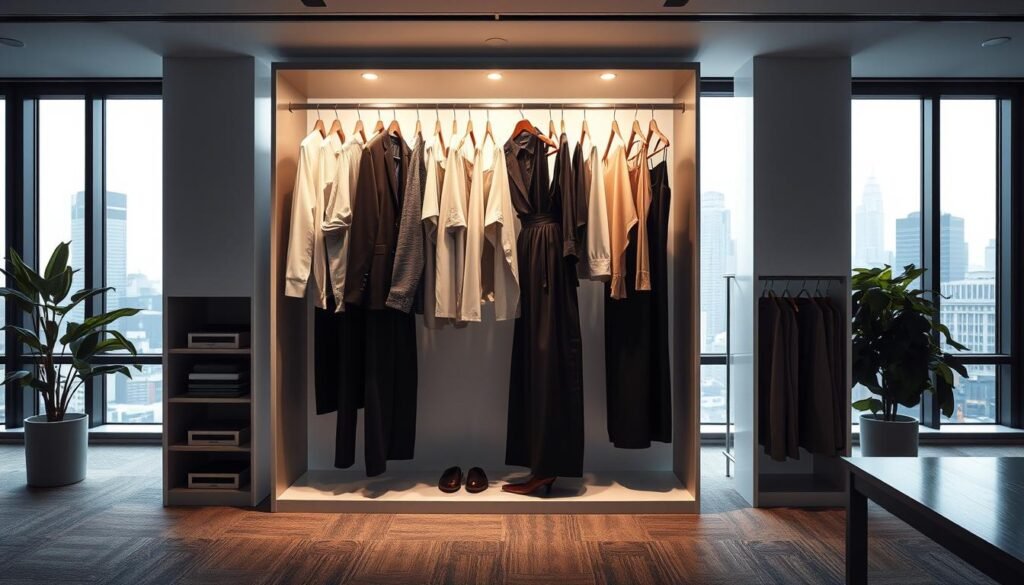
Key Principles in Building a Capsule Wardrobe
We establish three non-negotiable filters for every potential addition. Each piece must demonstrate timeless design, maximum versatility, and perfect lifestyle alignment.
This concept extends beyond simple reduction. Your collection should reflect both functional demands and personal expression. Versatility acts as a multiplier—each item should create 5-7 distinct outfits.
| Principle | Business Equivalent | Practical Application |
|---|---|---|
| Timeless Design | Long-term Asset | Classic pieces that avoid seasonal trends |
| Maximum Versatility | ROI Multiplier | Items that mix and match effortlessly |
| Lifestyle Alignment | Strategic Fit | Clothing matching actual professional demands |
Must-Have Pieces for Versatility
Focus on items that serve multiple purposes across different occasions. Neutral colors form the foundation for easy coordination.
Reject rigid numerical limits—your ideal size depends on specific circumstances. Most professionals find 30-50 items sufficient for year-round needs. Start with what you love and refine through real-world use.
Starting with a Wardrobe Audit
We’re going to treat your clothing collection with the same rigor we apply to business inventories. This diagnostic phase reveals your actual assets versus dead weight. You cannot optimize what you haven’t measured.
Empty everything onto your bed. First, identify your proven performers—the items you automatically reach for each day. These pieces already demonstrate maximum functionality and personal appeal.
Identifying Favorite and Functional Pieces
Separate your favorite clothes from the rest. Seeing these items together clarifies your authentic style. Notice patterns in colors, fabrics, and silhouettes that suit your current lifestyle.
Now categorize the remaining pieces by type: pants, shirts, dresses, outerwear. This exposes redundancy immediately. Most people discover 5-7 items serving identical purposes—pure waste of space and capital.
Apply straightforward business logic to decluttering. Eliminate anything unworn in 90 days. Remove duplicates, ill-fitting pieces, and damaged items. Seasonal clothes move to secondary storage—they consume mental bandwidth without delivering current value.
This process typically reveals that 20% of your clothes create 80% of your outfits. A well-organized closet where you see all options cuts decision time by 40-60%. You reclaim both physical space and cognitive capacity.
Identifying Your Personal Style and Needs
Your authentic style isn’t found in magazines—it’s hidden in your current closet favorites. We separate functional requirements from personal expression. Both elements demand equal attention in your strategic clothing system.
Your professional environment dictates functionality. A client-facing consultant needs different pieces than a creative professional in a casual office. Climate considerations are non-negotiable—ignoring your actual weather patterns creates gaps that sabotage the entire system.
Personal style isn’t about following fashion trends. It’s about identifying what makes you feel confident and competent. This directly impacts how you show up in professional situations.
Analyze your current “greatest hits” to identify patterns. What colors appear repeatedly? What silhouettes do you gravitate toward? These patterns reveal your authentic preferences without requiring fashion expertise.
We apply a four-question filter to every potential addition. Is the item comfortable for your current lifestyle? Is it easy to maintain? Will it pair easily with existing items? Can it be styled multiple ways?
The goal is creating a clothing collection that reflects intentional choice. It should represent your professional brand rather than random purchases. This approach transforms your daily look from stressful decision to confident statement.
Your ideal wardrobe serves both practical needs and personal expression. When these elements align, you achieve something beyond mere organization—you create a system that works as hard as you do.
Selecting Timeless and Functional Clothing Pieces
The foundation of any efficient clothing system rests on pieces that pass three critical business filters: timelessness, functionality, and versatility. We’re not discussing fashion trends—we’re establishing investment criteria for your professional appearance.
Essential Work Wardrobe Staples
Timeless items maintain their value across seasons and years. Think crisp white button-down shirts and classic blazers that never appear dated. These pieces deliver consistent returns regardless of changing trends.
Functional clothing serves your actual professional needs. Consider fabrics, ease of care, and comfort for your specific work environment. Each item must align with your daily reality.
Versatility acts as your ROI multiplier. Every piece should create 5-7 distinct outfit combinations. This maximizes your investment while minimizing decision fatigue.
| Selection Criteria | Business Equivalent | Practical Application |
|---|---|---|
| Timeless Design | Long-term Asset | Classic pieces avoiding seasonal trends |
| Functional Performance | Operational Efficiency | Comfort and practicality for daily use |
| Maximum Versatility | ROI Multiplier | Items creating multiple outfit combinations |
For men starting their strategic collection, begin with 2 jackets including a navy blazer. Add 8 tops spanning formality levels and 2 pants in dark washes. This foundation covers most professional scenarios.
Quality indicators separate investments from expenses. Look for natural fibers, finished seams, and substantial fabric weight. These pieces outperform cheaper alternatives by 5-10x in longevity.
Creating a Cohesive Color Palette
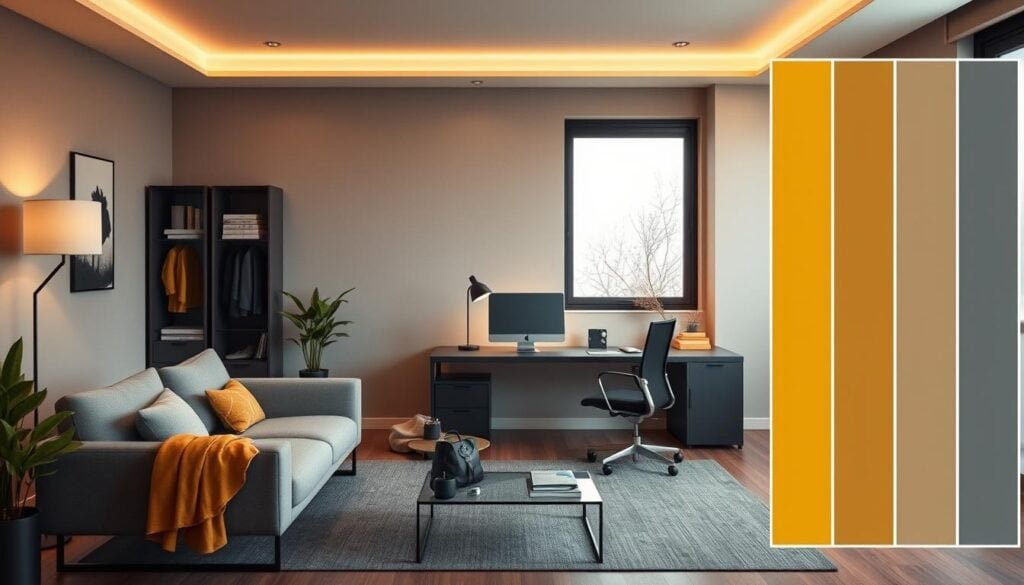
The mathematics of outfit creation reveals why neutral foundations deliver exponential returns on your clothing investments. We build strategic systems on color compatibility—eliminating morning guesswork through intentional selection.
Choosing Neutrals and Accent Colors
Neutral tones create automatic compatibility. Every piece works with every other piece when you stick to core colors like navy, gray, black, and white.
These foundational shades work across all skin tones and professional contexts. They provide a sophisticated backdrop that lets quality and fit stand out.
The mixing advantage is undeniable. With five neutral tops and five bottoms, you create twenty-five outfit combinations instantly.
Accent colors should be limited to one or two maximum. Choose shades that flatter your complexion and align with your professional environment.
Follow the 80/20 rule for optimal results. Eighty percent neutrals ensure maximum versatility, while twenty percent accent colors prevent your system from feeling sterile.
Color selection should reflect your skin tone realities. Cool undertones favor navy and gray, while warm undertones work better with camel and olive tones.
Organizing Your Capsule Wardrobe Efficiently
Your closet’s physical layout directly determines your morning efficiency—we’re optimizing the infrastructure. Poor organization negates all your curation work by hiding functional pieces.
We treat this space as operational territory requiring clear zoning. Dedicate one specific section exclusively to your core collection.
Closet Organization and Decluttering Tips
Move everything else out of sight immediately. This physical separation eliminates decision paralysis before it starts.
Visual accessibility matters most. You should see every piece at a glance without digging. Use consistent hangers and logical grouping.
| Organization Approach | Efficiency Impact | Sustainability Level |
|---|---|---|
| Dedicated Capsule Section | High – eliminates distractions | Easy to maintain |
| Mixed Storage | Low – creates decision fatigue | Hard to sustain |
| Over-Complex Systems | Variable – often abandoned | Poor long-term |
Commit to a 30-day probation period without adding items back. This tests whether perceived gaps are real needs or comfort habits.
Apply the five-way rule for any additions. New pieces must work in minimum five outfit combinations.
Remove decluttered items within 48 hours. Seeing them daily invites second-guessing. Donate or sell immediately.
The first declutter pass is never the final one—living with less reveals what you truly don’t miss.
Simple systems beat perfect complexity every time. If your organization requires special equipment, you won’t sustain it.
Building Your Capsule Wardrobe Collection
Abstract principles fail where concrete frameworks succeed—we’re providing exact quantities that translate theory into daily practice. Your strategic system requires specific numbers that match real-world functionality.
Curating a Collection of Interchangeable Pieces
Interchangeability acts as your ROI multiplier. When every top pairs with every bottom, your combinations grow exponentially. We build systems where 10 foundational items create 100+ outfit possibilities.
The mathematics are undeniable. A minimalist core of 14 essential pieces—excluding socks and underwear—delivers surprising versatility. Two jackets, eight tops, and two pants generate 64+ distinct looks through strategic pairing.
| Collection Type | Core Pieces | Outfit Combinations | Ideal For |
|---|---|---|---|
| Minimalist Starter | 14 items (2 jackets, 8 tops, 2 pants, 2 shoes) | 64+ | Professionals testing the concept |
| Standard Professional | 30-50 items including accessories | 200+ | Most office environments |
| Climate-Adapted | Adjusts sweater/top ratios | 150-300 | Specific weather conditions |
Real-Life Examples of Capsule Wardrobe Setups
We reject theoretical ideals in favor of practical frameworks. A functional professional collection typically ranges between 30-50 total pieces. This includes 2-3 jeans, 5-7 basic tops, and 3-4 structured blazers.
Real-world testing reveals necessary adjustments. You might need three pairs of pants instead of two. The “laziness buffer” proves crucial—stock eight daily tops instead of seven to accommodate laundry delays.
Systems that don’t account for human behavior inevitably fail. Build for your actual life, not an idealized version.
These examples serve as starting points, not prescriptions. Modify based on your climate, professional demands, and personal style preferences. The goal remains consistent: maximum functionality through intentional selection.
Budget-Friendly Strategies for Building Your Wardrobe
The real financial breakthrough in professional dressing comes from disciplined purchasing, not bargain hunting. We’re challenging the myth that strategic systems cost more than random shopping.
Investing in Quality Versus Trendy Items
Most professionals build their first collection from existing clothes. This eliminates upfront costs while revealing genuine gaps through real-world testing.
We prioritize investment hierarchy. Spend most on frequently worn pieces like basic tops and everyday shoes. Quality differences matter most in items closest to your body.
The cost-per-wear metric reveals true value. A $200 blazer worn 100 times costs $2 per wear. A $40 trendy piece worn five times costs $8. Quality wins on pure economics.
Timing purchases strategically maximizes budget. Buy end-of-season for 40-60% discounts on classic pieces. Avoid “investment” items in fleeting styles.
Professionals report spending 60-70% less annually despite higher individual prices. They buy 75% fewer total items while eliminating wasteful impulse purchases.
Outfitting for Different Seasons and Occasions
Your clothing strategy must account for environmental realities, not theoretical ideals about seasonal dressing. We implement rotation protocols that maintain system efficiency across changing conditions.
Adapting Your Capsule for Seasonal Changes
Seasonal rotation eliminates the decision fatigue that year-round visibility creates. If you cannot wear an item now, store it elsewhere. This current-season focus typically reduces visible inventory by 40-50%.
Transition periods provide natural review points. When rotating clothes, assess each piece’s performance from the previous season. Did it earn its place for another year?

We recommend building season-specific mini-collections rather than one year-round system. A 30-35 piece summer capsule and 35-40 piece winter capsule provide better functionality.
Climate considerations are paramount. Someone in Southern California needs a different approach than someone in Chicago. Adapt the framework to your reality.
The layering strategy extends seasonal utility. Pieces like blazers and light sweaters bridge temperature ranges. They reduce the total number of items needed.
Occasion planning should inform your composition. If your professional life includes client presentations, your system needs pieces that handle these requirements.
Storage logistics matter. Off-season clothes should be clean and properly stored. Treat your wardrobe as valuable assets requiring proper maintenance.
Style Inspiration and Outfit Pairings for Work
Your curated clothing collection becomes truly operational when you translate individual pieces into proven outfit combinations. This step bridges the gap between owning great items and experiencing daily efficiency.
Pre-Planned Outfits for Busy Mornings
We mandate creating 7-10 pre-planned outfits because this transforms theory into practice. Morning decisions become simple execution rather than creative problem-solving.
Start with one core item—like your favorite pants—and build outward. See how many different looks you can create with various tops and layers. This approach maximizes each piece’s value.
Balance proportions for professional polish. Pair wide-leg trousers with slim tops rather than bulky alternatives. The rule of thirds creates visual harmony when you tuck shirts into high-waisted bottoms.
Layering and Accessorizing for Added Flair
Layering acts as your versatility multiplier without adding inventory. One blazer over eight different shirt-and-pant pairs creates eight distinct outfits.
Photograph combinations you love for future reference. Your phone becomes an outfit database for rushed mornings. This documentation solves the “I forgot that great combination” problem.
Conduct styling sessions separately from dressing time. Spend 30 minutes weekly creating new outfit pairs. This strategic approach works for both professional and casual settings.
Identify gaps during this process. You might discover one missing piece that would unlock numerous new ways to put together your existing items.
Overcoming Decision Fatigue with a Minimalist Approach
Decision fatigue begins the moment you open an overstuffed closet door. We’re not discussing fashion—we’re addressing a documented cognitive drain that sabotages morning productivity.
The “cluttered closet cycle” creates the illusion of choice. You stare at packed racks yet feel you have nothing to wear. This paradox of choice triggers analysis paralysis.
Simplifying Your Morning Routine
Think about scrolling Netflix for 20 minutes only to find nothing to watch. Your brain reacts the same way to fifty incompatible clothing options. More choices make getting dressed harder, not easier.
A strategic system solves this through intentional constraint. You eliminate the morning search through incompatible pieces. Every item works together seamlessly.
| Scenario | Decision Time | Mental Energy Used | Outcome Quality |
|---|---|---|---|
| Cluttered Closet (50+ items) | 25-30 minutes | High – decision fatigue | Often unsatisfactory |
| Curated Selection (20 items) | 3-5 minutes | Low – preserved capacity | Consistently professional |
Prepare your outfit the night before. This simple habit eliminates morning decisions entirely. You preserve cognitive resources for work that matters.
The compound effect is substantial. Saving 25 minutes daily creates over 150 hours annually. That’s real time returned to your professional life.
Maintaining and Evolving Your Capsule Wardrobe
Your initial clothing collection represents version one, not the final product. Evolution through experience creates true optimization. We reject perfectionism in favor of practical progress.
Think of your first attempt as a functional prototype. Choose pieces you love and items you want to wear more often. This approach prevents analysis paralysis.
Periodic Reviews and Updates
We implement quarterly assessments as natural checkpoints. Every 90 days, evaluate which pieces performed well and which underperformed. This data-driven approach reveals patterns.
After 30 days, conduct your first declutter pass. You’ll find many items you’re ready to release that previously felt difficult. Real usage clarifies true needs.
| Review Timeline | Primary Focus | Expected Outcome |
|---|---|---|
| 30 Days | Remove obvious failures | Streamlined core collection |
| 60 Days | Identify genuine gaps | Strategic addition planning |
| 90 Days | Performance-based adjustments | Optimized functionality |
Life changes demand strategic updates. Job transitions, relocations, or lifestyle shifts require collection adjustments. Your system should serve your current reality.
Quality maintenance extends garment lifespan. Proper cleaning and storage protect your investment for years. This reduces replacement frequency and costs.
Year two typically outperforms year one significantly. Experience compounds, creating continuous improvement. Your understanding of personal needs deepens over time.
Conclusion
We’ve established a system where your professional attire works for you, not against you. The framework delivers measurable returns—reclaiming precious time and optimizing your money.
Your strategic capsule wardrobe should include 30-50 versatile pieces. Think 2-3 pairs of pants, 5-7 tops, and 3-5 pairs of shoes. This curated collection eliminates morning decision fatigue.
The financial case is undeniable. Professionals report 60-70% reductions in clothing costs. More importantly, they gain back 20-30 minutes daily for revenue-generating work.
Implementation follows our proven sequence: audit, select timeless pieces, create cohesive color palettes, and pre-plan your outfits. Your ideal system reflects your specific professional needs.
The ultimate measure? Your wardrobe should serve your career without consuming disproportionate resources. Function over fashion becomes your new standard for professional dressing success.
FAQ
What is a capsule wardrobe, and how does it save me time and money?
A capsule wardrobe is a curated collection of essential, interchangeable items. It saves time by eliminating daily outfit decisions and money by focusing on versatile, high-quality pieces that last for years, reducing the need for constant shopping.
How many items should be in a work capsule?
There’s no strict number; it depends on your lifestyle. A common starting point is 25-35 pieces, including tops, bottoms, dresses, and outerwear, but excluding accessories, shoes, and workout clothes. The goal is a functional collection, not a rigid count.
Can I build a capsule wardrobe on a tight budget?
Absolutely. We advocate for a strategic approach: invest in core items like a great pair of jeans or a classic blazer, and supplement with more affordable basics. Thrifting and focusing on cost-per-wear often yield better long-term value than buying cheap, trendy clothes.
How do I choose a color palette for my professional collection?
Start with a foundation of neutral colors—think black, navy, white, beige, and gray. These shades mix and match effortlessly. Then, add two or three accent colors that you love and that complement your neutrals, ensuring every piece can create multiple looks.
What if I get bored with my limited selection of clothes?
Boredom often stems from a lack of creativity, not a lack of options. We encourage using accessories like scarves, statement jewelry, and different pairs of shoes to refresh outfits. A well-built collection is designed for versatility, allowing you to create new looks by changing how you combine items.
How often should I update or review my capsule?
We recommend a seasonal review. Assess what you wore, what you didn’t, and why. This isn’t about a complete overhaul but a thoughtful edit—perhaps swapping a heavy sweater for a light cardigan or repairing a favorite shirt. This keeps your collection aligned with your current needs.
Is this concept only for people with a minimalist style?
Not at all. The principle is about intentionality, not minimalism. Whether your personal style is classic, bohemian, or edgy, the goal is to build a cohesive closet where you love and wear every piece. It’s a system to enhance your style, not erase it.