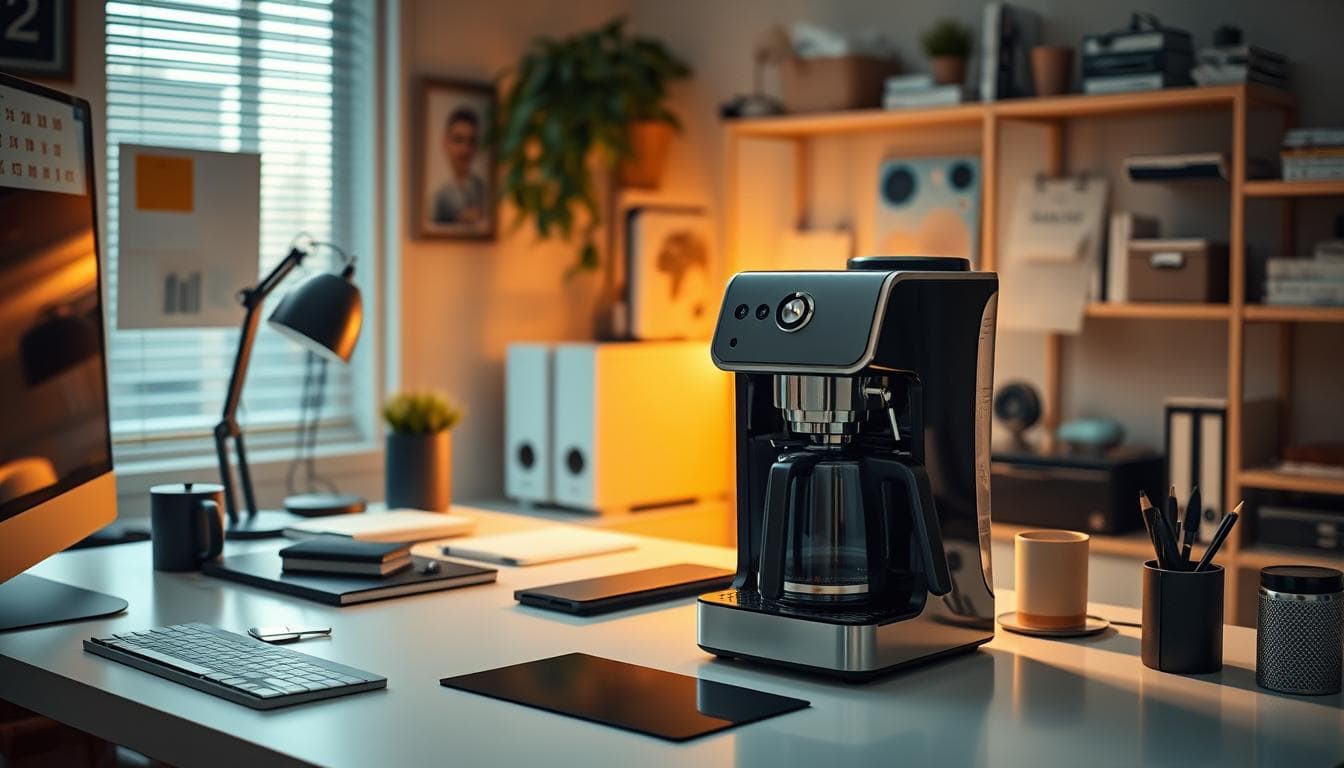
A well-chosen coffee maker can save time, cut daily coffee-shop spending, and keep your focus sharp during work hours. This guide points to the best machines for home offices by highlighting speed, consistency, and low-maintenance designs.
A dedicated workspace demands different priorities than a kitchen: you want quick brew cycles, consistent cup quality across multiple uses per day, and minimal upkeep that interrupts work. Machines that deliver these traits function as productivity tools rather than just appliances.
We explain the selection criteria used for the recommendations: brew temperature and extraction consistency, brew speed and recovery time, capacity and carafe type, plus ease of cleaning and long-term durability. The Specialty Coffee Association (SCA) Golden Cup standard recommends a brewing temperature range of 195–205°F, which we use as a benchmark when evaluating extraction quality (source: https://sca.coffee/research/quality/golden-cup-recipe).
Whether you want high-volume drip coffee, one-touch specialty drinks, or a compact brewer for solo use, this guide matches common home-office workflows to machines that make sense. Scroll to the picks for fast recommendations and to the performance sections if you want the data behind each choice.
Overview of Top Coffee Makers for Home Offices
The home-office coffee market is now split between high-volume drip systems, one-touch super-automatic machines, and hybrids that try to do both. Choosing the right approach hinges on your daily volume, drink variety needs, and tolerance for routine maintenance.
Understanding the Market Trends
Professionals increasingly expect machines that make quality drinks without barista skills. For many remote workers, thermal carafe drip brewers outperform hot-plate designs because they preserve serving temperature for 2–3 hours without burning flavor.
Certification matters: SCA Golden Cup parameters (195–205°F brew range) are a reliable benchmark for extraction quality. Several models, including certain Technivorm Moccamaster variants, meet those standards (source: https://moccamaster.com/pages/awards-and-certificates).
Expert Roundup Insights
Independent long-term reviews (multi-year evaluations from reputable outlets) highlight durability and maintenance as the main failure points that short tests miss. Cleaning complexity and descaling frequency often determine whether a machine becomes a daily tool or an ignored countertop fixture.
Customer feedback shows professionals choose workflow fit over feature lists: predictable temperature, fast recovery, and easy cleaning beat flashy touchscreens in real-world use. Three practical categories emerge—drip for volume, super-automatic for specialty drinks, and hybrids for mixed needs—so pick the category that matches how you actually drink coffee. See the category picks below to jump straight to recommendations.
Benefits of a Dedicated Coffee Maker in Your Home Office
A dedicated coffee maker delivers more than a beverage: it supports uninterrupted focus, can cut recurring spending, and improves the daily work routine. Choosing the right machine pays off in saved time and more consistent cup quality.
Boosting Productivity with Quality Brew
Caffeine improves alertness and concentration, which can translate into measurable gains during focused work blocks. Immediate access to a reliable cup reduces interruptions that otherwise break deep-focus sessions.
Here’s a practical cost comparison: a $5 daily coffee habit over 260 workdays equals about $1,300 per year, while a modest investment in beans and a mid-range machine can fall near $300 initially (260 × $5 = $1,300). Use this as a quick rule of thumb when weighing purchase decisions.
Practical example: a solo remote worker who drinks 1–2 cups a day often gets the best ROI from a compact drip brewer; a small team that consumes 8–12 cups daily benefits more from a thermal-carafe drip system or a super-automatic machine that reduces per-cup effort.
Employee Morale and Convenience
For client-facing or team spaces, offering café-level drinks signals professionalism and attention to detail. That small investment can prevent 20–30 minute outing disruptions during the workday and keeps teams on task.
Beyond convenience, reliable on-site coffee becomes part of workplace culture: it shortens downtime, supports consistent routines, and can improve morale—especially when machines offer a range of drinks to suit different preferences.
If you already know whether you need volume or specialty drinks, jump to the Drip or Super-Automatic picks below to find the best models for each workflow.
Performance and Brewing Efficiency
Performance differences in brew speed, temperature stability, and recovery time have direct effects on morning routines and meeting schedules. Below we focus on measurable metrics that matter in a home office: how fast a full pot is ready, how well a carafe preserves serving temperature, and how quickly a machine can prepare another round.
Quick Brew Times and Thermal Carafe Advantages
Brew time is an objective productivity metric: faster cycles get you back to work sooner, but only if extraction quality remains high. For example, the Bunn Speed Brew is specified to brew a 10-cup pot in roughly five minutes, making it one of the fastest drip brewers available (source: manufacturer specs).
Speed without proper extraction often yields weak coffee. The Technivorm Moccamaster balances speed and extraction, typically brewing in about 6–7 minutes while meeting SCA Golden Cup parameters on certified models (source: Moccamaster/SCA listings). Thermal carafe systems offer a clear practical advantage for office use: they retain drinkable temperature without the burnt taste from hot plates.
Measured temperature examples reported by independent reviewers and manufacturer data show meaningful differences: the OXO 8-Cup registers near 181°F immediately after brewing, while the Cuisinart 14-Cup starts around 185°F and holds near 176°F after one hour. Budget glass-plate brewers often fall below 160°F after an hour, producing noticeably stale flavor.
Recovery Time and Consistency Across Models
Recovery time matters when you host back-to-back meetings or serve a small team. Super-automatic espresso machines typically need only 30–90 seconds between drinks; many drip brewers require 5–10 minutes before a second full pot will match the initial temperature and taste.
How to read the table: it compares full-pot brew time and measured temperatures to show which models best balance speed and heat retention for prolonged use. Note that initial temperatures and one-hour retention figures come from manufacturer specs and independent measurements—check product pages for full test details.
| ModelBrew Time (Full Pot)Initial Brew Temp (°F)Temp After 1 Hour (°F) | |||
| Bunn Speed Brew | 5 minutes | N/A (Hot Plate) | N/A (Hot Plate) |
| Cuisinart 14-Cup | 14 min 20 sec | 185 | 176 |
| OXO Brew 8-Cup | 6 min 30 sec | 181 | 175 |
| Technivorm Moccamaster | 6-7 minutes | 200+ (SCA Certified) | N/A (Server) |
These figures show that the fastest option isn’t automatically the best—prioritize a balance of speed, extraction quality, and thermal retention. For many home offices, a thermal-carafe drip brewer or an SCA-aligned model like the Moccamaster offers the best mix of speed and cup quality for extended work sessions.
Design, Durability, and Ease of Use
Design choices affect more than aesthetics—material quality, control layout, and serviceability determine whether a machine becomes a trusted part of your daily routine or an ignored countertop item. Prioritize features that reduce friction during busy workdays.
Stainless Steel Finishes and Aesthetic Appeal
Stainless steel is more than a polished look: it often signals stronger construction and easier surface cleaning compared with inexpensive plastics. Many professionals prefer machines with metal components because they maintain a refined office appearance over years of use.
Premium models like the Jura GIGA 10 use stainless accents with intuitive touch controls, while other makers such as KitchenAid offer sensor buttons and clear LCDs that simplify interaction. If your brewer sits in view during core work hours, choose a design that fits your workspace and won’t feel dated quickly.
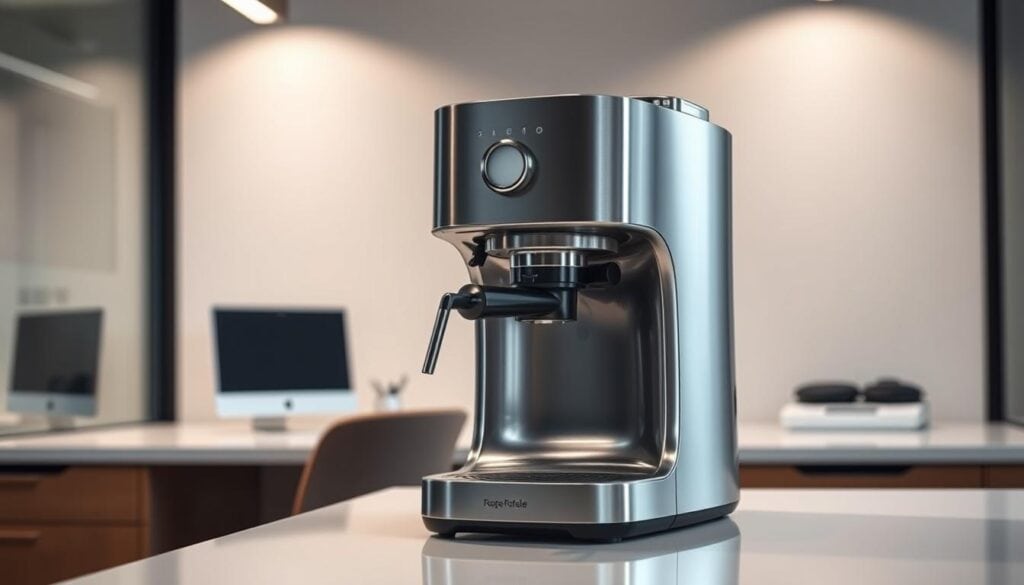
Design details matter: easy-to-remove water tanks, front-access drip trays, and clear indicator lights reduce the time you spend maintaining the machine and increase daily usage rates.
Maintenance and Cleaning Considerations
Cleaning complexity predicts long-term engagement. Machines that require more than a few minutes of daily attention often see declining usage after the first few months; simple, quick maintenance preserves consistent use.
Automated systems reduce maintenance friction. For example, Jura documents automated rinsing and descaling among the GIGA 10’s features, which helps busy users stay on top of care (source: https://www.jura.com).
Good interfaces matter: touchscreen menus that present drink options visually and one-touch cleaning cycles minimize the learning curve. Common UX pain points include hard-to-remove drip trays or reservoirs placed behind the machine—prioritize front or side access in tight workspaces.
Long-term reliability depends on build quality more than brand alone. Warranties and documented user reports are useful indicators when comparing models; look for multi-year coverage if uptime is critical to your workflow.
Ultimately, easy use determines whether a machine becomes part of your day. Choose units that let anyone in your household or team make a consistent cup with minimal steps.
Drip, Super-Automatic, and Specialty Options—Which Category Fits Your Workflow?
There are three practical approaches to workspace coffee: high-volume drip brewers for groups, super-automatic machines for one-touch specialty drinks, and hybrids that try to cover both. Pick the category that matches your daily volume and the types of drinks your team prefers—this choice determines price, maintenance, and countertop footprint.
Our top picks span a wide price range because each category solves a different problem: automation for teams, speed for volume, or flexibility for specialty drinks. For clarity, here are quick winners by category: Drip (volume) — Winner: Bunn Speed Brew; Mid-range (balanced extraction and build) — Winner: Technivorm Moccamaster; Specialty/Automation — Winner: Jura GIGA 10.
The Jura GIGA 10 represents peak automation with dual grinders and intuitive touch controls; at its list price it’s meant for heavy, team-driven use. The Breville Barista Touch Impress sits in the middle as a semi-automatic option that reduces the learning curve for espresso-based drinks. The Bunn Speed Brew is the standout value pick for fast, reliable drip coffee at scale.
Drip Coffee Maker Options for Office Use
For most shared home-office setups, drip coffee makers are the practical workhorses. They produce 8–14 cups per cycle and remove the individual attention required by single-serve or manual espresso systems.
Value and Versatility in Drip Brewing
If you need volume fast, the Bunn Speed Brew is built for speed—it’s specified to brew a ten-cup pot in about five minutes (source: Bunn product specs). Thermal carafe designs preserve drinkable temperature without the burnt flavors common to hot plates, which makes them well-suited to back-to-back meeting schedules.
The Cuisinart 14-Cup provides strong temperature control and capacity for larger teams; some users note real-world output closer to 13 cups at maximum fill, so account for slight capacity variation when planning service. Features that improve workflow: single-cup dispensers on larger drip models, reusable GoldTone filters (which reduce paper-filter costs), and front-access water reservoirs.
Instead of adding another table (this article keeps only one comparison table for clarity), here are the key specs for quick scanning:
- Bunn Speed Brew — Brew time: ~5 minutes; Capacity: 10 cups; Key benefit: fastest full-pot speed (Best for volume).
- Cuisinart 14-Cup — Brew time: ~14 minutes; Capacity: ~13 cups actual; Key benefit: precise temperature control and large capacity (Best for large teams on a budget).
Who should pick what: choose Bunn if speed and simple, reliable drip are your priorities; choose a Technivorm Moccamaster if precise extraction and SCA-aligned brewing matter; choose Jura or a similar super-automatic if your team wants espresso, milk drinks, and zero manual steps.
Exploring Super Automatic Espresso Machines and Specialty Coffee
Super-automatic espresso machines remove most of the manual steps between beans and cup, making specialty drinks available with a button press. For busy home offices that want lattes and cappuccinos without a barista’s skill, these units are the closest to a countertop café.
Intuitive Interfaces and Specialty Drink Options
High-end models now use touchscreens that present clear drink images and presets, which reduces training time for anyone in the household or team. The convenience of one-touch milk-texturing and programmable profiles turns mid-afternoon breaks into quick, consistent refreshments rather than long outings.
Winner — Super-Automatic: Jura GIGA 10. It pairs full automation with a broad menu of drinks and is engineered for team use (JURA documents dual grinders and extensive specialty options on the GIGA 10 product page: https://www.jura.com/en/home-products/coffee-machines/fully-automatic/jura-giga-10).
Limitations to acknowledge: super-automatic machines are costly to buy and can be expensive to repair; their espresso quality usually does not match a skilled barista using dedicated prosumer equipment. Still, for most teams and non-baristas, the trade-off is worthwhile for consistency and speed.
Built-In Grinders and Multi-Bean Hoppers
Integrated grinders are essential for freshness—grinding immediately before extraction preserves aroma and flavor. Built-in burr grinders outperform blade alternatives in producing consistent particle size, which leads to more reliable extraction and better-tasting espresso.
Multi-bean hopper systems provide practical benefits in shared settings. The GIGA 10’s two independent grinders let you keep decaf separate from regular beans, eliminating the purge time that single-hopper machines require when switching beans. That saves minutes and reduces wasted coffee during busy periods.
Who should pick a super-automatic: small teams or individuals who want a wide range of drinks with minimal hands-on work. If you prioritize top-tier shot quality for espresso competitions or specialty brewing, a prosumer setup (separate grinder + espresso machine) will beat a one-button unit—but for most office use, a super-automatic delivers the best balance of convenience and quality.
Built-In Features, Water, and Heat Retention That Actually Matter
Integrated systems—where grinder, brewer, and cleaning routines work together—reduce daily friction and deliver a more consistent cup with less hands-on time. For offices, that matters: predictable quality and low maintenance translate to fewer interruptions and better uptime.
The single biggest controllable variable in cup quality is the grind. Beans ground immediately before extraction retain aroma and flavor that pre-ground coffee loses quickly through oxidation.
Dual Grinders and Automated Cleaning Systems
For shared environments, dual-grinder setups solve a tangible problem: you can keep regular and decaf separate without lengthy purging. The Jura GIGA 10, for example, uses independent grinders to avoid cross-contamination and speed switching between beans (source: https://www.jura.com/en/home-products/coffee-machines/fully-automatic/jura-giga-10).
Winner — Grinder type: Built-in burr grinders are the best choice for most home offices because they produce consistent particle sizes needed for reliable extraction (source: grinder performance literature).
Water quality and filtration are the next practical concerns. Hard water deposits scale inside boilers and heat elements, reducing efficiency and lifespan. Built-in filters or a separate inline filter can reduce scaling and improve flavor; manufacturers and water-quality experts commonly recommend filtration or scheduled descaling in hard-water areas.
Practical maintenance guidelines: test your water hardness, replace or install appropriate filters if hardness is moderate-to-high, and follow a descaling cadence—monthly in very hard water, every 2–3 months in moderately hard water, and every 6–12 months in soft water areas.
- Why burr over blade: burr grinders create uniform particle size which improves extraction consistency and flavor; blade grinders create uneven particles that can produce sour and bitter notes.
- Cleaning alerts: modern mid- and high-end machines (for example, models in Breville’s line) include cleaning reminders or alerts that simplify maintenance and reduce neglect.
- Space and integration: units combining grinder, brewer, and frother reduce counter footprint compared with separate devices and speed the routine of making multiple drink styles.
Actionable checklist for office reliability: install or use a water filter if hardness is above 120 ppm; schedule descaling to match local hardness; choose a machine with accessible reservoirs and removable parts to simplify daily cleaning; prefer built-in burr grinders for consistent cups.
Price Tiers, Comparative Picks, Maintenance, and Longevity
Vacuum-insulated carafes and solid build quality change how useful a coffee maker is in an office: they keep drinks at serving temperature during long meeting blocks and reduce the need to rebrew. Below are practical price tiers and clear winners for common home-office needs.
Thermal Carafe and Heat Retention Advantages
Thermal carafes preserve flavor and serving temperature far longer than hot plates, making them a smart choice for back-to-back meetings. Measured examples from manufacturers and independent reviewers show meaningful differences in initial and one-hour temperatures across models, which affect how drinkable coffee remains during long sessions.
Optimal consumption temperatures are roughly 155–175°F; vacuum-insulated carafes and servers help keep coffee in that range for 60–90 minutes, while hot plates often degrade flavor within 20–30 minutes. The trade-off is that vacuum carafes generally need hand-washing to protect the seal, a minor upkeep cost for significantly better flavor retention.
Budget-Friendly Options Versus Luxury Models
Workspace coffee makers fall into three useful tiers. Match your choice to actual use—volume, drink variety, and how much hands-on time you want to spend.
- Entry-level ($80–$150): Good for straightforward black coffee and low-touch use. Example: Cuisinart 14-Cup — strong temperature control and large capacity for a modest price (best for teams on a tight budget).
- Mid-range ($180–$350): Upgrades in build, SCA-aligned extraction on some models, and better heat retention. Example: Technivorm Moccamaster — SCA-approved models provide consistent extraction and durable construction (source: https://moccamaster.com/pages/awards-and-certificates).
- Luxury ($1,000+): Full automation, integrated grinders, and specialty drink menus. Example: Jura GIGA 10 — extensive automation for teams that need one-touch specialty drinks; high upfront cost but minimal daily user involvement.
Value rule: a $200 machine can make excellent coffee if you accept some manual steps, while a $5,000 machine automates everything. For most home offices the practical sweet spot is the mid-range tier, which balances extraction, durability, and reasonable maintenance demands.
Comparative Analysis of Popular Models
Here are the recommended winners by category and their key trade-offs:
- Drip (volume) — Winner: Bunn Speed Brew. Why: fastest full-pot brew time and reliable thermal-carafe performance. Limitation: no integrated grinder or specialty drink capability.
- Mid-range (balanced extraction & build) — Winner: Technivorm Moccamaster. Why: consistent SCA-aligned extraction and strong heat retention. Limitation: limited milk-texturing for lattes/cappuccinos.
- Specialty/Automation — Winner: Jura GIGA 10. Why: dual grinders, broad drink menu, and heavy automation—ideal for teams. Limitation: very high price and larger footprint.
Who should pick what: choose Bunn if speed and simple volume are your priorities; choose Technivorm if precise filter extraction and longevity matter; choose Jura if you need one-button specialty drinks for a team and can justify the cost.
Small practical notes: check current list prices (they fluctuate by retailer), verify capacity against your typical cups-per-day, and read warranty terms—multi-year warranties are particularly valuable if uptime matters.
Maintenance, User Experience, and Final Recommendations
Maintenance habits determine whether a coffee maker becomes a reliable part of your workflow or an expensive countertop decoration. Followable, short care routines and water-quality management preserve flavor and extend machine life.
Daily Use Advice and Troubleshooting
Keep daily upkeep under five minutes to avoid usage drop-off—simple steps like rinsing removable parts, wiping the steam wand, and emptying the grounds bin prevent buildup that leads to failures. For espresso machines, quick group-head purges and a steam-wand wipe after each use take about two minutes and reduce the risk of clogs and flavor contamination.
If your machine shows error codes, consult the manual for the exact sequence; many issues are resolved by resetting or running an automatic rinse cycle. Keep a small toolkit and spare water filters or cleaning tablets on hand to avoid downtime during busy periods.
Ensuring Durability Over Time
Water quality is the single biggest environmental factor affecting longevity. Hard water causes scale that reduces heating efficiency and can shorten a machine’s useful life; manufacturers commonly recommend descaling monthly in very hard-water areas and every 2–3 months in moderately hard areas (source: manufacturer maintenance guides).
Practical durability checklist:
- Daily: Rinse removable parts and wipe surfaces (2–3 minutes).
- Weekly: Empty and clean grounds, check filter condition (5–10 minutes).
- Monthly/quarterly: Descale or run manufacturer-recommended cleaning cycles depending on local hardness (30–45 minutes when required).
- Every 2–3 months: Replace water filters if used (5 minutes).
Machines with automated cleaning cycles or alerts (common on mid- and high-end models) reduce the risk of neglect and often justify a higher initial price if uptime and convenience are priorities.
Final Recommendation
Match the machine to how you actually drink coffee. For high-volume office use, pick a fast thermal-carafe drip brewer like the Bunn Speed Brew; for precise filter extraction and long-term reliability, choose an SCA-aligned mid-range model such as the Technivorm Moccamaster; for one-touch specialty drinks for a team, a super-automatic like the Jura GIGA 10 is the top pick. Overall, the mid-range $180–$350 tier offers the best balance for most home-office setups.