

Your first major business decision sets the stage for everything that follows. How you secure funding dictates your company’s speed, culture, and ultimate destiny. This isn’t a minor detail; it’s a foundational choice.
We see many entrepreneurs default to seeking outside investment without weighing the true cost. They trade ownership and control for rapid growth, often without a clear strategy. This path isn’t inherently wrong, but it’s not the only one.
The alternative is building with your own resources. This self-funded approach demands discipline but preserves your vision. You answer to your customers, not a board of investors. Your capital comes from revenue and personal savings.
This guide cuts through the noise. We provide a data-driven comparison of these two distinct models for startups. We’ll examine real-world outcomes, dilution percentages, and founder success stories. Our goal is to give you the framework for an informed choice.
Key Takeaways
- Your funding method is a core business model decision, not just a financial transaction.
- Self-funding prioritizes control and ownership but often requires slower, more organic growth.
- External investment accelerates scaling but introduces investor oversight and equity dilution.
- The “best” path depends entirely on your personal goals, market, and definition of success.
- Real data on founder outcomes reveals significant trade-offs with each approach.
Introduction to Startup Funding Options
Before a single product ships, founders must confront the fundamental question of capital. Where will the money come from? This choice defines your company’s operational rhythm and final ownership structure.
We see two primary paths. The first relies on personal savings and early revenue. This self-funded approach keeps control firmly with the entrepreneurs. The second path involves raising substantial funding from external sources in exchange for equity.
The landscape isn’t a simple either-or. Angel investors, credit lines, and hybrid models offer middle ground. Yet, many business leaders default to the most accessible option without modeling long-term consequences.
The source of your money is a strategic decision, not just a financial one.
Your industry’s requirements, growth timeline, and personal goals dictate the right fit. Some startups need rapid scale, while others thrive with organic growth. Both models have created massive successes.
The key is alignment. Your funding strategy must support your core business model. We will break down the mechanics next to help you evaluate what fits your specific situation.
Understanding Bootstrapping in the Startup Ecosystem
The path of self-funding represents more than just financial restraint—it’s a complete business philosophy. We see founders who embrace this approach develop fundamentally different operational mindsets.
Defining Bootstrapping
Bootstrapping means building your company without external investors. You fund operations through personal savings and early revenue generation.
This approach maintains complete founder control. Decisions answer to market realities, not investor expectations. The business grows at its own sustainable pace.
Resourcefulness and Lean Operations
Bootstrapped founders master capital efficiency. Every dollar must demonstrate clear revenue impact. This discipline becomes a competitive advantage.
Lean operations force smarter decision-making. You prioritize profitability from day one. The business develops resilience through controlled growth.
This model works best with clear product-market fit. Short sales cycles and healthy margins support organic expansion. Founders maintain strategic flexibility without external pressure.
Overview of Venture Capital Financing
The injection of external capital transforms more than just your balance sheet—it reshapes your company’s entire trajectory. We see this as a strategic partnership where institutional investors provide substantial funding in exchange for equity ownership. This model operates on an accelerated timeline with clear exit expectations.
These investors typically participate through structured funding rounds tied to specific business milestones. Each round involves negotiating term sheets that outline valuation, equity percentages, and governance rights. The process demands rigorous evaluation of market potential and growth metrics.
Key Drivers of VC Investment
Institutional investors prioritize massive market opportunities and defensible competitive advantages. They seek companies with proven customer acquisition economics and scalable business models. The founding team’s capability to execute rapid expansion remains critical.
VC firms expect aggressive growth—often triple-digit revenue increases—to achieve their target returns. Their fund economics require a few massive winners to offset numerous smaller investments. This creates pressure for market dominance through accelerated hiring and marketing.
Beyond capital, these partnerships provide strategic guidance, operational resources, and industry connections. However, this support comes with increased oversight and milestone pressure. The relationship fundamentally prioritizes speed and market capture above all else.
Exploring “bootstrapping vs venture capital”
We see many founders frame this choice as a simple financial decision, but it’s far more strategic. Your selection defines your company’s operational DNA. It’s a choice between two distinct business model philosophies.
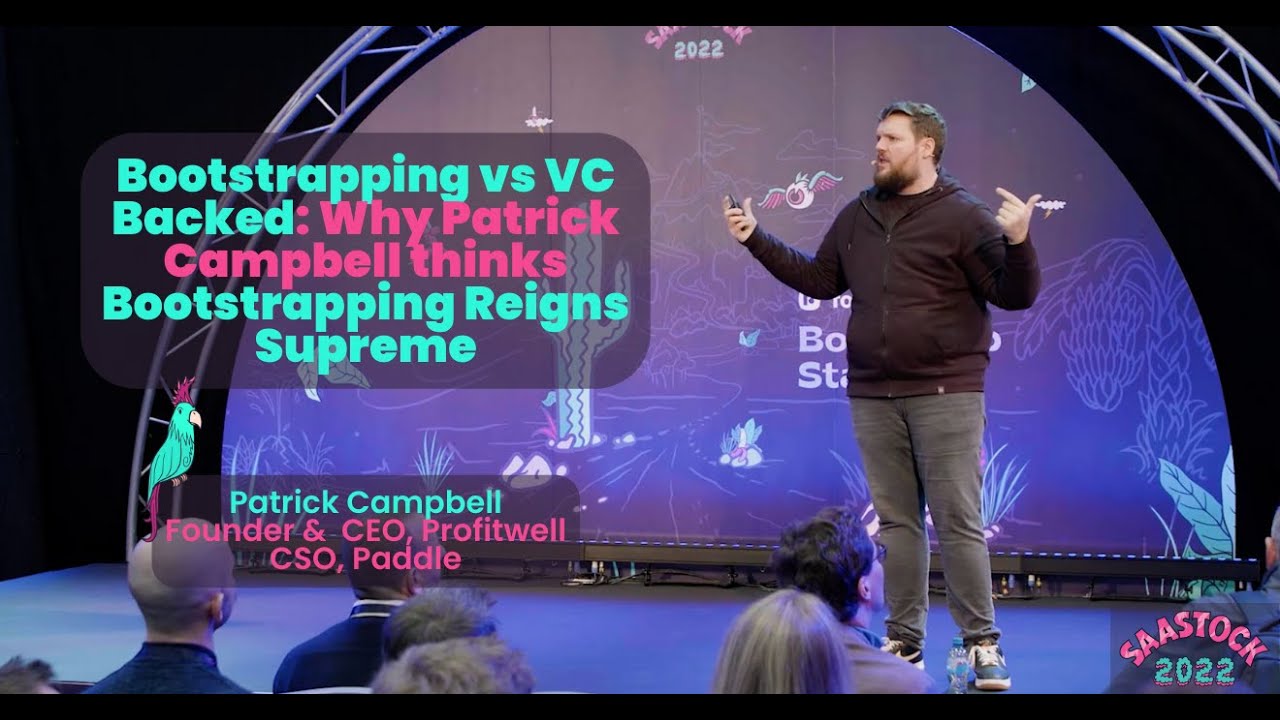
One approach prioritizes complete ownership and organic growth. It relies on internal capital and customer revenue. This path demands discipline but guarantees control.
The alternative approach seeks rapid market capture. It uses external funding to accelerate scaling. This model trades equity for speed and resources.
The data shows these paths attract different founder personalities. Some value autonomy and long-term wealth building. Others accept dilution for accelerated growth and strategic networks.
Your industry’s capital requirements often dictate the viable approach. Capital-light businesses can thrive with internal funding. Capital-intensive ventures usually require external investment.
Ultimately, the right business model depends on your vision. Do you optimize for profitability or market share? Your answer guides this critical funding decision.
Pros and Cons of Bootstrapping Your Startup
The self-funded path presents a clear dichotomy of advantages and constraints. We see founders who understand this balance make more strategic decisions about their business trajectory.
This approach creates a unique operational environment. Your company develops under specific conditions that shape its long-term potential.
Benefits of Bootstrapping
Complete ownership retention stands as the primary advantage. You maintain 100% equity without dilution from external parties.
Founders exercise absolute control over strategic decisions. There’s no board approval required for product direction or hiring choices.
Profitability becomes an immediate focus rather than a distant goal. The business develops sustainable unit economics from day one.
Limitations and Growth Constraints
Capital constraints directly impact scaling velocity. You cannot rapidly assemble large teams or execute aggressive market expansion.
Revenue-dependent growth creates methodical but slower expansion. Well-funded competitors may outpace your market capture.
Limited financial runway increases vulnerability to cash flow disruptions. Seasonal variations or unexpected expenses pose greater risks.
| Aspect | Advantage | Constraint | Business Impact |
|---|---|---|---|
| Financial Control | Full profit retention | Limited capital access | Slower scaling potential |
| Strategic Direction | Complete decision autonomy | Resource limitations | Methodical growth pace |
| Market Position | Customer-focused development | Competitive pressure | Niche market advantage |
| Long-term Vision | Sustainable business model | Vulnerability to disruptions | Organic expansion timeline |
Advantages of Maintaining Control and Ownership
The power to make swift decisions without external approval creates a distinct competitive advantage. Founders who retain complete control can respond to market feedback instantly. They pivot strategies, adjust pricing, or enter new markets based purely on business logic.

Complete ownership translates directly to wealth creation. Building a company worth $50 million while owning 100% keeps the entire value with the founders. This contrasts sharply with diluted ownership after multiple funding rounds.
Strategic autonomy allows founders to optimize for sustainable profitability rather than hypergrowth. They can build for specific customer segments that external investors might consider too small. Product quality takes priority over rapid feature shipping.
The alignment between personal vision and company direction remains intact. Self-funded businesses reflect the founders‘ values rather than conforming to investor expectations. This approach supports decade-long building rather than pressured exits.
Long-term thinking becomes possible when you’re not constrained by investor fund timelines. You can refuse acquisition offers that don’t align with your goals. Company culture, hiring standards, and customer relationships develop organically.
Financial independence through full ownership means profits flow directly to reinvestment or distribution. This bootstrapping advantage creates businesses that answer to customers rather than investor return expectations.
Challenges of Limited Resources and Slower Growth
Resource limitations transform more than just your budget—they reshape your entire approach to market penetration. We see self-funded companies operating under constraints that directly impact their competitive position.
Your growth velocity becomes tied directly to incoming revenue. This creates a fundamental timing disadvantage against funded competitors. They can deploy capital aggressively while you scale methodically.
The risk compounds in winner-take-all markets. First-mover advantages establish network effects that become insurmountable barriers. Your business may miss critical market windows despite having superior products.
Customer acquisition faces hard constraints. Without capital reserves, you cannot test multiple channels or run campaigns at meaningful scales. Your ability to reach wider customer bases remains limited by available funds.
| Constraint Area | Operational Impact | Market Consequence |
|---|---|---|
| Hiring & Talent | Limited team depth | Slower product development |
| Marketing Budget | Narrow channel testing | Reduced brand visibility |
| Sales Resources | Manual outreach only | Longer sales cycles |
| Technology Investment | Basic tools only | Technical debt accumulation |
| Founder Capacity | Multiple role juggling | Burnout risk |
Founder burnout represents a real risk when wearing multiple hats. The constant context switching between product, sales, and operations drains creative energy. This impacts long-term business health.
Time becomes your most valuable—and constrained—resource. Milestones that take funded companies 2-3 years may require 5-7 years of organic growth. This extended timeline tests founder patience and market timing.
The Venture Capital Route: Risks and Rewards
Accepting institutional money fundamentally redefines your relationship with the company you built. We see founders experience this transition as both liberating and constraining.

The funding unlocks resources that organic growth cannot match. You gain access to millions for rapid scaling and strategic networks.
Access to Growth Capital and Industry Connections
Institutional backing provides more than just financial fuel. These partnerships open doors to executive talent, enterprise customers, and media attention.
The strategic value extends beyond the check size. Experienced investors offer operational playbooks and mentorship that accelerate learning curves.
Potential Trade-offs and Equity Dilution
The primary risk involves ownership reduction. Each funding round chips away at founder stakes through equity dilution.
By later stages, many creators own just 15-25% of their companies. Board control shifts to investors with veto power over major decisions.
- Growth pressure intensifies with expectations of triple-digit revenue increases
- Term sheets include liquidation preferences favoring financial backers
- Timeline misalignment occurs when founders want sustainable building while investors need rapid exits
The data reveals stark outcomes: only 1 in 10 companies achieves the massive returns investors target. Most accept the dilution and pressure without the corresponding reward.
Access to Significant Capital and Industry Resources
The financial firepower available through institutional backing creates operational possibilities that organic growth cannot match. We see funded companies execute multi-channel strategies simultaneously rather than sequentially.
This access enables aggressive hiring, enterprise sales teams, and rapid market expansion. You can enter new geographic markets while developing products across multiple verticals.
The resource advantage extends beyond money. Top firms provide operating partners for recruiting and growth marketers for acquisition funnels. This support system accelerates learning curves dramatically.
Industry connections through investor networks deliver warm introductions to enterprise customers. These relationships would take years to develop organically. Strategic partnerships and acquisition discussions become readily accessible.
Brand credibility increases measurably with reputable backers. Enterprise clients view funded startups as more stable partners. Press coverage expands, and talent recruitment becomes significantly easier.
The compounding effect of capital access allows testing multiple growth strategies simultaneously. You can fail faster on ineffective initiatives and double down on winning approaches. This creates a decisive timing advantage over resource-constrained competitors.
Navigating Dilution and Loss of Control with VC Funding
The exchange of equity for capital represents more than just financial dilution—it’s a gradual transfer of strategic control. We see founders underestimate how quickly their decision-making authority erodes with each funding round.

Consider this typical progression: after raising $1M at Seed (20% dilution), $5M at Series A (25%), $10M at Series B (25%), and $20M at Series C (30%), founder ownership drops to approximately 31.5%. This doesn’t account for employee equity pools that dilute further.
Board composition shifts dramatically as investors secure seats proportional to their stakes. They gain voting power over major decisions including mergers, executive hires, and strategic pivots. Your autonomy diminishes with each round.
Liquidation preferences in term sheets mean investors get paid first during exit events. This can leave founders with minimal returns even from respectable sales. The pressure for timely exits often conflicts with long-term vision.
Understanding this funding trade-off is crucial. You’re exchanging permanent equity for temporary capital. The growth enabled must justify the control and ownership surrendered.
Assessing Your Startup’s Goals, Values, and Market Fit
The most critical funding decision begins with honest self-reflection. We see founders succeed when they align capital strategy with personal priorities rather than industry trends.
Evaluating Long-Term Vision
Your vision determines the entire funding trajectory. Building for steady cash flow over decades? Self-funding preserves your timeline. Chasing rapid market dominance? External capital accelerates that vision.
Consider your tolerance for oversight versus autonomy. Maintaining complete control over business decisions often outweighs scaling velocity for many startups. Your core goals around culture and decision-making dictate the right path.
Industry and Market Considerations
Market dynamics heavily influence feasibility. Winner-take-all sectors demand speed that self-funding rarely provides. Fragmented markets allow profitable niche building without external pressure.
Capital requirements create natural boundaries. Hardware and biotech startups typically need millions before revenue—making bootstrapping impractical. Software and service businesses can often reach profitability with minimal capital.
Timing impacts every decision. Have you achieved product-market fit? Is your competitive window closing? These time-sensitive factors determine whether organic growth suffices or demands immediate scaling. The right funding choice emerges when personal goals meet market realities.
Real-World Examples of Bootstrapped and VC-Backed Success
Real-world outcomes reveal the true costs and rewards of each funding path. We examine two iconic companies that achieved massive success through opposite approaches.
Their journeys demonstrate how funding choices shape ultimate outcomes. Both created tremendous value but with fundamentally different trade-offs.
Case Studies and Success Stories
Mailchimp’s story showcases pure bootstrapping achievement. The founders built a side project into a $12 billion acquisition.
They maintained 100% ownership throughout their journey. Their growth came from customer subscriptions and a viral freemium model.
This approach prioritized sustainable unit economics over rapid scaling. The founders captured the entire exit value personally.
Uber represents the extreme venture capital model. They raised billions from top investors to fund global domination.
The company burned nearly $30 billion before achieving profitability. This aggressive market capture strategy required immense capital.
While creating a $166 billion company, early participants experienced significant dilution. The founder eventually departed amid controversies.
Both paths produced remarkable success stories. Mailchimp optimized for founder wealth and autonomy.
Uber prioritized market scale and dominance. These companies prove that success definitions vary dramatically.
The right path depends on your personal goals and growth timeline. Each model offers distinct advantages for different types of companies.
Strategies for Preparing and Scaling Your Business
Your preparation strategy determines whether your scaling efforts succeed or stall. We see founders underestimate how operational readiness impacts their funding outcomes. Both paths demand specific groundwork before pursuing rapid growth.
Preparing for Bootstrapping
Self-funded business success requires immediate validation. Prove customers will pay prices supporting sustainable unit economics. This evidence becomes your foundation for growth without external capital.
Focus on early traction through direct customer acquisition. Use content marketing and network referrals to generate revenue without large upfront investment. Prioritize profitability from day one by monitoring cash flow obsessively.
Customer retention delivers predictable revenue for gradual scaling. Build strong relationships that reduce churn and increase lifetime value. This creates stable operations supporting organic expansion.
Securing VC Funding
Investor-backed scaling demands different preparation. Research firms matching your industry, stage, and check size. Target investors who understand your specific business model and growth potential.
Develop compelling pitch decks highlighting your market opportunity and competitive advantages. Show traction metrics proving momentum and team execution capability. Build relationships with potential investors before you need funding.
Your preparation should demonstrate scalable product development and efficient operations. Investors seek companies ready for accelerated growth with their capital injection. Proper groundwork makes the difference between rejection and term sheets.
Conclusion
We’ve reached the critical moment where theory meets practice in your funding journey. The evidence clearly shows that both paths create successful outcomes—just with different definitions of success.
Your choice ultimately reflects what you value most as a founder. Do you prioritize complete control and ownership retention? Or does rapid market capture justify sharing equity?
The data proves each approach serves specific business models and market conditions. Smart founders make this decision based on honest self-assessment rather than industry trends.
Whatever path you select, commit fully to its requirements. Your funding strategy becomes your company’s operational blueprint for years to come.
FAQ
What is the main difference between using personal savings and seeking outside investors?
The core difference lies in ownership and control. Using your own funds means you retain full ownership and make all strategic decisions. Bringing in investors provides significant capital for rapid expansion but requires sharing equity and often ceding some control over the company’s direction.
Can a bootstrapped company ever achieve the same level of growth as a venture-backed one?
Absolutely. While the timeline may differ, sustainable growth built on solid unit economics can lead to substantial market success. Companies like Mailchimp prove that profitability and market leadership are achievable without external capital, though it often requires a longer, more disciplined path.
How do I know if my business model is attractive to venture capital firms?
Venture capital firms typically seek businesses with the potential for massive scale in a large market. They look for a defensible product, a strong team, and a clear path to a high-return exit, usually through an acquisition or IPO. If your vision involves slower, sustainable profitability, it may not align with traditional VC goals.
Is it possible to start by bootstrapping and later seek venture capital funding?
Yes, this hybrid approach is common and often strategic. By bootstrapping initially, you can develop your product, prove market fit, and achieve early revenue. This de-risks the business, putting you in a stronger position to negotiate favorable terms if you later decide to pursue venture capital for accelerated expansion.
What are the biggest risks associated with giving up equity to investors?
The primary risks are dilution of your ownership stake and loss of autonomy. Investors have a fiduciary duty to their limited partners and will expect a return on their investment, which can create pressure to pursue aggressive growth or a specific exit strategy that may not fully align with your original vision.