Forget the rigid, confusing rules from decades past. The modern workplace demands a new approach to professional attire. We cut through the noise to deliver a clear, actionable framework.
This is not about fleeting trends. Our guide focuses on versatility and credibility. You need a wardrobe that transitions seamlessly from client meetings to collaborative sessions.
We provide intelligence on fabrics, fits, and layering strategies. This knowledge is backed by workplace evolution data, not fashion hype. The goal is a polished, intentional look.
Master the fundamentals first. Then, layer in personal expression. This methodology eliminates morning wardrobe paralysis. It ensures you always present your best professional self.
Key Takeaways
- Modern professional attire blends comfort with uncompromising credibility.
- Versatility is key; your wardrobe must adapt to various workplace scenarios.
- Focus on investment-worthy staples for long-term value, not short-lived trends.
- Understanding fabric, fit, and color theory is more important than following hype.
- A strategic, capsule-based approach maximizes the impact of every piece you own.
- Personal style should enhance a solid foundation, not replace it.
- The right accessories elevate an outfit without overpowering your professional presence.
Introduction to Business Casual for Men in 2025
Silicon Valley’s 1960s rebellion against corporate dress codes created a ripple effect that still defines modern offices. What began as tech companies rejecting rigid suits has evolved into a sophisticated approach to professional presentation.
Understanding the Modern Office Aesthetic
The contemporary workplace aesthetic balances comfort with uncompromising credibility. We’ve moved beyond the false choice between professional and comfortable.
Your first strategic move should be observing your specific environment. Some spaces demand structured blazers and dress trousers. Others welcome dark denim and polos.
This isn’t about following trends blindly. It’s about intentional choices that serve multiple functions. Your wardrobe should transition seamlessly from internal meetings to client presentations.
Why 2025 Demands a New Approach to Business Casual
The remote work revolution reset comfort expectations. Returning to physical spaces requires finding equilibrium between home-office ease and professional presence.
We’re seeing athletic comfort technology merge with traditional fabrics. Performance materials that stretch and resist wrinkles are now standard expectations. Three well-fitted shirts consistently outperform ten mediocre ones.
This evolution represents strategic transformation, not fleeting fashion. Levi’s distribution of dress code guidance to HR departments in the 1990s legitimized this shift. Today’s approach prioritizes quality and versatility above all.
What is Business Casual? Exploring the Concept
Professional attire has evolved into a strategic tool for workplace navigation rather than a rigid set of rules. We see this dress code as a spectrum that adapts to industry, company culture, and geographic location.
The core definition centers on polished presentation without full suit requirements. Think well-fitted shirts with chinos or dress slacks. This approach creates a balanced look where comfort meets professional standards.
Versatility becomes the operational advantage of this attire. A pressed blazer, tucked-in polo, or sweater over a crisp shirt provides mixing options for different scenarios. Each choice should communicate competence and attention to detail.
We prioritize fit and fabric quality over brand names. A perfectly tailored shirt consistently outperforms expensive but poorly fitting pieces. This intentional presentation builds authentic connections while maintaining credibility.
The modern professional’s strategic advantage lies in personality expression within boundaries. This approach eliminates wardrobe paralysis and ensures you present your best self daily.
The Evolution and History of Business Casual Attire
Corporate dress codes didn’t soften by accident. They were deliberately dismantled by strategic business interests.
The Hawaiian Fashion Guild’s “Casual Friday” campaign was pure marketing genius. They increased shirt sales while reshaping American workplace culture.
Levi’s 1990s outreach to HR departments represented deliberate market expansion. This wasn’t organic evolution—it was corporate strategy.
Traditional fashion houses like Ralph Lauren adapted their offerings. Luxury brand pivots signal genuine market transformation.
We see clear phases in this professional attire revolution:
| Period | Primary Driver | Workplace Result |
|---|---|---|
| 1960s-1970s | Tech Industry Rebellion | Relaxed Silicon Valley Offices |
| 1980s-1990s | Corporate Marketing Campaigns | Mainstream Casual Friday Adoption |
| 2000s-2010s | Performance Fabric Innovation | Comfort-Meets-Professional Balance |
| 2020s-Present | Remote Work Influence | Refined Comfort-Focused Pieces |
This history provides crucial context. The shift wasn’t about lowering standards. It redefined professionalism to emphasize output over conformity.
Today’s sophisticated blends maintain core comfort principles. Understanding this evolution helps us make smarter wardrobe investments.
Key Wardrobe Staples for a Versatile Look
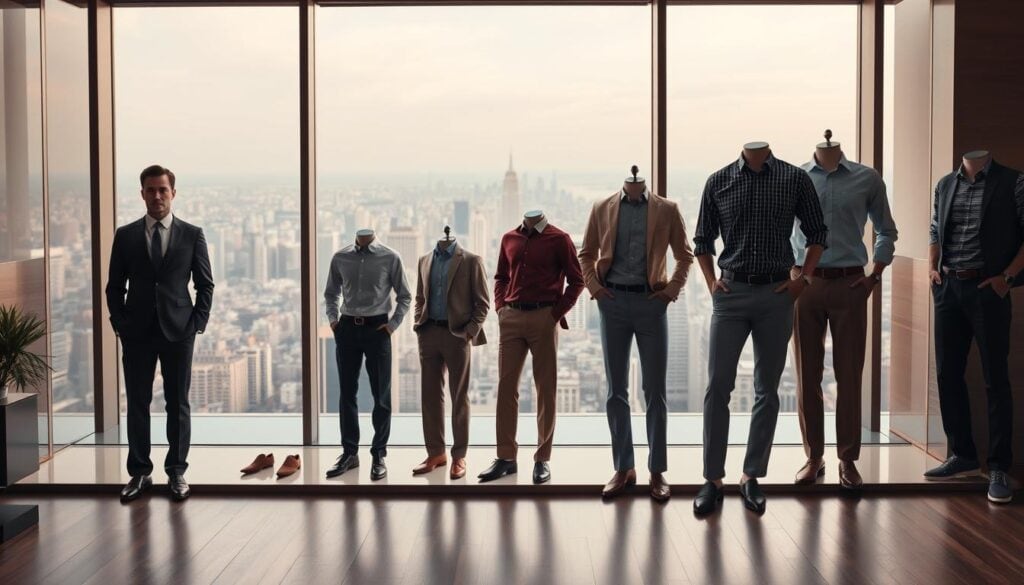
The most effective professional wardrobes operate on a capsule principle: fewer, higher-quality pieces that create numerous outfit combinations. We focus on strategic investments that deliver maximum versatility across different workplace scenarios.
Must-Have Tops: Button-Ups, Polos, and Turtlenecks
A crisp button-up shirt remains the cornerstone of any professional wardrobe. We recommend solid colors like white and light blue for maximum versatility. The fit should hug shoulders perfectly while tapering at the waist.
Polos work well in warmer climates or relaxed environments. Choose structured designs in premium fabrics like double knit jersey. Stick to neutral tones that maintain professional credibility.
Turtlenecks offer sophisticated alternatives to traditional collared shirts. Slim-fit designs in black or navy work particularly well when layered under blazers. This creates a refined look suitable for cooler months.
Bottoms: Chinos, Jeans, and Tailored Trousers
Chinos form the foundation of business casual bottoms. Neutral tones like navy and beige provide exceptional pairing options. High-quality cotton blends ensure all-day comfort and durability.
Dark jeans can work in many professional settings when styled correctly. Avoid distressing or fading for a polished appearance. Pair with leather footwear for balanced sophistication.
Tailored trousers deliver uncompromising professionalism. Wool blends offer superior drape and comfort. These pieces elevate any casual look while maintaining workplace appropriateness.
| Bottom Type | Best For | Key Colors | Fit Recommendation |
|---|---|---|---|
| Chinos | Daily office wear | Navy, Beige, Grey | Slim or tailored fit |
| Dark Jeans | Relaxed environments | Deep Indigo, Black | Straight or slim fit |
| Tailored Trousers | Client meetings | Charcoal, Navy | Modern tailored fit |
This strategic approach to business casual ensures every piece in your wardrobe serves multiple functions. Three quality shirts and two versatile bottoms create dozens of professional combinations.
Elevating Your Look with Blazers and Sport Coats
No single garment delivers more transformative power to a professional wardrobe than a well-chosen blazer. We treat these pieces as strategic investments that elevate basic combinations into polished presentations.
The distinction between blazers and sport coats matters for informed selection. Blazers typically feature solid colors with metal buttons, while sport coats embrace patterns and textured fabrics like tweed.
Tips for Choosing the Perfect Blazer
Fit remains non-negotiable. Your blazer should contour perfectly to your shoulders and taper slightly at the waist. This creates a streamlined silhouette without restriction.
Shoulder alignment cannot be altered effectively. Sleeve length and body taper adjustments come second in priority. Invest time in this selection process.
Neutral tones deliver maximum versatility. A navy blazer pairs with virtually any shirt and trouser combination. Grey and charcoal options provide similar flexibility for different environments.
Sport coats originated for 19th-century outdoor activities but evolved into legitimate professional pieces. Their less formal structure and seasonal fabrics like linen provide adaptable options beyond traditional suit expectations.
Selecting the Right Fabrics and Fit for 2025 Trends
We’re moving beyond basic fabric choices to performance-driven materials that work as hard as you do. The right composition determines both day-long comfort and professional credibility.

Modern fabrics blend traditional aesthetics with athletic comfort technology. Stretch, breathability, and wrinkle resistance are now baseline requirements for professional attire.
Wool blends with minimal elastane deliver optimal performance. They maintain structure while allowing natural movement throughout demanding workdays. These materials resist wrinkles better than pure wool, reducing maintenance.
High-thread-count cotton remains essential for shirts. Tight weaves resist wrinkles and maintain shape longer than cheaper alternatives. This makes premium cotton worth the investment for frequently worn pieces.
The right fit creates a sharp silhouette without restriction. Modern cuts follow body lines without being tight. This eliminates excess fabric that creates sloppy appearances.
Performance fit technology has evolved beyond simple measurements. Many brands now offer articulated cuts that accommodate natural movement. Strategic stretch panels provide comfort previously found only in athletic wear.
Prioritize fit first, then upgrade fabric quality as budget allows. Even premium materials look unprofessional in poor fits. Excellent tailoring elevates mid-range fabrics for maximum impact.
Business Casual for Men 2025: Signature Styles
We’ve identified three dominant aesthetic frameworks that define contemporary professional presentation across different workplace environments. These signature approaches provide strategic foundations rather than rigid formulas.
The Classic framework serves traditional settings and client-facing roles. It communicates reliability through time-tested combinations like blazers with button-up shirts. This style prioritizes established credibility over trend-chasing.
Modern Minimalist style excels in creative and tech environments. It demonstrates design sensibility through streamlined silhouettes and monochromatic schemes. Think turtlenecks under blazers or tailored trousers with sleek sneakers.
Smart Casual bridges flexible work environments. It maintains polish while prioritizing comfort through quality fabrics and precise fits. Well-constructed polos with dark jeans exemplify this balanced approach.
Developing a signature aesthetic creates professional consistency. Your outfit choices become part of your brand identity. This eliminates wardrobe stress and projects intentionality.
Each framework delivers maximum versatility. Your chosen look should transition seamlessly from morning meetings to evening events. Strategic layering and quality fabrics enable these seamless transitions.
Confidence comes from knowing your signature outfit approach works for your context. Once established, building your wardrobe becomes a strategic process rather than a stressful one.
Accessorizing Your Business Casual Look
The difference between adequate and exceptional professional attire often lies in accessory selection. We treat these elements as strategic force multipliers that elevate basic combinations into sophisticated presentations.
Your footwear choices establish the foundation of your entire look. Quality leather shoes communicate attention to detail more powerfully than any garment.
Statement Footwear: Loafers, Sneakers, and Chelsea Boots
Leather loafers deliver effortless sophistication for daily office wear. They pair seamlessly with chinos or tailored trousers.
Modern sneakers have earned their place in professional settings. Choose sleek designs in neutral tones to maintain credibility.
Chelsea boots offer versatile options for transitional seasons. Their streamlined silhouette works across various workplace environments.
The belt–shoe coordination rule remains non-negotiable. Matching your leather belt to your footwear creates visual cohesion that registers as professionalism.
A minimalist watch and optional tie complete the ensemble. These elements demonstrate style awareness without overwhelming your presentation.
Mastering Layering Techniques for a Refined Look
We treat layering not as seasonal necessity but as strategic wardrobe engineering. This approach separates basic professional presentation from truly sophisticated style. It’s the smartest way to achieve temperature control and visual depth simultaneously.
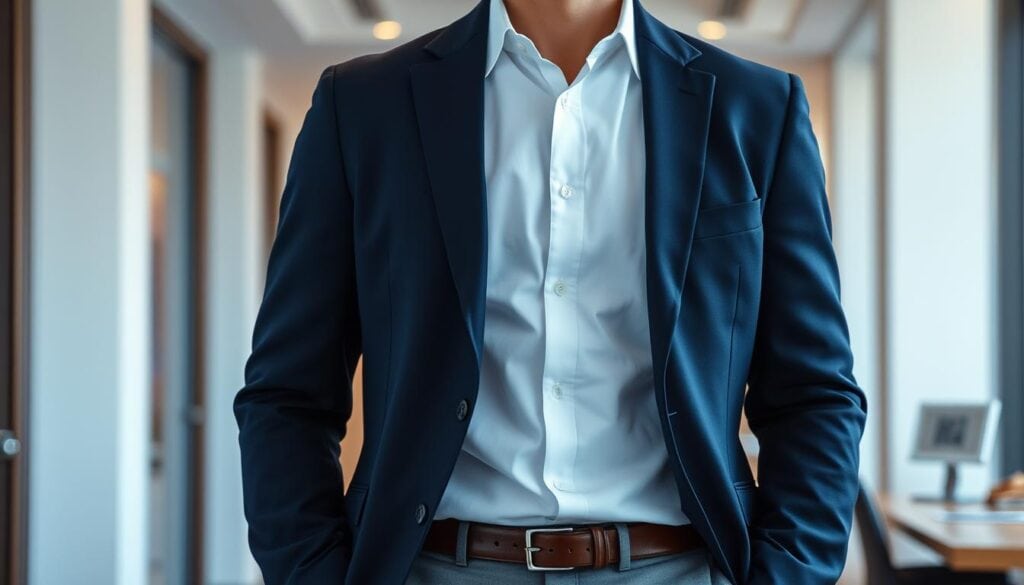
A thoughtful hierarchy creates the foundation. Start with a base layer like a shirt or turtleneck. Add a middle layer such as a cardigan or lightweight sweater. Finish with an outer jacket or blazer. Each piece should fit slightly looser than the one beneath it.
Smart Combinations and Seasonal Layering Strategies
Balance is non-negotiable. Every component must complement others in fit, texture, and color. Avoid combining multiple heavy fabrics or clashing patterns. This creates visual chaos instead of intentional sophistication.
The single-breasted overcoat is the ultimate winter layer for a polished casual look. Choose a medium-length design that stops just above the knee. It provides full protection while maintaining a refined appearance.
Turtlenecks under blazers offer a sleek, modern alternative to traditional shirt combinations. This pairing demonstrates contemporary style awareness. It works exceptionally well in creative environments.
| Season | Primary Layers | Key Piece | Professional Context |
|---|---|---|---|
| Spring/Summer | Shirt + Light Blazer | Unstructured Jacket | Client Meetings |
| Fall | Turtleneck + Cardigan | Knit Sweater | Internal Collaboration |
| Winter | Base + Sweater + Overcoat | Wool Overcoat | Formal Business Events |
Smart layering allows effortless formality adjustments throughout your day. Remove the blazer for internal team sessions. Add it back before important presentations. This business casual strategy ensures you’re always appropriately dressed for any setting.
Custom Fit and Tailored Pieces: Personalizing Your Wardrobe
Standard sizing fails most professionals; custom clothing corrects this fundamental industry flaw. Off-the-rack garments force compromises that undermine both comfort and credibility. We reject the mass-production model that treats bodies as uniform.
Tailored pieces deliver precise shoulder alignment, proper sleeve length, and exact waist measurements. This eliminates the constant adjustments that distract during important meetings. The result is clothing that works with your body, not against it.
| Aspect | Off-the-Rack | Custom Tailored |
|---|---|---|
| Shoulder Fit | Approximate | Precise |
| Sleeve Length | Standardized | Personalized |
| Comfort Level | Compromised | Optimized |
| Longevity | 1-2 years | 3-5 years |
The ROI calculation favors custom investment. A $200 shirt lasting five years outperforms three $80 shirts lasting two years each. You gain superior appearance, comfort, and cost-efficiency simultaneously.
Modern technology democratizes tailoring. AI-driven measurement systems provide perfect fits without in-person visits. This removes historical barriers of time and geographic access.
For those exploring custom suits and tailoring, the approach has never been more accessible. Start with core pieces: two custom shirts, tailored trousers, and one blazer. This foundation elevates your entire business casual wardrobe through superior fit quality.
Adapting Your Attire for Office Culture and Climate Variations
Your professional presentation strategy must adapt to two powerful variables: office culture and geographic climate. We reject universal formulas that ignore these critical factors.
Begin with workplace observation. Study what successful colleagues wear for two weeks. This reveals your specific dress code boundaries and flexibility options.
Cooler climates demand layered systems. Start with a base layer like a dress shirt. Add a middle layer such as a sweater. Finish with a blazer or overcoat. This approach maintains professional appearance through temperature changes.
Warmer environments require breathable fabrics. Lightweight wool, cotton, and linen blends work best. Choose lighter colors that reflect heat while maintaining business casual standards.
Keep transitional pieces at your office. A stored blazer provides instant formality adjustment for unexpected meetings. This eliminates morning wardrobe prediction stress.
Industry culture matters as much as climate. Tech companies in cold cities often accept more relaxed attire than financial firms in warm locations. Understand your specific context.
International work requires additional research. What works in your home office may differ abroad. Always verify expectations before traveling to avoid professional missteps.
Build around versatile core pieces first. Then add climate-specific and culture-specific items as needed. This strategic approach creates a responsive professional wardrobe.
Balancing Comfort with Professionalism in Modern Office Wear
The remote work revolution fundamentally rewired our comfort expectations for professional environments. We reject the false choice between physical ease and polished presentation. Modern office wear embraces both through intelligent design and strategic pairing.
Performance fabrics deliver invisible comfort technology. Stretch-integrated trousers provide all-day ease without compromising appearance. Brands like Lululemon demonstrate this isn’t compromise—it’s upgrade.
Mixing Casual Elements with Polished Details
Our pairing formula maintains professional standards while maximizing comfort. Combine one relaxed element with two structured pieces. Stretch chinos paired with a button-up shirt and blazer creates this balanced approach.
Footwear represents the biggest tension point. Minimalist leather sneakers now work in many offices when paired with formal elements. They provide all-day comfort without sacrificing overall polish.
Knit polos bridge the gap between casual and formal wear effectively. They offer t-shirt ease with structured appearance. These options work particularly well in environments prioritizing both comfort and professionalism.
Lightweight sport coats add formality without traditional stiffness. They allow natural movement throughout long workdays. This strategic approach eliminates the historical trade-off between looking good and feeling good at work.
Modern Innovations and Smart Style Combinations in Business Casual
True style innovation occurs when you can mix formal and casual elements without compromising professionalism. We reject the notion that creativity and workplace appropriateness are mutually exclusive.
The turtleneck represents one of the most significant modern innovations. It eliminates collar-and-tie formality while delivering sleek sophistication. Layer it under a blazer for a refined outfit that works across seasons.
Texture mixing adds depth without risking credibility. Combine wool blazers with cotton chinos or linen shirts with tailored trousers. This approach creates visual interest beyond basic uniformity.
Upscale-casual styling bridges important meetings and daily office wear. Think sport coats over polos with dark denim. This way maintains polish while feeling approachable.
Smart combinations maximize versatility from minimal pieces. A navy blazer pairs with button-ups, sweaters, and turtlenecks alike. These options demonstrate sophisticated style awareness.
We treat innovation as strategic experimentation within professional boundaries. Mastering these combinations ensures your outfit always reflects contemporary thinking.
Conclusion
The final component of professional presentation extends beyond clothing selection to encompass grooming discipline. We’ve provided the strategic framework—now execution depends on understanding your specific environment and personal preferences.
Your wardrobe foundation should consist of proven staple pieces from brands like Banana Republic, J.Crew, or Uniqlo. For precision fits, custom options like Hangrr deliver unparalleled tailoring through AI-driven technology.
Grooming represents the often-overlooked element that completes your professional look. Regular maintenance shows attention to detail that enhances any outfit. Clean nails, neat hair, and subtle care routines demonstrate serious commitment.
Modern business casual embraces smart combinations within professional boundaries. The goal is developing an approach that becomes effortless, freeing mental energy for actual work rather than wardrobe anxiety.
FAQ
Can I wear sneakers in a business casual office in 2025?
Yes, but choose wisely. We recommend minimalist leather or high-quality suede sneakers in neutral tones like white, grey, or navy. Avoid athletic styles. The right pair elevates an outfit while maintaining a professional edge.
Are jeans still acceptable for a business casual dress code?
Absolutely, if they are the right jeans. Opt for dark-wash, tailored fits without rips or distressing. A crisp shirt and a blazer instantly polish denim, making it a smart option for many modern workplaces.
What is the most important factor for a modern business casual look?
Fit is paramount. Regardless of the garment—a shirt, trousers, or a blazer—a proper, tailored fit conveys professionalism more than any specific item. Ill-fitting clothing undermines even the most expensive wardrobe.
How can I incorporate a turtleneck into my office attire?
A turtleneck is a powerful staple. Wear it under a sport coat or unstructured blazer instead of a traditional button-up shirt. This combination, especially in merino wool or fine cotton, creates a sophisticated, modern silhouette.
What footwear options are best for winter in a business casual setting?
A> Chelsea boots are our top pick. They offer a sleek profile, are easy to wear, and provide weather-appropriate utility. Look for options in quality leather or suede. Loafers also remain a versatile choice year-round.
How do I personalize my business casual wardrobe?
Focus on accessories and fabric choices. A distinctive leather belt, a quality watch, or trousers in an interesting fabric like wool flannel or textured cotton can express personal style while adhering to the office dress code.