The digital landscape is transforming before our eyes. What began as experimental technology has exploded into a $5.1 billion market with staggering growth projections. We’re seeing a fundamental shift in how businesses connect with audiences.
Companies across gaming, retail, healthcare, and education are investing heavily in immersive digital experiences. The reason is simple: this medium delivers engagement metrics that traditional formats cannot match. The return on investment is measurable and compelling.
Here’s what matters for newcomers: you don’t need a Hollywood budget or years of specialized experience. What you do need is the right strategic approach and foundational knowledge. We’ve distilled insights from industry professionals who’ve built successful immersive projects.
This guide cuts through the hype to deliver actionable steps you can implement immediately. The process follows proven workflows from game development and 3D animation. This means transferable skills and established best practices already exist for beginners to leverage effectively.
Key Takeaways
- The immersive content market reached $5.1 billion in 2023 with 25.7% annual growth
- Multiple industries now use this technology for measurable business results
- Beginner-friendly approaches exist without requiring massive budgets
- Proven workflows from related fields provide transferable skills
- Strategic planning matters more than technical complexity
- Immediate implementation of best practices drives success
- Engagement metrics consistently outperform traditional media formats
Understanding Virtual Reality Content
We categorize immersive digital assets differently than traditional media formats. The fundamental distinction lies in user control versus director control.
What Is VR Content?
Any object or experience designed for immersive environments qualifies. This includes everything from a single 3D golf club to an entire interactive course.
The scope ranges from individual assets to complete worlds. Both passive observation and active participation fall under this category.
Types of Immersive and Interactive Experiences
We see two primary categories in practice. Interactive formats let users make choices that affect outcomes. Think medical simulations or branching narrative games.
Passive formats involve observation without manipulation. A 360-degree tour of historical sites represents this approach well.
The strategic consideration is clear. Passive video typically demands less development time and lower budgets. Interactive 3D experiences require more resources but deliver superior engagement metrics.
Most beginners specialize in one area initially. This allows faster skill development and portfolio growth. The key is designing environments where users control their viewpoint.
Essential Steps in Virtual Reality Content Creation
We break down the development pipeline into distinct phases that build upon each other logically. This systematic approach prevents costly revisions and ensures each step contributes to the final experience.
Concept Development and Storytelling
The initial phase demands rigorous planning. We create detailed flowcharts that map every user decision point before production begins. This prevents expensive changes later in the process.
Storytelling requires a unique approach compared to traditional media. Each scene must guide attention through spatial audio, strategic lighting, and environmental staging. Users control their viewpoint, so every part of the environment competes for their focus.
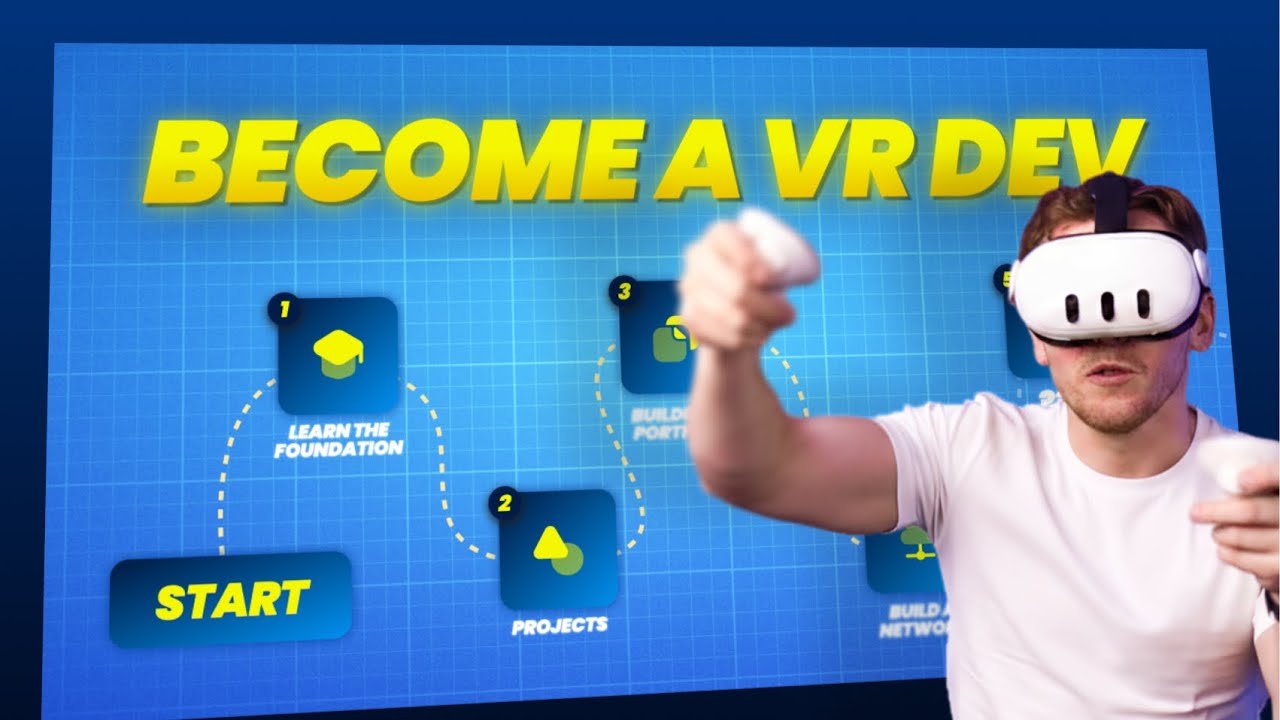
Step-by-Step Production Process
The practical workflow diverges based on format. For 360-degree video, the steps involve filming with omnidirectional cameras, stitching footage, and editing for seamless transitions. Interactive 3D experiences require software setup, movement implementation, and interactive object programming.
Asset development follows five essential stages: concept definition, 3D sculpting, UV mapping, baking and texturing, and final lighting. Time invested in the concept phase pays dividends throughout the entire creation process.
We recommend a two-step verification method. First, map the complete user journey to identify logical gaps. Second, design each scene with multiple attention elements since users look everywhere unexpectedly.
Tools, Software, and Hardware for VR Development
Tool selection separates successful projects from costly failures in immersive development. We approach this with a pragmatic framework that balances budget constraints against production requirements.
Choosing the Right Equipment and Software
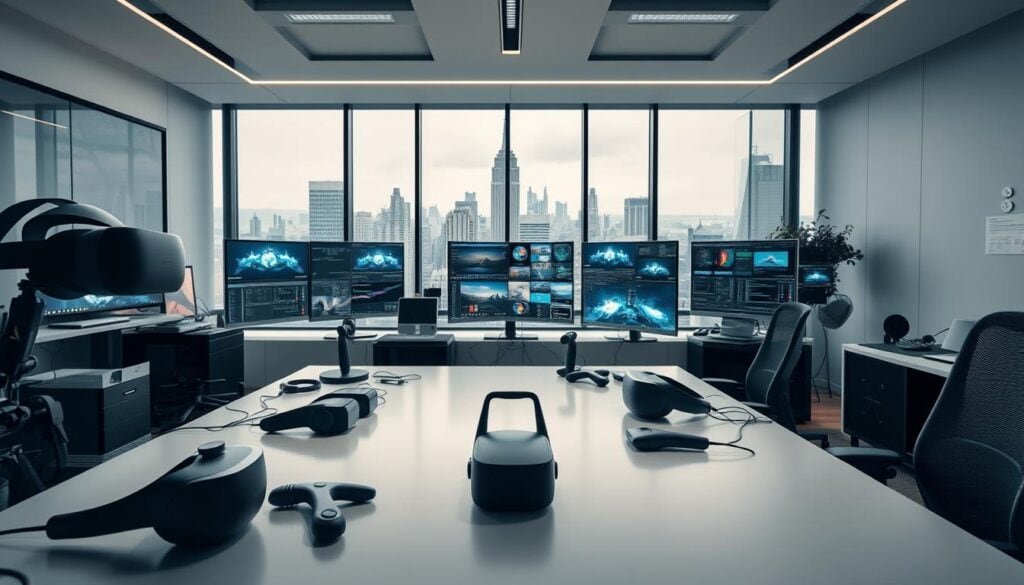
Equipment costs vary dramatically based on project scope. A basic 360-degree camera starts around $450, while professional models reach $5,000. Testing headsets like MetaQuest range from $300 to $500.
We recommend a tiered approach for beginners. Start with accessible tools like Microsoft Paint 3D for simple modeling. Audio equipment matters too—lavalier microphones from $15 to $2,800 significantly impact immersion quality.
Overview of Game Engines and 3D Modeling Tools
Game engines form the core of interactive development. Unity excels for cross-platform deployment across PC, console, mobile, and web. Unreal Engine delivers superior graphics for premium projects.
For 3D asset creation, Blender offers a free, powerful solution. Maya provides professional-grade animation tools for complex projects. Version control systems like Helix Core prevent catastrophic asset conflicts in team environments.
Digital asset management programs track hundreds of models and textures efficiently. This infrastructure maintains production velocity on complex immersive experiences.
Designing Immersive VR Environments and Experiences
The architecture of immersive digital spaces presents unique design challenges that separate successful projects from technical failures. We approach these environments with three non-negotiable constraints that dictate every production decision.
Object scale becomes critically important when users physically interact with digital items. What appears correct on a flat screen often feels uncomfortably large or small in three-dimensional space. This requires iterative testing with headsets during development.
Creating Interactive Versus Passive Content
The fundamental design dichotomy drives production resources: interactive experiences where users manipulate objects demand complex programming. Passive formats focus on environmental storytelling through spatial design and lighting.
Medical training simulations demonstrate the measurable ROI of properly designed learning experiences. Healthcare organizations use these digital worlds to let students practice procedures repeatedly. Data shows this preparation correlates with better patient outcomes in clinical settings.
Texture optimization represents one of the most overlooked performance factors. Combining multiple small textures into single large atlases reduces engine load times significantly. This optimization becomes critical when every millisecond affects user comfort.
We see training programs across industries adopting immersive learning because retention rates outperform traditional methods. Workers practicing equipment operation in digital environments make fewer costly errors during actual deployment.
Accessibility applications expand the market beyond entertainment. These experiences let people with physical limitations explore environments impossible in their daily lives. The technology creates opportunities for those with financial constraints to visit locations otherwise inaccessible.
Best Practices in Virtual Reality Content Creation
Professional teams treat version control as infrastructure, not optional software. This discipline separates sustainable projects from chaotic development cycles.
We implement systems like Helix Core specifically for handling massive binary files. The free tier supports small teams with robust change tracking.
Version Control and Asset Management
Multiple contributors working simultaneously demand conflict resolution capabilities. Manual tracking becomes impossible at scale.
Digital asset management tools provide visual libraries for rapid model location. This eliminates productivity-killing search time across hundreds of files.
Optimizing Performance and User Engagement
Maintaining framerates above 90fps prevents motion sickness. This requires aggressive polygon reduction and texture consolidation.
Realistic object scale at human reference level increases presence. Spatial audio cues guide attention more effectively than visual indicators alone.
Generative AI now creates personalized environments based on user behavior. Narratives dynamically evolve through individual choices and learning patterns.
Training simulations demonstrate measurable ROI across industries. Employees achieve competency faster with fewer errors than traditional methods.
Conclusion
Your success in this field hinges on a simple formula: specialized focus, consistent practice, and performance optimization. The $5.1 billion market for immersive experiences represents more than growth—it signifies a fundamental shift in how businesses operate across healthcare, retail, and education sectors.
We’ve outlined a structured approach: choose your specialization early, master core tools like Unity or Blender, and build a focused portfolio. This methodology separates hobbyists from professionals who deliver measurable business results. The development process demands both technical execution and user experience thinking.
Your immediate next steps are clear. Download the appropriate software, complete foundational tutorials, and build a simple project demonstrating core competencies. The knowledge foundation you’ve gained here provides the framework—consistent practice transforms it into career advancement.
FAQ
What software is best for beginners starting with VR development?
We recommend Unity for its extensive learning resources and user-friendly interface. It’s a powerful game engine that supports most headsets and has a massive asset store. For 3D modeling, Blender is our top choice—it’s free, open-source, and robust enough for professional projects.
Do I need to know how to code to create immersive experiences?
Not necessarily. While coding skills unlock advanced interactivity, several platforms offer visual scripting or drag-and-drop tools. However, learning basic programming, like C# for Unity, significantly expands your control over the environment and objects within your project.
How do I design an experience that avoids causing motion sickness?
Optimize performance to maintain a high, stable frame rate—this is critical. Use comfort modes like teleportation for movement instead of continuous locomotion. We also advise keeping the user’s point of view stable and avoiding rapid camera rotations that can disorient people.
What hardware is essential beyond a headset for production?
A powerful computer is non-negotiable for rendering complex environments. We also prioritize a good quality microphone for spatial audio and, depending on your project, a 360-degree camera for capturing real-world video. These tools are foundational for a high-quality result.
Can VR be used effectively for training and education?
Absolutely. Immersive simulations are transforming learning in industries like healthcare and manufacturing. They allow for safe, repeatable practice of complex skills. The key is designing scenarios with clear objectives and interactive feedback to maximize knowledge retention.
What’s the biggest mistake new creators make in their first project?
Over-scaling. Attempting a massive, open-world game right away leads to burnout. We insist you start small—create a single, polished scene. Focus on mastering the fundamentals of design, animation, and user interaction on a manageable scale before tackling larger endeavors.