
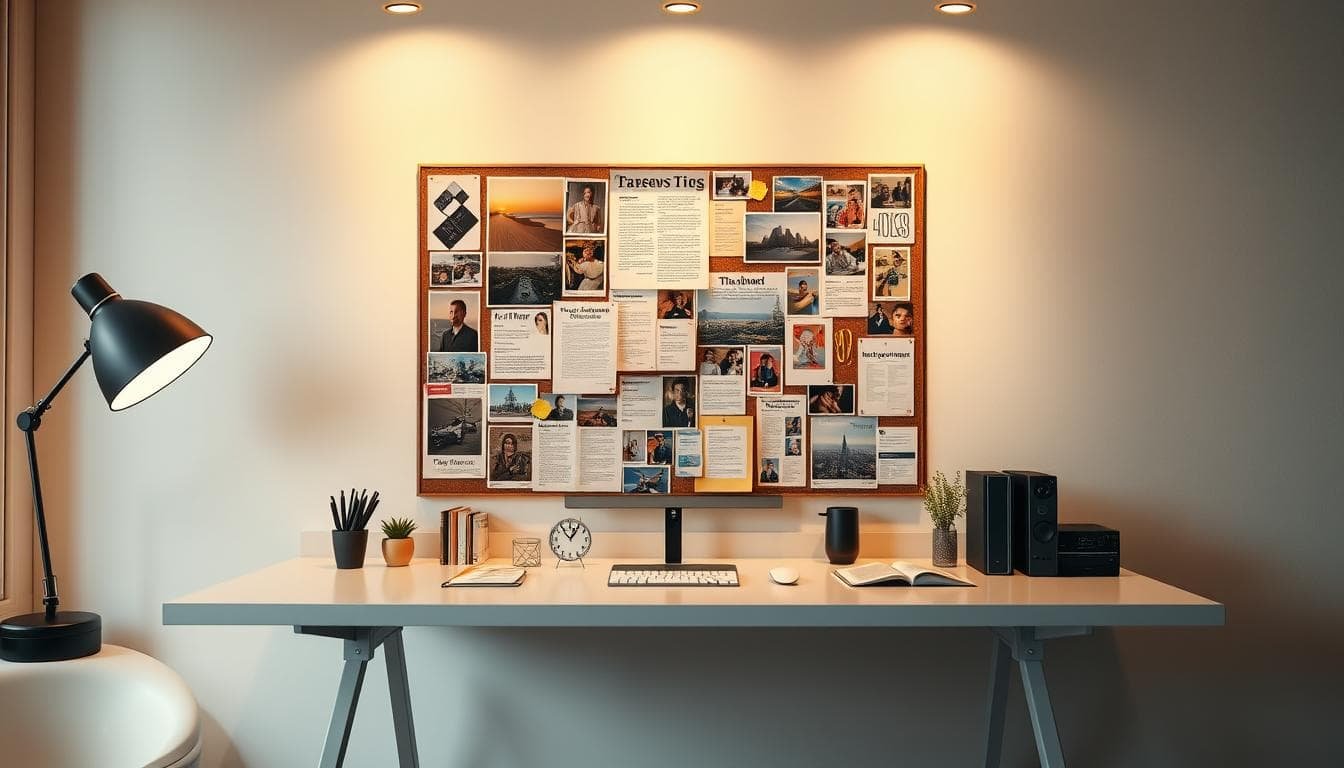
Forget abstract goal-setting that fades by February. We’re cutting through the productivity noise with a tool that delivers measurable results. This method transforms your career ambitions into a concrete visual roadmap you engage with daily.
This isn’t a creative exercise; it’s a strategic instrument. For over 20 years, practitioners have reported achieving specific outcomes: landing dream jobs, launching businesses, and securing promotions. The process works because it activates both conscious planning and subconscious pattern recognition.
We’ll show you a systematic approach that combines intention-setting with actionable execution. Your creation becomes a decision-making filter, helping you assess opportunities against the professional life you want to build. This is about creating a tangible tool for motivation and focus.
Key Takeaways
- Vision boards turn abstract career goals into a daily visual reminder.
- The practice is a strategic tool, not just a creative project.
- Documented use shows people achieve specific career milestones.
- The process combines conscious planning with subconscious activation.
- It acts as a filter for making career-aligned decisions.
- Focus is on practical application and clarifying what success looks like for you.
Understanding the Power of Vision Boards
The mechanism behind vision boards isn’t mystical; it’s rooted in cognitive science and practical reinforcement. We see them as strategic instruments that bridge the gap between abstract goals and tangible reality.

The Role of Visualization in Manifesting Dreams
This process combines conscious planning with subconscious activation. When you see your career objectives every day, your brain starts recognizing relevant opportunities.
It’s a documented technique. For over twenty years, people have reported achieving specific milestones. They land new roles, launch businesses, and author books.
How Vision Boards Boost Career Motivation
These tools make ambitious dreams feel achievable. This tangible quality directly fuels your motivation to take calculated risks.
The timeframe for results varies. Some objectives materialize in months; others take years. The consistent factor is increased likelihood of success compared to written lists alone.
Your creation acts as an accountability partner. It’s harder to ignore actions that don’t align with your desired professional life when your aspirations are visually present. This is how vision boards work to create lasting change.
Gathering Inspiration with Vision Board Ideas
We treat the inspiration phase as a strategic hunt, not a passive browse. This is where you build the raw material for your career roadmap.

Collecting Images and Words that Resonate
Start by gathering magazines from library free stacks or thrift stores. Clip everything that sparks a reaction—colors, powerful words, and interesting pictures.
Collect two to three times more material than you think you’ll need. This initial generosity is crucial. The real strategy happens during the curation process.
Your selection criteria should be visceral. Choose images that create a physical jolt of energy. If your heart skips a beat, it belongs on your creation.
Focus on the essence of your goals. A sunrise can represent a new beginning better than a literal office photo.
Using Magazines and Digital Resources for Creativity
When magazines lack specific career imagery, turn to digital resources. Search for precise terms like “women leading tech teams” to find the perfect pictures.
This blend of analog and digital sourcing ensures no goal is left unrepresented. The internet provides targeted options that print simply can’t match.
Don’t ignore the art of this process. Selecting and arranging these elements engages a different part of your brain. It helps you access what you truly want, not just what you think you should want.
Build a reserve file for future updates. Your professional path will evolve, and maintaining this library makes the process efficient.
Planning and Prioritizing Your Career Goals
We approach career planning with the same rigor as a business audit, starting with a clear-eyed status check. This initial step grounds your aspirations in reality, preventing a common pitfall: creating a beautiful but strategically empty collage.
Before gathering any materials, conduct a structured review of the past year. Grab a journal and assess your current position. What projects delivered the highest ROI? What tasks consistently drain your energy? This honest assessment is the foundation for meaningful goals.
Defining Clear Objectives and Intentions
Next, initiate a brain dump. Spend 20-30 minutes writing every career goal without filtering. Capture everything from “lead a team” to “master a new software.” This process unlocks ambitions you might otherwise dismiss.
The critical step is prioritization. Not all goals are created equal. Identify your top three to five objectives—the ones you really want to happen. These become the anchors for your creation.

We insist on defining two types of objectives. Outcome goals are destinations, like a specific job title. Process goals are the journey, like building a professional network. Success requires both.
| Goal Type | Definition | Example | Timeframe |
|---|---|---|---|
| Outcome Goal | A specific, measurable result | Earn a promotion to Director | 12-18 months |
| Process Goal | An ongoing activity or skill | Network with 5 industry leaders per quarter | Ongoing |
| Guiding Principle | A value or intention for how you work | Operate with “clarity” and “confidence” | Daily focus |
Finally, define your guiding principles for the year. Words like “strategic” or “innovative” shape daily decisions. This comprehensive planning process ensures your final tool is a powerful filter for opportunities, saving you time and aligning your actions with your true professional life.
Step-by-Step Guide to Creating Your Vision Board
Execution separates dreamers from achievers; this section transforms your career blueprint into a tangible tool. We’ll guide you through the physical creation process that turns intention into daily visual reinforcement.
Reflecting on Your Past Year and Aspirations
Begin with honest reflection before touching any materials. Review your career wins and lessons from the past year. This foundation prevents repeating ineffective patterns.
Understanding where you’ve been clarifies where you’re going. Document key insights in your journal to inform your selection process.
Selecting Materials and Tools
Gather your core materials strategically. You’ll need a sturdy poster board as your foundation. Collect magazines, scissors, and glue sticks for the classic approach.
For digital creators, platforms like Canva offer portable alternatives. These versions work well on your phone during commutes. Choose the method that fits your lifestyle.
Arranging and Gluing Your Elements for Impact
The arrangement step requires both intuition and strategy. Place images where they feel right initially. Then step back to assess if the layout reflects your true priorities.
Gluing represents your commitment moment. This physical act creates a psychological contract with your objectives. Follow this proven method to make vision creation effective.
| Method | Best For | Engagement Level | Update Frequency |
|---|---|---|---|
| Poster Board | Tactile learners | High | Low |
| Digital Vision Board | Frequent travelers | Medium | High |
| Hybrid Approach | Maximum impact | Very High | Medium |
Make sure your final arrangement places biggest goals prominently. This visual hierarchy reinforces what matters most in your career path.
Enhancing Your Vision Board for Daily Motivation
Most people fail at vision boards not during creation but during implementation. We treat engagement with the same discipline as quarterly business reviews.
Your creation becomes powerful through consistent exposure. Place it where you’ll encounter it multiple times each day.
Customizing Your Board with Personal Touches
Add tactical markers as you progress. Checkmarks or dates create visible momentum evidence.
Update elements quarterly when goals evolve. Replace achieved objectives with new targets to maintain forward movement.
Tips for Displaying and Engaging with Your Vision Board
Integrate viewing into existing routines rather than creating new habits. Morning coffee or evening wind-down work perfectly.
We recommend these engagement strategies:
- Set digital versions as phone lock screens and computer wallpapers
- Position physical boards in your primary work space for peripheral visibility
- Create weekly 5-minute review sessions to plan actionable steps
- Track concrete metrics that demonstrate alignment with your visualized path
Avoid the perfectionism trap. Your tool needs functional placement, not Pinterest aesthetics. When it becomes background noise, refresh the location or images to regain attention.
Conclusion
This isn’t about wishful thinking; it’s about strategic implementation that transforms professional aspirations into measurable outcomes. The data from practitioners with 20+ years of experience demonstrates clear patterns: people who engage with their visual tools regularly achieve higher success rates.
Your next step is immediate. Gather materials this week and block time for creation. Focus on career objectives that matter most. Don’t fall into the perfectionism trap—an imperfect tool you see daily outperforms a perfect one you never create.
Treat this as a living document with quarterly reviews. The minimal investment delivers substantial ROI in career clarity and motivation. Start today with one small action: write three goals in your journal or find one image representing your primary objective.
The real power emerges through daily engagement over weeks and months. Commit to placement and routine from day one. Your professional reality begins to shift when you combine visual reinforcement with consistent action.
FAQ
What is the best way to start a vision board for my professional life?
We recommend beginning with a quiet reflection session. Look back at your past year to identify what worked and what didn’t. Then, define clear, actionable career objectives. This foundation ensures the images and words you collect later will have deep personal meaning and direct your focus effectively.
Do I need to use a physical poster board, or can I create a digital version?
Both methods are powerful. A physical poster board offers a tangible, hands-on creative process. A digital collage on your phone or computer provides portability and easy updates. Choose the tool that fits your lifestyle best; the key is consistent daily engagement with the final product.
How often should I look at my career vision board?
For maximum impact, place your board where you will see it every day—like your home office wall or as your phone’s wallpaper. This daily exposure keeps your goals at the forefront of your mind, reinforcing your motivation and helping you make decisions aligned with your aspirations.
Can I include abstract concepts or only specific job titles?
Absolutely include abstract concepts. While a target job title is a great concrete goal, also use images that represent desired feelings: freedom, leadership, creativity, or financial abundance. These emotional drivers are often more powerful motivators than a specific title alone.
What if my career goals change after I create the board?
That’s a sign of growth! Your vision board is a dynamic tool, not a static contract. We encourage you to update it. Add new images, remove elements that no longer resonate, or even start a new one. This process ensures it always reflects your current ambitions and continues to serve as a relevant source of inspiration.