

The digital landscape is undergoing its most significant transformation since social media emerged. We’re witnessing a fundamental shift in how companies connect with audiences. The virtual world isn’t a distant concept anymore—it’s a $65.5 billion market that hit critical mass and is projected to reach $936.6 billion by 2030.
Nearly half of US consumers—47%—are ready to engage with companies in virtual spaces for early product access. This signals a massive change in what people expect from brands. Major players like Nike and Disney aren’t just testing the waters; they’re diving in headfirst.
We cut through the hype to deliver actionable strategies. This guide shows how virtual spaces redefine customer journeys and create new revenue streams. The question isn’t whether your business should enter—it’s how quickly you can establish presence and generate measurable ROI.
Key Takeaways
- The virtual world represents a $936.6 billion market opportunity by 2030
- 47% of US consumers are ready to engage with companies in digital spaces
- Industry leaders are making significant investments in virtual presence
- Virtual environments create immersive experiences traditional channels can’t match
- Early adoption provides competitive advantage before market saturation
- Virtual goods and services represent new revenue streams for forward-thinking brands
- Measurable ROI requires strategic planning rather than reactive participation
Understanding the Metaverse and Its Marketing Potential
Today’s most innovative brand interactions are happening not on websites or social feeds, but within persistent virtual environments. This represents a fundamental shift in how companies connect with audiences across digital landscapes.
Defining the Virtual World
The metaverse lacks a single definition, but we identify seven core attributes that characterize this emerging space. These include immersive domains using VR/AR, real-time uninterrupted engagement, and seamless integration between physical and digital realms.
A functioning virtual economy thrives on cryptocurrency and digital assets. Users gain agency through personalized avatars in endless, interconnected platforms. This isn’t science fiction—it’s Web 3.0, the internet’s third evolution driven by advanced technology.
Evolution from Traditional Marketing
Traditional approaches rely on passive engagement through videos and text. The virtual world transforms viewers into active participants who shape brand narratives. This mirrors the print-to-digital transition, but accelerates faster with greater competitive advantages.
Currently, 32% of US marketers favor Meta as their primary platform. Gaming environments like Fortnite (10%) and Minecraft (8%) emerge as viable alternatives. The key difference: traditional methods interrupt experiences, while virtual presence becomes the experience itself.
Exploring Metaverse Marketing Opportunities
Forward-thinking companies are discovering that virtual worlds offer more than just novelty—they deliver tangible business value. The data reveals a significant gap between recognition and action: 61% of marketers prioritize immersive experiences, yet only 6.9% report strong executive support.
Unlocking Immersive Experiences
We see three core capabilities driving success in digital environments. First, creating multi-sensory experiences that engage people beyond traditional screens. Second, enabling real-time peer interactions that 59% of marketers consider crucial.
The biggest challenges—brand awareness (68%), customer engagement (59%), and innovation (55%)—actually represent the biggest openings for differentiation. Early movers gain competitive advantage while others hesitate.
Innovative Virtual Engagement Strategies
Traditional influencer marketing grew 50% over five years on platforms like YouTube. The virtual space accelerates this trend by turning every user into a potential brand ambassador.
Smart brands build “always-on” environments where consumers can interact 24/7 without physical limitations. They combine interactive storytelling with gamification elements that feel like entertainment rather than advertising.
These approaches reach younger demographics who prefer experiential interactions and willingly spend on virtual goods. The opportunity lies in creating value that transcends traditional advertising formats.
Crafting Immersive Brand Experiences
True brand loyalty emerges when customers don’t just see your message—they live it through immersive digital experiences. We build environments where people become active participants in your story rather than passive observers.
The data confirms what we’ve observed: immersive experiences increase brand affinity by 60% and drive 90% better recall. This isn’t theoretical—it’s measurable business impact that separates leaders from followers.
Interactive Storytelling in Virtual Environments
Traditional advertising interrupts. Immersive storytelling invites participation. We transform customers from spectators into protagonists within your brand narrative.
Three-dimensional environments engage multiple senses simultaneously. Visual, auditory, and interactive elements combine to create emotionally resonant experiences that people remember and share.
Custom Digital Identities and Avatars
Avatars represent more than digital representations—they’re expressions of identity. When users customize their digital selves with your branded items, they’re making personal statements.
Brands like Nike and Gucci demonstrate how virtual goods create real-world desire. Users showcasing your products provide authentic endorsements to their networks.
The most effective approach gives users autonomy to shape their own narratives. This freedom drives engagement and creates loyal advocates who voluntarily promote your brand.
Leveraging Virtual Goods and Digital Collectibles
The economics of digital ownership are rewriting traditional business models. Virtual goods emerge as pure-margin revenue streams with minimal production costs.
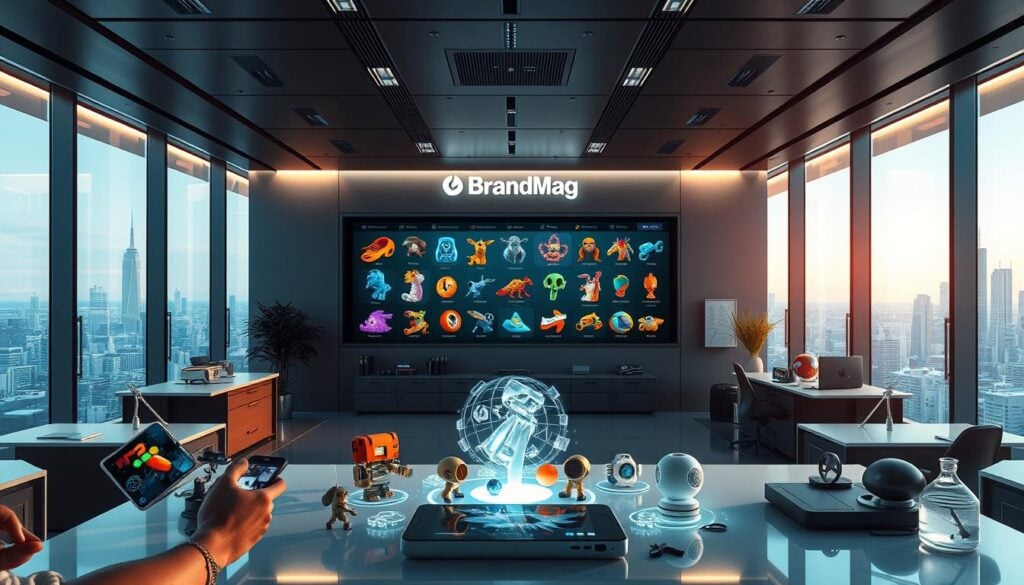
We see the virtual goods economy accounting for 40% of global gaming revenues. This market expansion reaches mainstream consumer brands through scalable digital products.
NFTs and Cryptocurrency Integration
Non-fungible tokens solve authenticity challenges in digital markets. Blockchain technology creates verifiable certificates of ownership for unique digital items.
Cryptocurrency enables seamless transactions within virtual environments. This reduces purchase friction and appeals to younger, crypto-native demographics.
Forward-thinking brands implement dual-product strategies. They pair physical items with virtual counterparts to increase perceived value.
| Business Aspect | Traditional Goods | Virtual Goods | Advantage |
|---|---|---|---|
| Production Cost | High manufacturing expenses | Minimal digital creation cost | 90%+ cost reduction |
| Inventory Risk | Physical storage and waste | Instant digital replication | Zero inventory overhead |
| Distribution | Complex logistics chain | Immediate platform delivery | Global instant access |
| Revenue Potential | Limited by physical constraints | Unlimited digital scalability | Exponential growth capacity |
Nike demonstrated this potential by netting $3.1 million from a single campaign. They paired authentic sneakers with virtual versions through their RTFKT acquisition.
Digital collectibles include virtual art, trading cards, and branded accessories. Customers showcase these across multiple platforms, extending organic brand reach.
Driving Customer Engagement in Virtual Spaces
We’re moving beyond passive scrolling to active participation in digital environments where customers control the experience. This shift represents the most significant advancement in brand-consumer relationships since social media emerged.
Traditional advertising interrupts. Virtual engagement invites. Users voluntarily explore branded spaces when they become destinations rather than distractions.
Interactive Ads and Real-Time Interactions
We see interactive ads transforming from interruptions to destinations. Customers spend meaningful time exploring virtual stores and trying products in realistic contexts.
Real-time responsiveness creates immediate value. Brands can personalize experiences based on user behavior within seconds. This builds stronger relationships through instant relevance.
The data confirms what we observe: immersive environments increase shopping time by 40% compared to traditional e-commerce. Customers make decisions with higher confidence when they can interact with products firsthand.
Gamified mechanics like scavenger hunts reward exploration. These approaches increase repeat visits and customer lifetime value. The key advantage is persistence—virtual spaces remain accessible long after campaigns end.
Brands that master real-time interactions create social experiences customers actively seek. This represents the future of meaningful customer engagement.
Integrating Metaverse Strategies with Traditional Marketing
The most effective marketing strategies now bridge digital and physical worlds rather than treating them as separate domains. We see this integration as the next logical step in customer engagement evolution.

Smart businesses treat virtual platforms as another channel in their mix. This approach creates cohesive experiences across all touchpoints. The technical infrastructure already supports seamless transitions.
Bridging Physical Stores and Virtual Showrooms
Companies like Domino’s demonstrate practical integration models. Customers can order real pizzas from virtual environments. This combines engagement benefits with traditional fulfillment.
Retailers including H&M and Diesel operate virtual stores in platforms like Second Life. Customers preview products before purchasing physical items. This reduces return rates and increases satisfaction.
We recommend using virtual spaces for immersive storytelling. Then drive conversions through preferred customer channels. The path from virtual browsing to real-world purchasing becomes frictionless.
Integration should leverage each channel’s unique strengths. Virtual showrooms can drive foot traffic to physical locations. In-store experiences can promote virtual communities.
The most successful approaches create unified customer journeys. They ensure consistent messaging across all touchpoints. This simplifies attribution while enhancing the entire buying experience.
Key Success Stories and Case Studies in the Metaverse
Concrete results now validate what early adopters predicted: virtual engagement delivers measurable ROI. We see leading companies generating significant revenue while building authentic connections.
These examples demonstrate how digital spaces create tangible business value. They show what works when strategy meets execution.
Brands Pioneering Virtual Experiences
Nike’s RTFKT acquisition generated $3.1 million by pairing physical sneakers with virtual versions. This approach creates pure-margin revenue while extending brand presence.
Gucci transformed luxury branding with their Roblox Garden experience. Multi-room virtual exhibits feature avatars as mannequins, creating immersive storytelling.
Entertainment companies like Warner Bros. hosted virtual premiere parties that expanded event capacity dramatically. These examples prove virtual spaces overcome physical limitations.
Impactful Campaigns and User-Generated Content
Vans built an authentic skatepark on Roblox that engages younger audiences. Balenciaga’s Fortnite partnership offers virtual wearables that players actively purchase and showcase.
Coca-Cola’s evolving digital collectibles create ongoing engagement. BMW’s virtual showrooms let customers explore cars before dealership visits.
These campaigns share a common thread: they create genuine value for users while driving business results. The most successful approaches integrate seamlessly with existing brand identities.
Challenges and Considerations for Marketing in the Metaverse
Before diving into immersive digital spaces, companies must confront several critical obstacles. The data reveals significant hurdles: 68% of marketers struggle with brand awareness, 59% with customer engagement, and 55% with innovation. These challenges test organizational readiness.
Privacy, Security, and Ethical Concerns
Virtual environments collect extensive behavioral data that raises legitimate privacy questions. Bad actors could exploit new vulnerabilities through hacking or fraud. We see ethical considerations emerging around data collection practices.
Targeting vulnerable demographics requires careful consideration. Businesses must establish robust security protocols and transparent data practices. This builds consumer trust as the digital landscape matures.

Measuring ROI and Audience Engagement
Determining which platform aligns with your target audience remains complex. Traditional KPIs don’t capture virtual engagement effectively. We need new metrics like virtual foot traffic and engagement duration.
The leadership gap is striking—only 6.9% have strong executive support despite high innovator engagement. Measuring effectiveness requires correlating virtual interactions with real-world business outcomes. Smart businesses approach these challenges systematically through pilot programs and cross-functional teams.
Future Trends and Innovations in Metaverse Marketing
Market projections reveal an undeniable shift toward immersive digital economies that demand strategic adaptation. The numbers tell a compelling story: from $65.5 billion in 2022 to an expected $82 billion this year, this space is accelerating rapidly.
McKinsey’s analysis shows over $120 billion flowed into these technologies in 2022 alone. This signals serious corporate commitment beyond speculative interest.
Market Projections and Emerging Technologies
The VR market exemplifies this growth—expanding from $5 billion in 2021 to a projected $12 billion by 2024. This makes immersive tech increasingly accessible to mainstream audiences.
Advertising spending patterns confirm the shift. US digital advertising will grow 6.2% in 2023, with double-digit growth projected through 2029. Gaming platforms like Fortnite and Minecraft are becoming primary channels for reaching people.
Adapting to Continuous Digital Evolution
Forward-looking companies are establishing dedicated teams and long-term strategies. They recognize that delaying entry means ceding advantages to first movers.
The harsh reality: brands that fail to develop capabilities risk becoming irrelevant to younger audiences. These emerging platforms demand continuous learning and flexible approaches.
Adaptation requires staying informed as technologies evolve rapidly. Marketing teams must experiment constantly and remain ready to pivot strategies as the landscape changes.
Conclusion
The data leaves no room for debate: virtual engagement is transitioning from experimental to essential for business growth. With a projected $936.6 billion market by 2030, ignoring this space means ceding competitive advantage.
Nearly half of US consumers—47%—are ready to interact with companies in digital environments. This isn’t theoretical; it’s measurable demand. Forward-thinking organizations recognize that metaverse marketing represents the next evolution in customer relationships.
We’ve moved beyond speculation. Major brands are generating real revenue and building authentic connections through immersive experiences. The challenges are manageable with strategic planning.
The risk of inaction now exceeds the risk of experimentation. Businesses that establish their presence today will lead tomorrow. Those who delay will spend years playing catch-up in an increasingly saturated landscape.
FAQ
What exactly is the metaverse for businesses?
We see it as a network of persistent, shared virtual worlds where brands can interact with consumers. It’s an evolution of the internet into a more immersive, 3D space where people use avatars to socialize, work, and shop. For companies, it’s a new frontier for building community and creating unique experiences beyond a standard website.
How can a brand start engaging in this virtual space?
Begin by identifying your goal—whether it’s brand awareness, product launches, or direct sales. A practical first step is to establish a presence on an existing platform like Roblox or Fortnite Creative. Launch a simple interactive experience or virtual event that aligns with your core values to test audience reception before investing heavily.
Are virtual goods and NFTs still relevant for customer engagement?
Absolutely, but the approach has matured. The focus is shifting from speculative assets to functional digital products that enhance user experience. For example, a branded cosmetic item for an avatar or a digital twin of a physical product can drive engagement and create new revenue streams when integrated thoughtfully into a larger strategy.
How do we measure success and ROI in these environments?
We prioritize metrics tied to business outcomes. Look beyond simple foot traffic; track engagement time, conversion rates for virtual goods, and the sentiment of user-generated content. The most telling metric is often the cost of acquiring a highly-engaged customer within the platform compared to traditional digital channels.
What are the biggest risks or challenges we should anticipate?
The primary concerns are user privacy, platform stability, and brand safety. These are nascent technologies, so protocols are still developing. We advise starting with clear terms of service, investing in moderation for user-generated content, and choosing partners with robust security measures to protect your company and your audience.
Can these virtual strategies be connected to physical stores or products?
Yes, and this integration is where we see immense potential. Brands like Nike and Gucci are already bridging the gap. You can offer exclusive physical products to owners of specific digital items or use augmented reality to let users “try on” products in their real-world environment, creating a seamless omnichannel journey.