

The hype cycle is over. We’re moving past the theoretical to the tangible. In 2025, this powerful technology is generating measurable returns for forward-thinking organizations.
This isn’t about cryptocurrency speculation. We’re talking about a fundamental shift in operational trust and efficiency. Companies are now leveraging its unique attributes to solve real-world problems.
This guide cuts through the noise. We show you exactly where this technology creates value today. We focus on manufacturing, finance, and logistics sectors where the impact is already proven.
Major players like Walmart and IBM run production-scale networks. They process millions of transactions, proving the concept’s maturity. The future is here, and it’s built on a foundation of shared, secure data.
We’ll break down the four core pillars that deliver this value: consensus for trust, replication for integrity, immutability for audit trails, and robust security. These elements eliminate duplication and build stakeholder confidence across industries worldwide.
Key Takeaways
- The focus in 2025 is on measurable ROI, not theoretical potential.
- Practical use cases extend far beyond cryptocurrency into core operations.
- The technology has matured, with major corporations running large-scale networks.
- Value stems from four key attributes: consensus, replication, immutability, and security.
- These applications are transforming supply chains, finance, and logistics right now.
- Implementation strategy is critical to avoid the pitfalls of early adoption.
- This guide provides actionable intelligence for strategic deployment.
Understanding the Core Elements of Blockchain Technology
Many misunderstand the technology’s foundation, focusing on outcomes rather than the architectural principles that enable them. We see its power in the specific way it handles information.
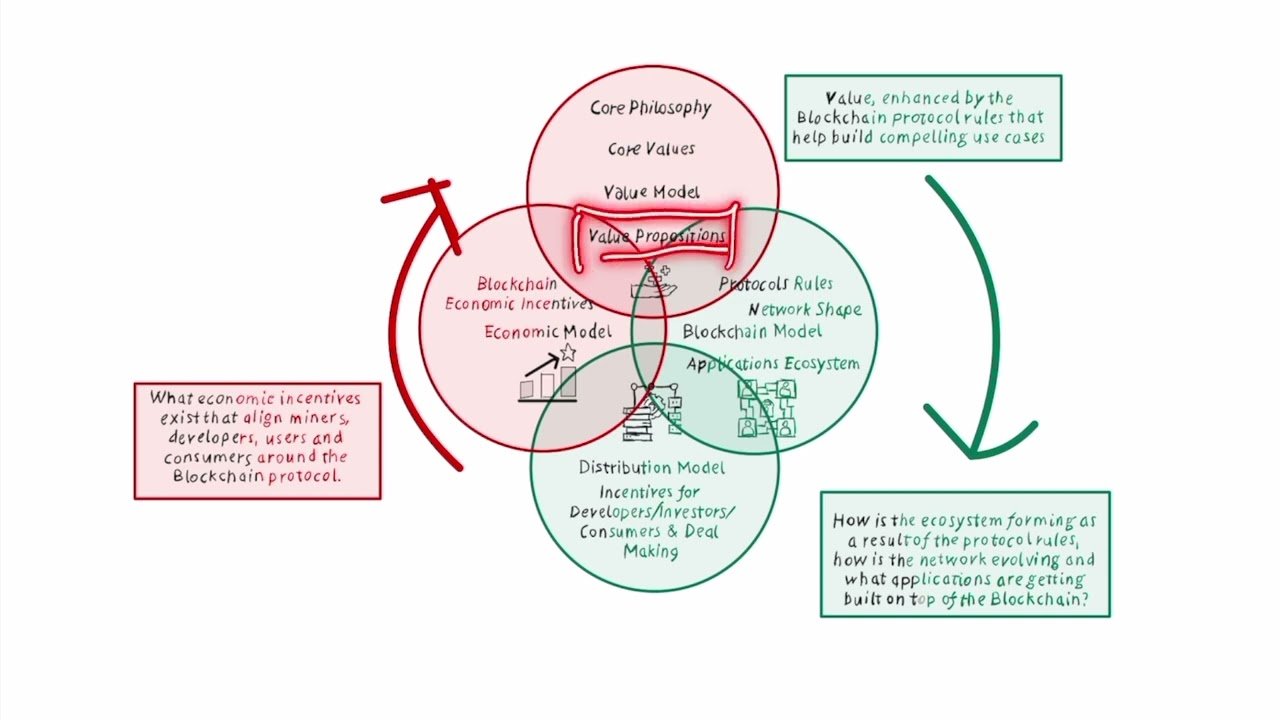
This system operates as a shared database. Records, or blocks, link together in a chain using cryptography. Each new block reinforces the one before it, creating a permanent sequence.
Decentralization, Consensus, and Security
No single entity controls the ledger. Instead, a network of participants maintains identical copies. This decentralization removes central points of failure.
Trust comes from consensus. All participants must agree on a transaction’s validity before it joins the chain. Protocols like Proof of Work or Proof of Stake manage this agreement.
Security is inherent. Cryptographic algorithms protect the data. An attacker would need overwhelming control of the network, a feat that becomes impractical at scale.
Immutability and Distributed Ledgers
Once validated, a record cannot be altered or deleted. This immutability creates a perfect audit trail. It eliminates disputes over historical data.
The ledger is distributed. Authorized participants have simultaneous access to the same information. When one node updates a record, all others see the change instantly.
This synchronization ensures everyone operates from a single source of truth. It removes the delays and errors of reconciling separate databases.
| Feature | Traditional Centralized Ledger | Distributed Ledger Technology |
|---|---|---|
| Control | Single authority | Network consensus |
| Data Integrity | Mutable, can be changed | Immutable, permanent record |
| Access | Restricted, centralized | Simultaneous, permissioned |
| Security Model | Perimeter defense | Cryptographic and consensus-based |
| Settlement Time | Days for complex transactions | Minutes or seconds |
Effective Strategies for Implementing Blockchain in Business
A successful integration begins not with code, but with a clear-eyed assessment of your operational weaknesses. We recommend a phased approach. This ensures every step delivers tangible value.

Assessing Business Needs and Opportunities
Start with a ruthless pain-point analysis. Identify where your current processes suffer. Look for slow settlement time, lack of transparency, or trust gaps between partners.
Map your entire value chain. This prevents companies from building solutions for non-existent problems. Focus on high-friction areas where multiple parties share data.
The choice between public and private networks isn’t academic. It directly impacts cost, speed, and control. Your assessment dictates the best way forward.
Designing and Prototyping Your Blockchain Ecosystem
Begin with one high-impact pilot. Avoid enterprise-wide transformation initially. Prove ROI on a smaller scale first.
Your design must specify technical needs upfront. Define the consensus protocol, data architecture, and governance rules. Identify key participants and their roles.
Prototyping on testnets is non-negotiable. This is where you refine user experience and debug smart contracts. Partnering with specialists during this phase reduces risk significantly.
These strategies turn theoretical potential into operational advantage. They provide a clear path for businesses ready to use this technology effectively.
Exploring Practical Use Cases Across Industries
Across manufacturing, finance, and logistics, we see a common pattern: shared data ledgers eliminating costly friction. These deployments are not experiments. They are production systems delivering measurable returns.

Enhancing Supply Chain Transparency and Efficiency
Global supply chains represent the most mature area for this technology. The core problem is a lack of a single truth. Multiple parties—shippers, ports, customs—often work from conflicting data.
This system creates a unified record. Walmart’s famous example traces mangoes back to the farm in 2.2 seconds, not six days. Such speed transforms recall management and builds consumer trust.
The impact extends beyond food. Pharmaceutical companies use it to combat counterfeit drugs. Every pill’s journey is recorded, ensuring authenticity from factory to patient.
Innovations in Finance, Healthcare, and Retail
Financial applications target slow, expensive intermediaries. Cross-border payments now settle in minutes for a fraction of the cost. Trade finance automates reconciliation between exporters, importers, and banks.
In healthcare, patients control their medical history across different providers. They share records securely while maintaining privacy. This solves critical data-sharing problems.
Retailers like Home Depot use the technology to resolve vendor disputes. An immutable record of orders and shipments means all parties see the same facts. Disputes drop dramatically, saving millions.
These diverse applications share a DNA: multiple entities needing to trust shared data without a central authority. If your operations involve complex reconciliation, this approach offers a clear path to efficiency.
Maximizing ROI and Overcoming Challenges in Blockchain Projects
The financial justification for distributed ledger technology comes down to three core value drivers. We see consistent returns from eliminating intermediaries, automating manual work, and reducing disputes. These benefits translate directly to improved unit economics.
Cost Reduction through Automation and Smart Contracts
Smart contracts deliver the most immediate efficiency gains. They automatically execute when predetermined conditions are met. Insurance claims that took weeks now process in hours.
Supply chain payments release instantly upon delivery confirmation. This automation cuts administrative overhead by 30-70%. Human error drops dramatically across all processes.

Sustainable Solutions and Addressing Environmental Concerns
Energy consumption remains a critical consideration. Proof-of-Work systems consume electricity comparable to small countries. This creates both sustainability issues and reputational risks.
The solution lies in modern alternatives. Proof-of-Stake mechanisms reduce energy use by over 99%. Private networks typically consume far less power than public cryptocurrencies.
| Feature | Proof-of-Work (PoW) | Proof-of-Stake (PoS) |
|---|---|---|
| Energy Consumption | Extremely high | Minimal |
| Hardware Requirements | Specialized mining equipment | Standard servers |
| Transaction Speed | Slower settlement time | Faster processing |
| Environmental Impact | Significant carbon footprint | Negligible emissions |
| Business Applications | Limited suitability | Ideal for enterprise use |
When selecting technology, factor energy costs into your total ownership calculation. The right choice aligns with both financial and sustainability goals. For deeper insights on measuring impact, explore our analysis of ROI of enterprise blockchain.
Conclusion
We’ve moved from theoretical promise to practical implementation across global operations. The potential is now realized through measurable returns in diverse industries. This technology delivers value where traditional systems create friction.
Successful strategies start with focused pilots rather than enterprise-wide transformation. Companies prove ROI on specific pain points first. This measured way forward ensures sustainable adoption.
The future belongs to organizations that view this as a strategic tool. They focus on high-impact applications involving multiple parties sharing data. The competitive advantage shifts to those who execute effectively.
Your journey begins with assessing where trust gaps or reconciliation costs time and money. Start small, measure results, and scale what works. The world of enterprise technology has embraced this approach—your business can too.
FAQ
How does blockchain technology create value for supply chain management?
We see its primary value in creating an unchangeable, shared record of transactions. This ledger provides full visibility into a product’s journey. Every participant in the network—from manufacturer to end customer—can access the same trusted information. This transparency drastically cuts down on disputes, delays, and fraud, leading to more efficient logistics and stronger trust among all parties.
What are smart contracts, and how do they automate business processes?
Think of smart contracts as self-executing agreements with the terms written directly into code. They run on the distributed ledger and automatically trigger actions when preset conditions are met. For example, a payment can be released the instant a shipment’s delivery is verified. This automation removes intermediaries, reduces administrative costs, and speeds up transaction times across various industries.
Is implementing a blockchain solution only relevant for large enterprises?
A> Absolutely not. While large companies were early adopters, the technology’s potential is now accessible to businesses of all sizes. Many service providers offer scalable solutions that don’t require massive upfront investment. The key is to identify a specific operational issue—like document verification or payment reconciliation—where the inherent security and transparency of a distributed network can deliver a clear return.
Beyond cryptocurrencies, what are other real-world applications?
The applications extend far beyond digital currencies. In healthcare, it secures patient records. In retail, it verifies product authenticity. For legal and real estate industries, it streamlines title transfers and contract management. Any process that relies on a trusted, tamper-proof record of information is a candidate for innovation using this technology.
How do companies address the environmental concerns associated with some blockchain networks?
This is a critical question. The high energy consumption is often tied to specific “proof-of-work” consensus mechanisms. The market is rapidly evolving towards more sustainable models like “proof-of-stake,” which use a fraction of the energy. When evaluating providers, we advise businesses to prioritize these energy-efficient protocols to ensure their solutions are both effective and environmentally responsible.