
Most business gatherings drain resources without delivering real value. The data speaks volumes: 67% of executives consider their meetings outright failures. This isn’t just perception—it’s a systemic problem costing companies dearly.
Professionals waste an average of 31 hours monthly in unproductive sessions. That’s nearly an entire work week lost to discussions that go nowhere. Senior roles face even greater time drains, spending 35% of their workweek in these gatherings.
The financial impact is staggering. Unproductive meetings cost organizations at least $25,000 per employee annually. This directly hits your bottom line while damaging team morale and creating cultures of inefficiency.
We’re cutting through the corporate theater with evidence-based strategies. Traditional solutions like better agendas barely scratch the surface of a deeper issue: how most gatherings fundamentally contradict effective information processing.
Our approach transforms time-wasting obligations into structured, outcome-focused sessions. We provide frameworks that actually move projects forward and reclaim valuable work hours.
Key Takeaways
- 67% of executives view their meetings as complete failures
- Professionals waste 31 hours monthly on unproductive sessions
- Senior roles spend 35% of their workweek in meetings
- Inefficient gatherings cost $25,000 per employee annually
- Traditional solutions like better agendas are insufficient
- The problem stems from fundamental design flaws in meeting structure
- Evidence-based strategies can transform meeting effectiveness
Understanding the Hidden Costs of Unproductive Meetings
Corporate America’s meeting culture creates a silent drain on both financial resources and human potential. We need to look beyond the obvious calendar blocks to understand the true impact.
Impact on Time and Efficiency
U.S. employees spend 20-35% of their workweek in various sessions. Senior leaders face the heaviest burden, losing over a third of their productive hours.
Time fragmentation destroys deep work capabilities. Constant switching between discussions and independent tasks creates cognitive overload. Team members struggle to achieve the focused states where real innovation happens.
The Financial and Emotional Toll
The financial damage reaches $25,000 per employee annually. This represents pure waste that could fund actual value-creating work instead.
In-person gatherings are the worst offenders. They demand over 53 hours of combined preparation and attendance while costing $5,197.50 on average.
The emotional cost compounds the financial damage. Meeting fatigue leads to burnout and disengagement as professionals watch their workdays consumed by ineffective discussions.
The Core Challenges Behind Ineffective Meetings
The architecture of most corporate discussions fundamentally conflicts with human cognitive patterns. We see the same destructive dynamics emerge regardless of industry or company size.
Structural flaws create predictable failures. These aren’t personality problems but system failures that demand redesign.
Information Overload and Communication Breakdowns
Data dumps paralyze decision-making. Too much information overwhelms team members without proper frameworks.
Virtual environments amplify these issues. Missing body language cues and technical glitches disrupt information flow.
Different people leave with completely different understandings. This misalignment guarantees follow-up meetings to clarify what should’ve been resolved.
Groupthink and Dominant Voices
Extroverted or senior team members consistently control the conversation. Introverts and junior staff with valuable insights stay silent.
Harmony becomes the enemy of innovation. Team members self-censor to avoid conflict, leading to mediocre consensus.
Off-topic discussions derail focus. Without enforcement mechanisms, circular conversations consume time without producing outcomes.
The default response to failed meetings? Schedule another one. This creates a vicious cycle where gatherings multiply to fix problems caused by previous ineffective discussions.
How to Implement Effective Meeting Frameworks
The real breakthrough in collaborative work comes from abandoning the traditional meeting format entirely. We replace chaotic open-discussions with structured workshops designed for tangible outcomes.
Transitioning from Open Discussions to Structured Workshops
Workshops eliminate the faulty dynamics that plague conventional meetings. They impose frameworks preventing groupthink and ensuring equal participation.
Structured processes replace people talking over each other. Each participant’s input gets captured systematically. This maintains relentless focus on objectives.
Consider proven workshop formats like Lightning Decision Jam. It moves from problem identification to prioritized solutions in under one hour. Problem Framer workshops excel at project kick-offs, ensuring everyone aligns on challenge definitions.
Establishing Clear Meeting Objectives
Clear objectives before the session starts are non-negotiable. If you cannot articulate the specific decision or outcome required, cancel the meeting immediately.
The transition requires facilitator training and initial team buy-in. However, productivity gains justify the upfront investment within the first few sessions.
Action Board workshops excel at decision-making by visually mapping options against criteria. This makes the rationale transparent and ensures everyone understands why specific choices were made.
Meeting Productivity Tips to Enhance Collaboration
The tools we choose determine whether our virtual sessions build momentum or create confusion. We focus on practical strategies that transform discussion into decisive action.
Choosing the Right Tools and Techniques
Collaboration platforms should enforce workflow discipline, not just provide digital whiteboard space. We recommend tools with built-in structure that guide teams toward outcomes.
Multi-layered voting eliminates endless debate cycles. This technique systematically narrows options through structured input. Teams move from brainstorming to decision in minutes rather than hours.
The Effort/Impact Scale forces pragmatic prioritization. Plotting ideas against two axes reveals which action items deliver maximum value with minimum resource investment.
Ensuring Clear Next Steps and Action Items
Every session must end with assigned tasks, designated owners, and specific deadlines. Scheduling another gathering is never an acceptable next step.
Effective action items require three elements: what needs completion, who owns it, and when it’s due. Anything less creates ambiguity that guarantees follow-up won’t happen.
We recommend starting with one technique per session. Master it before adding the next approach. This prevents overwhelming your team while building sustainable improvement.
Setting the Stage: Pre-meeting Preparation and Tools
Success in collaborative sessions is determined more by what happens before they start than during the actual discussion. We treat preparation as the non-negotiable foundation that separates productive gatherings from time-wasting exercises.
Crafting Detailed Agendas in Advance
Your agenda serves as the session’s blueprint. Send it 24 hours before the gathering with crystal-clear purpose and expected outcomes. Vague agendas guarantee vague results.
Include specific time allocations for each topic and required pre-work. Participants should digest background materials in five minutes, not fifty. This discipline ensures everyone arrives prepared and focused.
Selecting the Appropriate Participants
Apply the RACI model ruthlessly: invite only Responsible and Accountable team members. Limit attendance to seven people per facilitator—more creates facilitation chaos.
Use scheduling tools like YouCanBookMe to eliminate email back-and-forth. Data shows 10 am as the optimal booking slot. Diverse perspectives drive better decisions, but overcrowding dilutes focus.
Every attendee should know their expected contribution beforehand. Ambiguity about why someone is present guarantees disengagement and wasted time.
Mastering Facilitation: Keeping Discussions On Track
The single most transformative element in any collaborative session is skilled facilitation that maintains momentum and focus. We see facilitation as the engine that drives gatherings from chaotic debates to structured outcomes.
Appointing a Facilitator and a Decider
A dedicated facilitator transforms meeting dynamics immediately. This person guides the process, stops circular discussions, and ensures concrete outcomes. The facilitator mindset is “guide not hero”—helping participants do their best work.
Every session needs a designated Decider with authority to make final calls. This person should have the highest stake in the outcome, typically a product owner or manager. Flat hierarchy fantasies waste time and create accountability vacuums.
| Role | Primary Responsibility | Key Mindset | Decision Authority |
|---|---|---|---|
| Facilitator | Guides discussion process | Guide, not hero | Process decisions only |
| Decider | Makes final content decisions | Accountability owner | Full decision authority |
Strategies for Managing Difficult Participants
Managing challenging team members requires direct action. Set ground rules upfront and use a Parking Lot for off-topic tangents. Give troublemakers specific tasks that channel their energy productively.
Probing questions are your secret weapon when faced with difficult questions. “What’s behind you asking that?” buys thinking time while validating the questioner. For persistent issues, use the nuclear option: private conversation followed by removal if necessary.
Facilitation is a learnable skill that dramatically increases career value. Becoming known as the person who makes sessions productive makes you indispensable across projects.
Leveraging Visuals and Creative Approaches in Meetings
We bypass verbal miscommunication by making every conversation tangible and visible. Traditional discussions rely on fragile memory and interpretation. Visual methods create shared understanding that words alone cannot achieve.
Using Whiteboards and Sticky Notes for Clarity
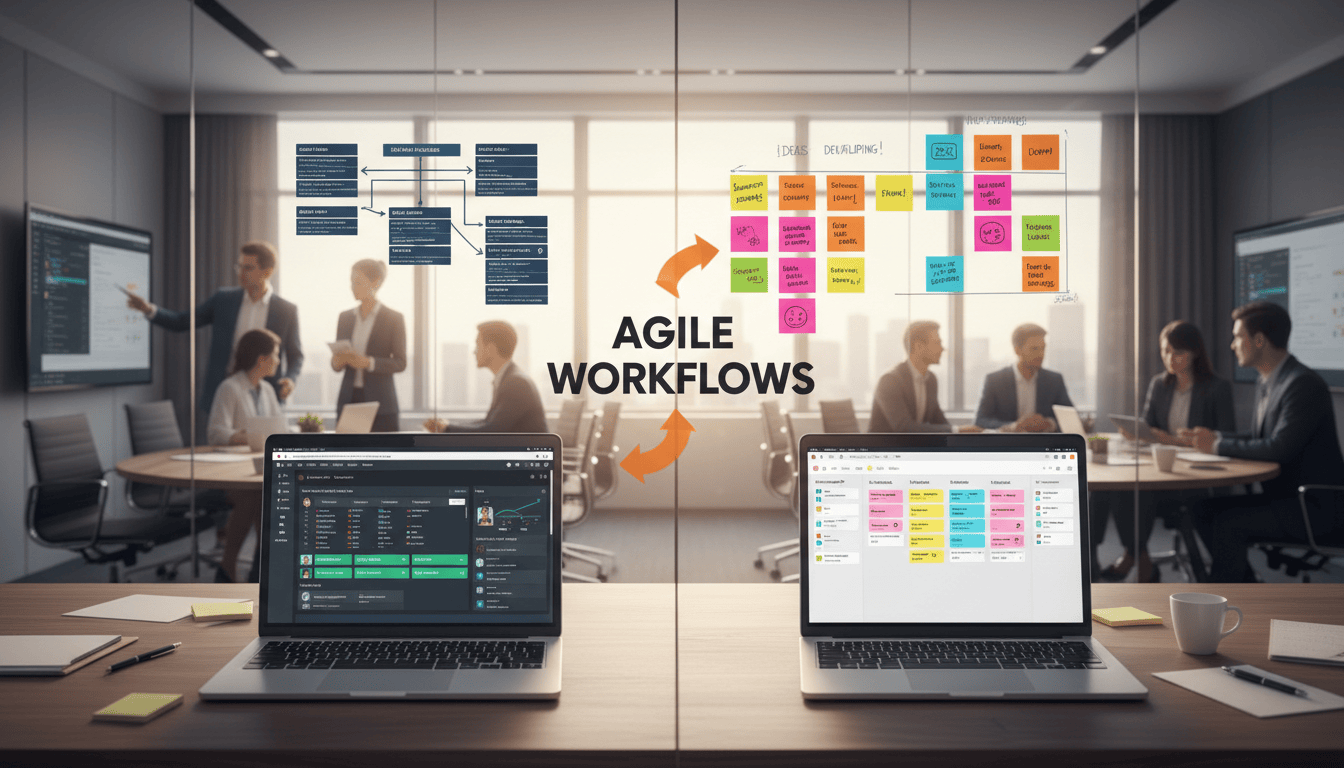
Sticky notes serve as cognitive offloading mechanisms. They free mental capacity from remembering details. This allows genuine focus on problem-solving instead of information retention.
The “alone, together” technique revolutionizes brainstorming. Participants silently write ideas simultaneously. Anonymized posting eliminates groupthink and social pressure.
Remote collaboration tools like Miro replicate physical sessions digitally. Distributed teams gain structured visual collaboration despite geographic separation. Standardized color coding creates instant organization.
We champion “show, don’t tell” for explaining concepts. Use actual screenshots, sketches, or role-playing instead of abstract descriptions. Concrete examples prevent interpretation differences.
Visual clarity accelerates decision-making dramatically. Participants point at options and move ideas physically. Patterns emerge that remain invisible in verbal discussions.
Introverts and junior members contribute better insights through visual methods. They avoid competing with loud voices. Thoughtful contributions get equal visibility without pressure.
Time Management: Time-boxing and Sequencing Meeting Activities>
We combat Parkinson’s Law by designing sessions with intentional constraints that force efficiency. Traditional gatherings expand to fill available time, but disciplined time management creates focus that cuts through corporate theater.

Allocating Tight Time Slots to Encourage Focus
Time-boxing transforms discussions by assigning specific minutes to each agenda item. When the clock expires, we move forward regardless of whether everyone feels “done.” This constraint drives brains directly into solution mode.
We intentionally make slots feel slightly too tight. Comfortable timelines encourage rambling, while pressure forces efficient thinking. A 60-minute session often consumes the full hour even when work could be done in 20 minutes.
Sequencing Discussion Phases for Better Flow
Sequencing prevents chaos by dividing gatherings into clear phases. First, define the challenge completely. Only after this phase concludes do we switch to solution generation.
Micro-sequencing controls speaking order. Instead of open discussion where people talk over each other, structure contributions so only one person speaks at a time. This maintains topic focus and prevents new challenges from emerging during solution mode.
| Approach | Time Allocation | Participant Focus | Outcome Quality |
|---|---|---|---|
| Traditional Meeting | Open-ended | Scattered attention | Variable, often poor |
| Time-Boxed Session | Strict 15-30 minute slots | Intense concentration | Consistently high |
| Sequenced Discussion | Phased progression | Logical flow | Structured decisions |
Ending on time even with incomplete agendas isn’t failure—it’s discipline. This forces realistic scoping and shows respect for participants’ valuable work hours.
Post-Meeting Strategies: Action Items and Accountability
Execution separates productive gatherings from corporate theater. Without disciplined follow-through, even the best-structured discussions become wasted hours.
We treat the final minutes as critical decision-making time. Always conclude with clear next steps—even without full resolution. Scheduling another session is never an acceptable action item.
Documenting Minutes and Next Steps
Effective documentation focuses on outcomes, not conversation transcripts. Your minutes should capture decisions and assigned tasks exclusively.
Every action item requires three non-negotiable elements: specific description, single owner, and concrete deadline. Ambiguity in any element guarantees failure.
Distribute notes within two hours while context remains fresh. Waiting until tomorrow means participants forget critical details that informed decisions.
Use tools like Asana or Trello to track follow-up actions. Visible status updates create social pressure for completion. AI note-takers like Bluedot automatically generate accurate summaries.
Resurface Parking Lot items during wrap-up. Decide immediately whether each deferred topic becomes an action item, gets scheduled separately, or gets dropped entirely.
Ensure everyone confirms their understanding before leaving. Verbal confirmation prevents the “I didn’t know” excuse that derails timelines.
Tools and Technologies to Boost Meeting Efficiency
Technology should eliminate friction, not create new administrative burdens. We select tools that enforce productive patterns rather than replicating bad habits digitally.
The right stack integrates scheduling, documentation, and task tracking seamlessly. This creates continuity across sessions without manual data transfer.
Utilizing Scheduling and Collaboration Software
Scheduling tools like YouCanBookMe eliminate email back-and-forth. Participants self-select times from available slots with automated confirmations.
Online calendars prevent conflicts while collaboration platforms enable real-time agenda building. These tools create structure before gatherings even begin.

AI-Powered Note Takers and Visual Collaboration Platforms
AI note-takers transform documentation by automatically generating summaries. This removes manual note-taking that divides attention during discussions.
Visual platforms like Miro replicate physical whiteboard functionality for remote teams. They enable structured brainstorming with sticky notes and real-time collaboration.
| Tool Category | Primary Function | Key Benefit | Integration Level |
|---|---|---|---|
| Scheduling Software | Time coordination | Eliminates email tennis | Calendar sync |
| AI Note-Takers | Automated documentation | Action item extraction | Video platform integration |
| Visual Collaboration | Remote whiteboarding | Structured brainstorming | Real-time editing |
| Task Management | Action tracking | Accountability enforcement | Automatic population |
Task management systems track follow-up actions with visible deadlines. They create transparency across teams while ensuring accountability.
We prioritize tools that require under five minutes of training. Complexity guarantees inconsistent adoption and undermines efficiency gains.
Conclusion
Effective team gatherings represent one of the most significant opportunities for organizational improvement. We’ve provided a framework for transforming wasted hours into productive, outcome-focused work.
Implementation beats theory—start with one or two evidence-based approaches from this guide. Master them before adding more techniques. This builds sustainable improvement.
Continuous feedback is essential. Ask participants targeted questions about contribution ease and value perception. 92% of attendees value contributing despite current structural barriers.
Technology will continue advancing meeting efficiency, with 89% expecting improvements. But tools only deliver value within disciplined frameworks.
The choice is clear: continue wasting 31 hours monthly or build practices that respect time and deliver results. Productive meetings create engagement through meaningful contribution.
FAQ
What’s the most common mistake that derails team discussions?
We find the biggest culprit is lack of a clear purpose. Without a defined objective, people default to open-ended conversations that waste hours. Start every session by stating the desired outcome upfront.
How can we ensure everyone contributes without letting a few voices dominate?
Appoint a facilitator. Their job is to manage the process, not the content. Use techniques like round-robin brainstorming or digital tools like Miro to give each participant equal airtime and capture all insights.
What’s the best way to handle action items and track accountability?
Document decisions and next steps in real-time using a shared platform like Google Docs or Confluence. Assign one owner per task with a hard deadline. Send a summary email within an hour of the meeting’s end to ensure alignment.
Are longer sessions with more topics better for collaboration?
Absolutely not. Research shows shorter, focused gatherings yield better results. We advocate for time-boxing each agenda item. A 25-minute slot forces concentration and prevents tangential discussions that kill efficiency.
Which tools actually improve outcomes for remote teams?
It’s less about the specific software and more about how you use it. We recommend a combination: Calendly for scheduling, Zoom for video, and Mural for visual collaboration. The key is integrating these into a repeatable process.
How detailed should a meeting agenda be?
A> Sufficiently detailed to eliminate ambiguity. A strong agenda includes the primary goal, specific discussion points, required pre-reading, and the desired outcome for each topic. Distribute it at least 24 hours in advance.