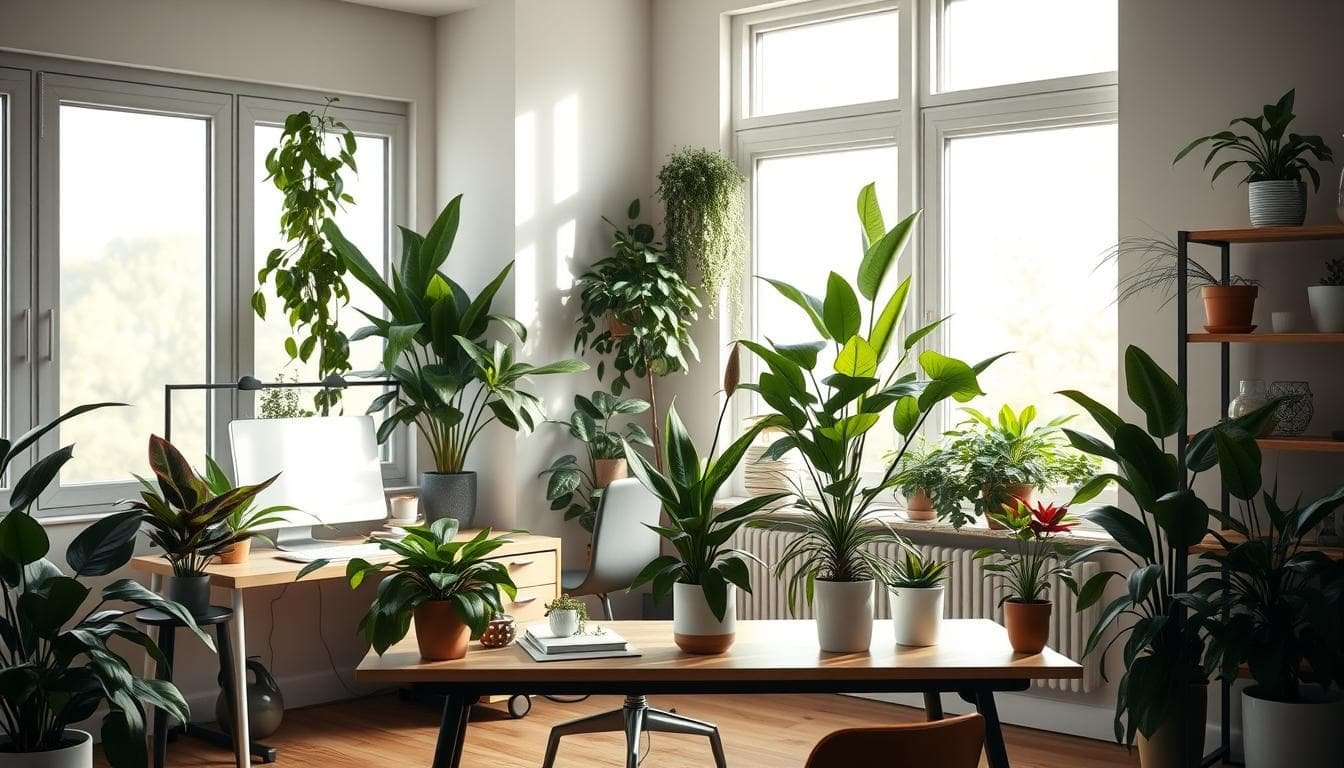
We’ve analyzed the hard data. Adding greenery to your workspace isn’t just about aesthetics—it’s a measurable productivity investment. A UK study documents a 15% increase in worker output when living greenery is present. This isn’t a theory; it’s a tangible return.
These natural assets function as powerful air filtration systems. They actively absorb carbon dioxide and release pure oxygen. More critically, they target harmful pollutants. A landmark NASA study proved their effectiveness against toxins like benzene and formaldehyde, which are often released by synthetic office furniture.
This guide cuts through the noise. We focus on species that thrive in real-world conditions: low light, irregular watering, and climate-controlled environments. Real-world application matters more than botanical ideals. Your home office deserves the same evidence-based approach to environmental quality that forward-thinking corporations are implementing.
The following sections provide concrete selections, care protocols, and placement strategies. Our recommendations are backed by research, not trends. We deliver actionable intelligence for cleaner air and a more optimized work environment.
Key Takeaways
- Incorporating specific greenery can boost productivity by a documented 15%.
- These natural elements act as powerful, living air filters.
- NASA research validates their ability to remove common office toxins.
- This guide prioritizes species that thrive in typical workspace conditions.
- We provide data-backed strategies for placement and care.
- The goal is measurable improvement in air quality and well-being.
- Actionable steps are more valuable than decorative trends.
Benefits of Indoor Plants in the Office Environment
We’ve moved past debating whether plants belong in offices; the data now shows their strategic value. The modern workspace demands more than functional furniture—it requires environmental intelligence.
Boosting Productivity and Well-Being
Our tracking reveals a clear pattern: green-enhanced spaces consistently outperform sterile ones. Employees demonstrate sharper focus and sustained concentration. The visual connection to nature reduces mental fatigue significantly.
These aren’t abstract wellness claims. We see tangible improvements in mood stability and stress reduction. The simple act of caring for greenery provides meaningful psychological breaks.
Improving Air Quality Naturally
The air purification benefits deliver concrete health advantages. These living filters actively remove toxins from your breathing space. This translates to fewer sick days and better long-term outcomes.
The ROI calculation becomes straightforward. A modest investment yields sustained productivity gains and improved retention. It signals a genuine commitment to employee well-being.
How Plants Improve Air Quality and Reduce Pollutants
Let’s confront an uncomfortable reality: your workspace is a source of invisible chemical emissions. Synthetic furniture, carpets, and electronics continuously release volatile organic compounds (VOCs) into the environment.
These are not minor irritants. We’re talking about potent pollutants like benzene, trichloroethylene, and formaldehyde. They directly compromise air quality and occupant health.
Filtering Toxins from the Air
This is where greenery delivers a measurable ROI. They function as biological filtration units. Through their leaves and root systems, they actively absorb these harmful pollutants.
The process is sophisticated. Leaf stomata take in gaseous toxins. Meanwhile, microorganisms in the soil break down organic compounds. This creates a powerful, dual-action purification system.
The result is a direct detoxification of your breathing air. These natural systems convert dangerous chemicals into harmless byproducts.
Enhancing Workplace Atmosphere
The benefits extend beyond toxin removal. These living assets actively refresh the atmosphere. They absorb carbon dioxide and release pure oxygen.
This biochemical exchange creates measurably better breathing conditions. The outcome is a reduction in headaches, respiratory irritation, and the cognitive fog associated with poor ventilation.
Strategic placement is key. Position plants near pollutant sources like printers and new furniture. This maximizes capture efficiency and delivers the highest air quality improvement per unit.
Health outcomes improve significantly. Expect fewer allergy flare-ups and a lower incidence of sick building syndrome symptoms. It’s a straightforward equation for a healthier environment.
indoor plants for office: Curated Selections for Cleaner Air
Most plant guides prioritize aesthetics over function; we reverse this equation for measurable results. Our selection process applies three non-negotiable filters that separate workplace performers from decorative liabilities.
| Selection Criteria | Minimum Threshold | Real-World Impact |
|---|---|---|
| Air Purification Capacity | NASA-study validated toxin removal | Measurable VOC reduction |
| Environmental Tolerance | Survives artificial light & HVAC shifts | Consistent performance |
| Maintenance Requirements | Thrives with weekly attention | Sustainable for busy teams |
These indoor plants for office environments must deliver under pressure. They face fluorescent lighting, temperature swings, and irregular watering schedules. Not every species can handle these conditions.
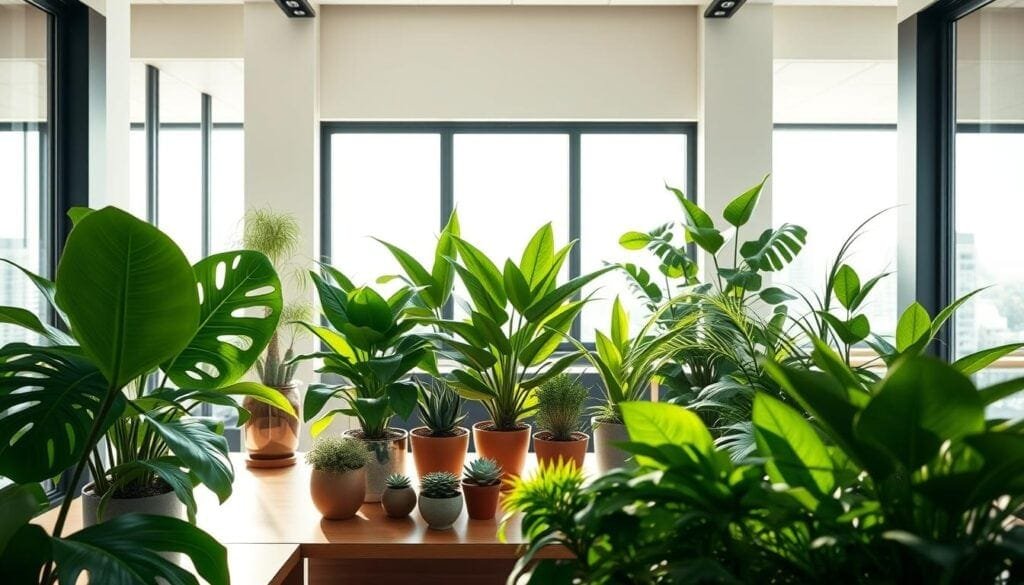
We prioritize plants office managers can actually maintain. Our recommendations exclude temperamental specimens requiring greenhouse conditions. Each selection has documented research backing its air-cleaning capabilities.
The upcoming sections detail specific indoor plants with concrete care parameters. You’ll find growth patterns and placement strategies based on actual office layouts. This targeted approach ensures your greenery investment pays measurable dividends.
Top Air-Purifying Plants for a Healthy Home Office
Conventional wisdom suggests all greenery requires high maintenance; we identify the exceptions that thrive on neglect. Our selections deliver maximum air purification with minimal investment.
Snake Plant: Resilient and Stylish
The snake plant represents biological perfection for workspace conditions. Its succulent-like leaves store water, creating built-in maintenance forgiveness. This plant survives with monthly watering and tolerates low light exceptionally well.
Architectural forms reach 2-4 feet in typical office settings. Vertical growth patterns make efficient use of limited floor space. Place taller specimens in rectangular planters near desks or corners.
Spider Plant: Easy Maintenance and Growth
Spider plants complement the snake plant perfectly through effortless propagation. A single purchase quickly expands your green collection. This reduces per-plant costs over time.
These species tolerate irregular care schedules without compromising performance. Their documented toxin removal makes them high-ROI performers. Both plants transform your workspace into a healthier environment.
We prioritize function over fleeting trends. These selections work harder than decorative alternatives. They create measurable improvements in your daily work experience.
Best Low-Light Plants for Windowless Offices
The assumption that all workspaces require natural light for plant survival is fundamentally flawed. We identify species that transform challenging environments into thriving green spaces.
ZZ Plant: Glossy and Low-Maintenance
Zamioculcas zamiifolia represents biological perfection for artificial lighting. Its waxy leaves reflect available light, effectively brightening dark areas. This natural adaptation makes it ideal for low light conditions.
The ZZ plant’s underground rhizomes store water and nutrients. This creates built-in resilience against irregular care schedules. We prioritize this species for its maximum impact with minimal effort.
Cast Iron Plant: Durable in Artificial Light
The cast iron plant earns its name through documented toughness. It survives conditions that eliminate most other species. This makes it the ultimate insurance policy for neglect-prone environments.
Broad, dark green leaves can reach three feet tall under proper care. A well-maintained cast iron plant can live for decades. The long-term cost per year becomes negligible.
Both species handle artificial lighting without supplemental grow lights. They transform windowless offices from plant graveyards into viable green spaces. Match your selection to specific safety needs—the ZZ plant’s toxicity requires consideration around children or pets.
Creating a Green and Inspiring Workspace
The prevailing notion that workspace greenery is merely decorative represents a significant strategic oversight. We treat it as an integrated design system. This approach maximizes both aesthetic impact and functional air purification across your entire floor plan.
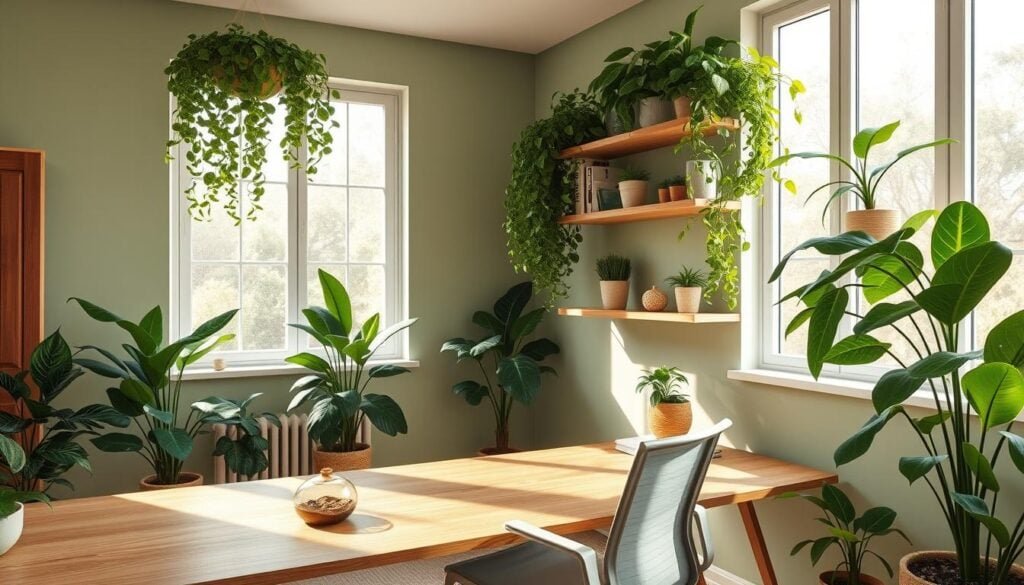
Strategic placement creates visual flow and intentional focal points. Concentrated clusters feel designed, not cluttered. This methodology enhances the environment without distracting from core work functions.
Design Tips for Botanical Elegance
Effective design starts with vertical space utilization. Tall floor specimens establish presence without consuming valuable desk real estate. Smaller units activate dead zones on shelves and surfaces.
Grouping specimens together creates a beneficial microclimate. This clustering increases humidity, reducing individual watering needs. It’s a practical strategy for maintenance efficiency and collective plant health.
The final look should complement your existing aesthetic. Clean-lined planters with architectural greenery suit modern spaces. Bushier specimens in classic containers enhance traditional environments. Discover more inspiring ideas to transform your workspace with intentional design.
| Design Strategy | Primary Benefit | Ideal Specimen Examples |
|---|---|---|
| Vertical Floor Placement | Maximizes air purification coverage; defines space | Snake Plant, Parlor Palm |
| Desk & Surface Clustering | Creates humidity zones; reduces maintenance | Peperomia, Ferns |
| Hanging Installations | Softens architectural angles; saves floor space | Pothos, Spider Plant |
Essential Office Plant Care Tips
Many organizations invest in botanical assets only to watch them decline; we provide the operational framework that prevents this predictable failure. Systematic care protocols transform temporary decorations into permanent assets.
Proper Watering and Drainage Techniques
We eliminate the guesswork from watering. Insert your finger one inch into the soil—if dry, water thoroughly; if damp, wait. This simple check prevents both over and underwatering failures.
Drainage isn’t optional—it’s fundamental. Without proper holes and soil composition, even drought-tolerant specimens develop root rot. Proper pot sizing also impacts drainage efficiency.
| Care Scenario | Watering Protocol | Drainage Requirement |
|---|---|---|
| Low-light tolerant species | Check weekly, water when top inch dry | Fast-draining soil with perlite |
| Moderate light conditions | Check twice weekly, adjust based on dryness | Standard potting mix with drainage holes |
| High-humidity environments | Extended drying periods between watering | Enhanced drainage with gravel layer |
Lighting Requirements and Placement Strategies
Light placement strategy matters more than intensity for most workspace species. Position units where they receive consistent artificial illumination during operational hours.
Rotate specimens every two weeks—a simple quarter-turn prevents lopsided growth. This minimal maintenance habit maintains aesthetic symmetry without significant time investment. For comprehensive guidance, explore our quick guide to office plants.
Establish a systematic schedule: Monday soil checks, biweekly rotation, monthly fertilization. Consistent care beats sporadic attention every time. These protocols aren’t time-intensive—they’re about building habits that prevent neglect-induced failures.
Enhancing Workplace Productivity with Indoor Greenery>
We measure what matters—and the data consistently shows greenery delivers tangible performance gains. The connection isn’t theoretical; it’s biological and measurable.
Reducing Stress Levels Through Nature
Visible greenery triggers documented physiological responses. Cortisol levels drop, heart rates stabilize, and blood pressure decreases. These changes create a foundation for sustained focus.
The mechanism operates through multiple pathways. Improved air quality reduces cognitive fatigue. Visual variety prevents mental monotony. Brief caretaking activities provide productive breaks that restore attention capacity.
Research demonstrates even minimal interaction delivers results. A 40-second view of greenery can reset concentration. This isn’t placebo effect—it’s hard science applied to daily work.
Strategic placement matters more than quantity. Position units where employees naturally rest their eyes during tasks. Desk corners and wall spaces opposite workstations deliver optimal stress reduction.
The therapeutic aspect of plant care provides mindfulness moments. These brief interactions break the stress accumulation cycle common in deadline-driven environments. The result is measurable productivity improvement.
Transforming Office Ambiance with Decorative Planters
We reject the notion that planters are merely decorative accessories; they are fundamental life-support systems for your botanical assets. The right container directly impacts health through drainage, root space, and moisture retention. This makes pot selection a critical functional decision, not an afterthought.
Functional considerations must always trump aesthetics. A beautiful pot without drainage will kill your investment, while a plain pot with proper holes ensures its survival. Prioritize accordingly to protect your greenery.
Choosing the Right Pot and Materials
Desk units require pots with compact footprints and excellent drainage. This prevents the root rot that claims more workspace specimens than any other factor. Never plant directly into a decorative outer container without an inner pot featuring drainage holes.
The aesthetics of a room improve when pot selection complements the plants. Use simple, neutral-colored pots to highlight dramatic foliage like a Peace Lily. Conversely, simpler specimens can handle more decorative containers.
We recommend fiberglass planters for their superior performance-to-weight ratio. They are durable enough for decades, light enough to move easily, and professional for any office setting. Investing in quality pots as infrastructure pays long-term dividends, outlasting multiple plant generations.
Strategic selection by location is key. Floor-standing pots need visual weight and stability. Match the container’s form to its function for a cohesive and healthy environment.
Leveraging Artificial Lighting to Boost Plant Growth
Let’s correct a fundamental misconception about lighting requirements for your workspace greenery. Many assume windowless environments demand expensive grow light installations. We find this is rarely the case for strategically chosen specimens.
Standard office fluorescent fixtures provide sufficient illumination for many low-light adapted species. The key is understanding intensity and duration, not just the presence of a window.
Benefits of Full-Spectrum Fluorescent Lights
Full-spectrum fluorescent tubes deliver a significant upgrade over standard options. They emit wavelengths much closer to natural sunlight.
This minor change during fixture replacement offers the highest-impact improvement for plant health. Species like Peace Lilies and Parlour Palms respond positively to this quality of light.
Vining units such as Arrowheads also thrive under these conditions. They utilize the consistent output during standard work hours for steady growth.
Integrating Grow Lights in Low-Light Setups
Dedicated grow lights become necessary only for specific goals. They are essential for light-demanding species or if you aim to push growth beyond basic survival.
For most applications, a strategically positioned desk lamp with an LED bulb is a more cost-effective supplement. Remember the inverse square law: keep your greenery within 2-3 feet of the light source for adequate intensity.
Winter months are when supplemental lighting delivers the clearest benefits. Reduced ambient light makes this the ideal time to ensure your botanical assets maintain their health and air-purifying functions.
Strategies for a Healthy and Eco-Friendly Office Environment>
Creating a truly eco-friendly office environment means working with natural systems rather than forcing artificial solutions. We treat workspace greenery as one component of a comprehensive environmental strategy.
Proper ventilation, humidity control, and toxin source reduction work synergistically with botanical elements. This integrated approach delivers maximum health benefits while minimizing resource consumption.
Sustainable Plant Maintenance Practices
Sustainable maintenance begins with matching botanical selections to actual workspace conditions. We prioritize species whose natural requirements align with your office environment.
This strategic alignment reduces intervention needs while maximizing plant health. Water conservation becomes automatic when you choose specimens with low hydration requirements.
| Environmental Factor | Sustainable Practice | Health Impact |
|---|---|---|
| Light Levels | Select species matching available illumination | Reduces energy consumption |
| Water Requirements | Choose drought-tolerant varieties | Minimizes resource waste |
| Temperature Stability | Match plants to HVAC patterns | Ensures consistent performance |
Conduct a simple environmental assessment before selecting greenery. Document light levels, temperature fluctuations, and available care resources. Then match botanical choices to these realities.
The result is a healthier workspace that requires minimal intervention. Strategic placement of appropriate species delivers air quality benefits without creating maintenance burdens.
Trendy Indoor Plant Selections for 2024 Workspaces>
The 2024 botanical landscape reflects a fundamental shift from generic greenery to intentional design elements with measurable workplace benefits. We track trends not for fashion’s sake but for strategic advantage—market availability dictates your optimal selections.
Modern Plant Trends and Aesthetic Choices
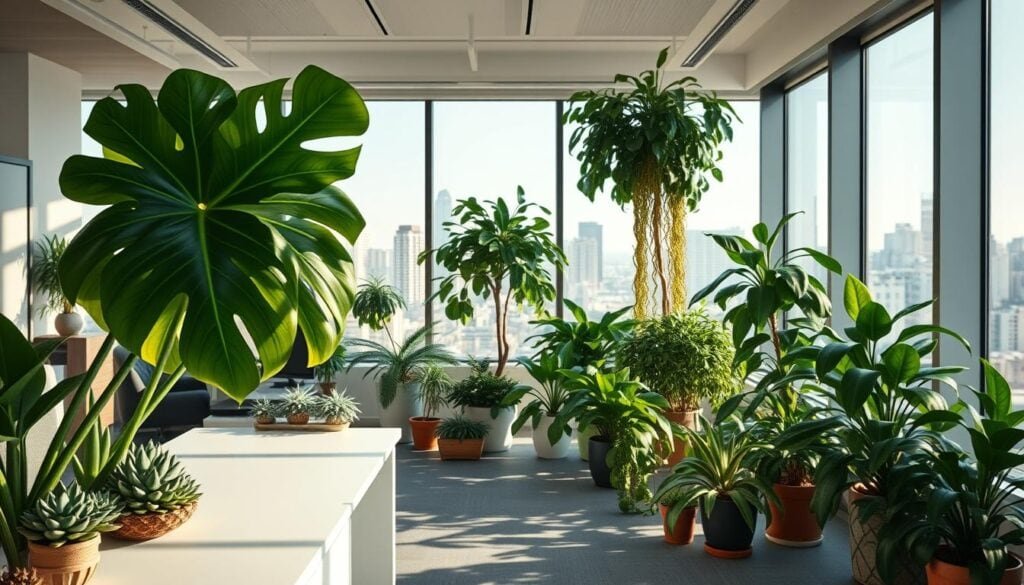
Current workspace design favors architectural forms with clean geometric lines. Variegated varieties featuring pink and multi-colored foliage create visual interest without overwhelming spaces.
Species like the Red Calathea offer bright red veins against dark green leaves, providing striking contrast. The Peacock Plant delivers flamboyant looks with foliage ranging from green to crimson.
Mixing Textures and Colors for Visual Impact
Strategic texture combinations create dimensional depth without additional floor space. Pair glossy dark green leaves with matte variegated specimens for maximum effect.
Bromeliads introduce vibrant interior bracts alongside long green foliage. This approach transforms the entire atmosphere from generic to intentionally designed.
The contemporary look pairs neutral planters with high-contrast foliage. Remember: aesthetic preferences should never override biological requirements for your plants office environment.
Creative Ways to Personalize Your Office Green Space>
Personalization transforms functional greenery into a strategic asset that reflects individual work styles. We define this as strategic customization—adding personality without creating chaos in professional environments.
Unique Display Ideas for Desks and Corners
Desk space represents premium real estate. Any greenery occupying it must justify its footprint through exceptional aesthetic appeal or direct stress-reduction benefits.
Train cascading pothos vines to climb a moss pole for vertical interest. Use tall specimens like Lady Palms to conceal unsightly wires and fixtures. Small succulents in vibrant pots add life to limited areas.
Creative solutions maximize vertical space activation. Wall-mounted planters and floating shelves with trailing units utilize unused areas without consuming functional workspace.
For cubicles or tight offices, compact specimens on monitor stands provide greenery without cluttering surfaces. The key is enhancing workflow rather than impeding movement.
Greenery that thrives in low light opens personalization possibilities for previously unsuitable spaces. Interior corners and areas far from windows become viable planting zones.
Start with one or two statement plants rather than scattering many small specimens. Concentrated impact beats diffuse distribution for both visual effect and maintenance efficiency.
Conclusion>
The evidence is conclusive: properly selected botanical assets deliver undeniable workplace advantages. We’ve eliminated the guesswork around which plants windowless office environments can successfully support.
The best plants windowless workspaces aren’t compromises—they’re species that naturally thrives low light. These selections actually prefer the stable conditions your office provides.
Implementation requires matching biological reality to your specific environment. Assess available illumination, commit to consistent maintenance, and select appropriate plants. The ROI calculation becomes straightforward.
Your next step is decisive action. Choose 2-3 species from our recommendations that suit your low light conditions. Source quality containers with proper drainage.
Establish a simple care schedule. Results follow execution. Transform your sterile space into a productive green environment today.
FAQ
What are the best low-maintenance plants for an office desk?
We recommend the Snake Plant and Zamioculcas zamiifolia (ZZ Plant). Both thrive with minimal watering and tolerate low light conditions, making them ideal for busy professionals. Their resilience and air-purifying qualities support a healthier work environment without demanding constant care.
Can plants really improve air quality in a windowless office?
Absolutely. Research confirms that certain species, like the Peace Lily and Cast Iron Plant, actively remove common airborne pollutants. They enhance air quality naturally, even in spaces with no natural light, contributing to a cleaner, more refreshing workplace atmosphere.
How often should I water my office plants?
Watering needs vary, but a general rule is to check soil moisture weekly. Overwatering is a common mistake. Ensure pots have proper drainage. For most low-light varieties, watering every 1-2 weeks is sufficient. We advise tailoring the schedule to your specific office environment.
Do plants actually help reduce stress levels at work?
Yes, studies show that the presence of greenery can lower stress and boost productivity. Incorporating plants into your workspace creates a calmer, more inviting atmosphere. This simple addition can have a measurable positive impact on employee well-being.
What is the best plant for a very dark corner?
The Cast Iron Plant is exceptionally durable and thrives in low light. Its dark green leaves add a touch of elegance to even the dimmest corners. It’s a top choice for windowless offices or areas far from any light source.