
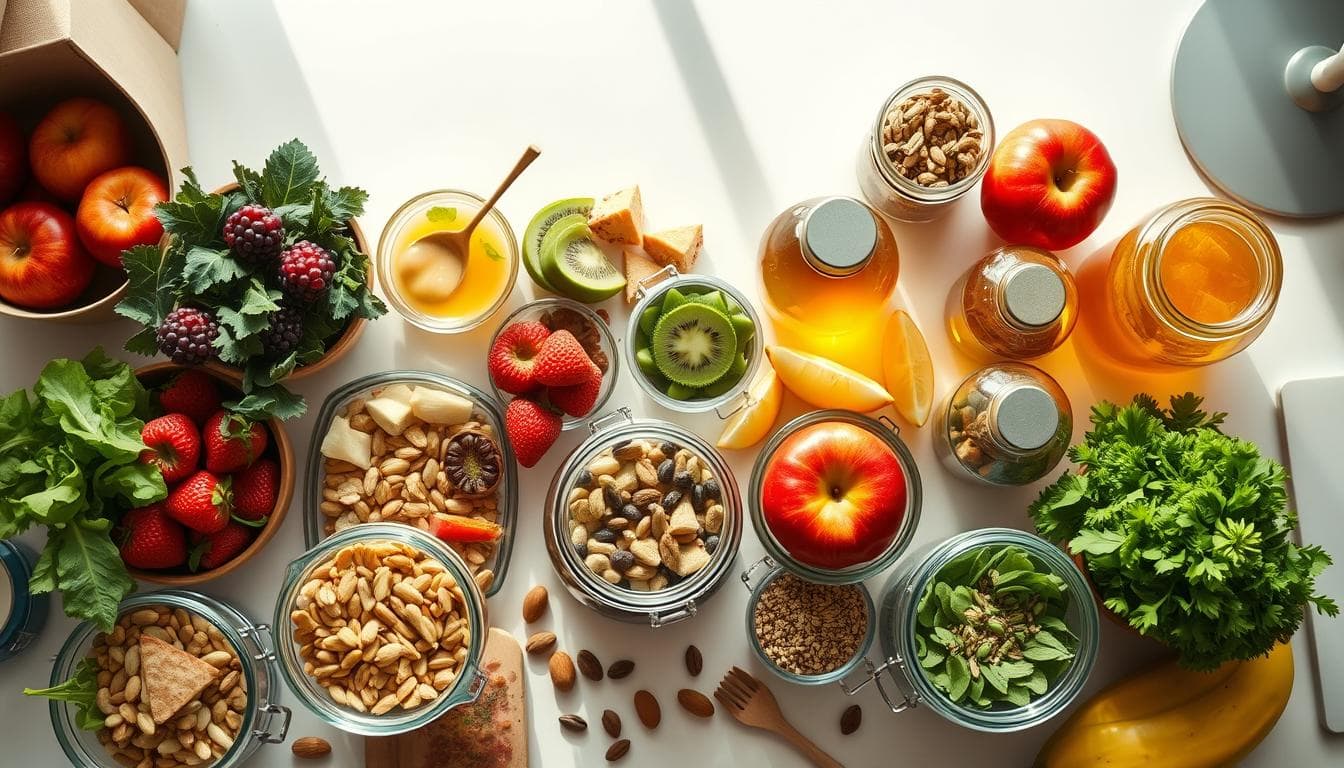
Let’s be direct: what you eat at your desk directly impacts your bottom line. This isn’t about dieting; it’s about performance optimization. Brigham Young University research reveals a hard truth: employees with poor nutritional habits face a 66% higher risk of productivity loss.
We’re cutting through the noise. The right midday fuel isn’t just about curbing hunger. It’s a strategic tool for maintaining cognitive sharpness and sustainable energy. Diets loaded with fast food correlate with higher depression risk, while fruits and vegetables—rich in inflammation-fighting antioxidants—boost mood and engagement.
Our guide moves beyond theory. We provide actionable, evidence-based options that fit a real work schedule. This is about nutritional ROI: selections that balance macronutrients to stabilize blood sugar and ensure consistent mental output. Discover office-friendly choices that require minimal prep and deliver maximum focus.
We focus on specific food that science confirms enhances brain function. This is a pragmatic approach to eating for peak workplace effectiveness.
Key Takeaways
- Poor eating habits can lead to a 66% higher risk of productivity loss at work.
- The right food choices act as strategic tools for cognitive performance, not just hunger relief.
- Foods rich in antioxidants, like fruits and vegetables, can improve mood and focus by reducing inflammation.
- Strategic snacking focuses on balancing protein, fats, and complex carbs for stable energy.
- Opt for convenient, office-friendly options that require little to no preparation.
- The goal is measurable nutritional return on investment to enhance output and efficiency.
Introduction to Energizing Office Snacks
We dismiss office eating as a simple necessity, but the data reframes it as a strategic imperative. What you consume between meetings is a direct input for your cognitive output. This isn’t about hunger management; it’s about performance optimization.
The science is unequivocal. Antioxidant-rich choices, like fruits and vegetables, actively combat bodily inflammation. This biochemical action translates directly to sharper memory and a more positive mood during demanding hours. Conversely, diets high in processed options correlate with increased risk of depression.
Why Snacking Right Matters
Poor choices initiate a vicious cycle. A sugar spike leads to an inevitable crash, cratering your focus. This drop prompts a reach for another quick fix, perpetuating a decline in productivity.
Strategic intake means selecting items with a balance of protein and fiber. These nutrients slow digestion, providing a steady release of glucose instead of a jarring spike and crash. We advocate for intentional, timed consumption—not mindless grazing—to bridge meal gaps and prevent the afternoon energy slump.
Office environments present unique hurdles: limited storage, time constraints, and the constant lure of vending machines filled with suboptimal fuel. The right selections are more than food; they are productivity tools that maintain peak mental performance when it matters most.
Benefits of Healthy Snacks for Work Productivity
The 66% productivity gap isn’t a statistic to ignore—it’s a business problem with a nutritional solution. We’ve quantified three core advantages that transform strategic eating from optional to essential.
Enhanced Focus and Energy
Stable blood sugar creates consistent mental clarity. When you consume items with protein and fiber, your body processes them slowly. This provides steady glucose to your brain instead of erratic spikes.
Quick-burning carbohydrates might offer 30 minutes of alertness. Protein-based selections sustain you for 2-3 hours of focused output. This energy sustainability matters during critical decision-making moments.
Long-Lasting Satiety
Specific macronutrients drive prolonged fullness. Protein takes longer to digest, while fiber adds bulk and slows gastric emptying. Healthy fats trigger hormones that signal satisfaction to your brain.
When you feel full longer, you eliminate hunger distractions. This frees cognitive resources for actual tasks rather than wondering about your next meal. The compounding effect of these choices creates a positive feedback loop for workplace performance.
Top Nutritious Picks to Power Your Workday
Strategic office nutrition requires more than good intentions—it demands specific, evidence-backed selections. We’ve structured our recommendations around the macronutrient trifecta that drives sustained performance.
Snack Options for Every Craving
Your craving type dictates the optimal choice. Sweet desires respond well to fruit-based combinations, while savory needs demand protein-rich solutions.
Nuts and dried fruit represent the ideal portable option. They deliver heart-healthy fats from nuts and quick-access carbohydrates from fruit. This combination offers exceptional shelf stability for desk storage.
| Option | Protein (g) | Fiber (g) | Healthy Fats | Energy Duration |
|---|---|---|---|---|
| Mixed Nuts | 6-8 | 3-4 | High | 3-4 hours |
| Roasted Chickpeas | 5 | 5 | Moderate | 2-3 hours |
| Avocado | 2 | 7 | High | 3-4 hours |
| Apple with Nut Butter | 4-6 | 5 | Moderate | 2-3 hours |
Balancing Protein, Fiber, and Healthy Fats
The key lies in understanding digestive timelines. Fats provide the longest energy release, followed by protein, with fiber slowing overall digestion.
The most effective office nutrition strategy combines immediate satisfaction with sustained energy release—this is where macronutrient balance becomes non-negotiable.
Chickpeas deliver remarkable density: half a cup provides 5 grams each of protein and fiber. Avocados stand out for monounsaturated fat content that supports cardiovascular health.
We recommend selecting options where you can identify the actual ingredients. Whole foods outperform processed alternatives with unpronounceable additives. This approach ensures maximum nutritional return for your work investment.
Quick and Easy Snacks for Busy Mornings
Time constraints aren’t an excuse for poor nutrition—we’ve identified zero-prep options that deliver cognitive returns. Mornings present the tightest schedule pressures, demanding solutions that require seconds, not minutes.
Minimal Prep, Maximum Impact
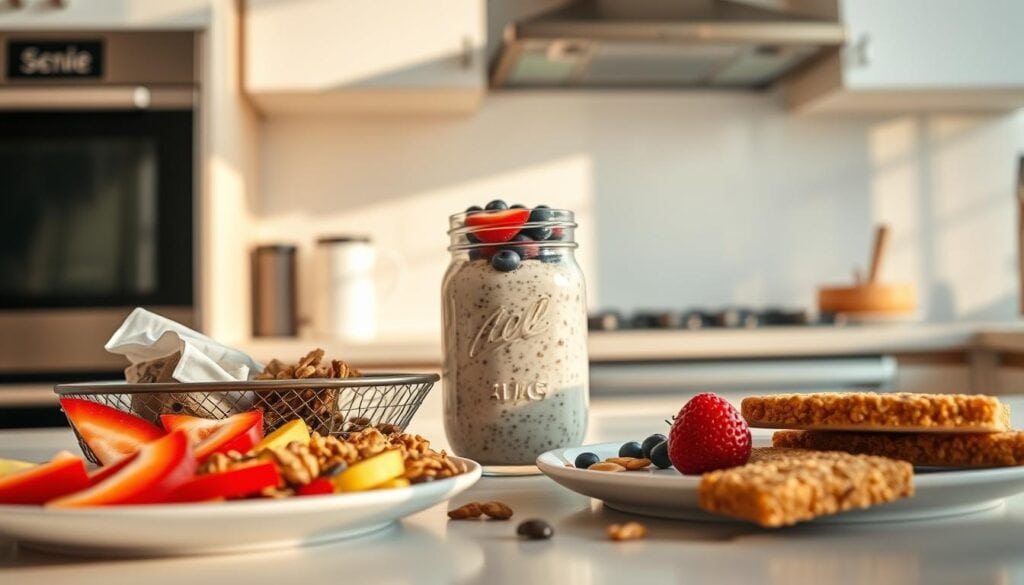
We prioritize selections requiring zero cooking or under five minutes assembly. The principle is simple: invest minimal time to prevent productivity loss from hunger-driven distraction.
Greek yogurt delivers exceptional protein density—16 grams for just 95 calories. Hard-boiled eggs can be batch-prepared weekly, securing days of portable nutrition. String cheese offers unmatched convenience with 6 grams of protein per piece.
| Option | Protein (g) | Calories | Prep Time | Portability |
|---|---|---|---|---|
| Greek Yogurt | 16 | 95 | 0 minutes | High |
| Hard-Boiled Eggs | 6+ | 70-80 | 15 min (weekly) | High |
| String Cheese | 6 | 80 | 0 minutes | Excellent |
On-the-Go Snack Ideas
True portability means items that won’t spill, require utensils, or create mess. These selections can be consumed with one hand during commutes or between meetings.
Grab them from the fridge in seconds—complete nutrition without schedule compromise. This approach saves thirty minutes of potential productivity loss from poor vending machine choices.
The most effective morning nutrition strategy eliminates excuses through preparation—batch cooking and grab-and-go options transform chaotic starts into productive beginnings.
Healthy Snacks for Work: Nutritious and Easy Options
We’ve built this list around one core principle: what actually works in an office environment. Our 33 selections deliver sustained energy without complicated preparation or special equipment requirements.
Why This List Stands Out
Most nutrition guides fail the practicality test. We’ve eliminated unrealistic expectations and focused exclusively on workplace compatibility.
Every option has been vetted for real-world conditions. No 47-ingredient recipes, no specialized kitchen tools, no assumptions about your available prep time.
Our approach covers the full spectrum of dietary needs. Whether you follow keto, vegan, or gluten-free protocols, you’ll find multiple viable choices.
We prioritize selections that maintain quality throughout the day. No soggy items by 2 PM, no refrigeration dependencies for remote workers.
Transparent nutritional profiles empower informed decisions. We provide specific protein, fiber, and calorie data for precise energy management.
Taste satisfaction drives compliance. Bland food fails; our balanced approach ensures genuine enjoyment alongside nutritional value.
This curated collection eliminates decision fatigue. Instead of scrolling through conflicting advice, you get evidence-based options for immediate implementation.
Creative Homemade Snack Recipes
Batch preparation eliminates daily decision fatigue—we’re providing tactical recipes that solve your weekly fuel needs in one 30-minute session.
Our energy ball formula demonstrates perfect macronutrient balance. Combine 1 cup oats, 1/2 cup peanut butter, 2 tablespoons flax seeds, 1/4 cup honey, and 1/4 cup dark chocolate chips.
This versatile mix accommodates endless customization. Swap ingredients based on preference or dietary needs.
Energy Balls, Egg Muffins, and More
Egg muffins represent peak efficiency. Beat eggs with chopped vegetables and cheese, bake in muffin tins at 375°F for 15-20 minutes.
They reheat in 90 seconds—portable protein that survives desk storage. Cosmic brownie protein bites use pantry ingredients for quick assembly.
| Recipe | Prep Time | Key Ingredients | Batch Yield | Storage Life |
|---|---|---|---|---|
| Energy Balls | 10 minutes | Peanut butter, honey, oats | 12-15 balls | 7 days |
| Egg Muffins | 20 minutes | Eggs, vegetables, cheese | 6 muffins | 5 days |
| Protein Bites | 15 minutes | Protein powder, nuts, dates | 10-12 bites | 10 days |
Customizing Your Favorite Recipes
Personal preference determines sustainability. Hate coconut? Use chopped nuts instead. Avoiding honey? Maple syrup works perfectly.
Protein powder additions boost nutritional value significantly. One scoop adds 20-25 grams across an entire batch.
Homemade versions provide complete ingredient control. You eliminate preservatives and hidden sugars found in commercial products.
We recommend weekly batch preparation. Thirty minutes on Sunday creates five days of ready-to-eat options.
Office-Friendly Snacks for Enhanced Brain Function
Conventional office nutrition advice misses the critical link between specific nutrients and measurable cognitive output. We target biochemical pathways with documented benefits for neural performance.
Omega-3 fatty acids form your brain’s structural components. Tuna pouches and walnuts deliver these inflammation-fighting compounds in shelf-stable formats.
Eggs provide over 30% of your daily choline requirement. This nutrient converts to acetylcholine—the neurotransmitter governing memory and learning.
Turkey roll-ups offer vitamin B6, essential for producing mood-regulating neurotransmitters. Consistent consumption creates measurable improvements in processing speed over weeks.
| Brain-Boosting Option | Key Nutrient | Cognitive Benefit | Office Compatibility |
|---|---|---|---|
| Tuna Pouches | Omega-3 Fatty Acids | Neural Signal Transmission | No Odor, No Prep |
| Hard-Boiled Eggs | Choline | Memory Formation | Portable, Minimal Mess |
| Turkey Roll-Ups | Vitamin B6 | Neurotransmitter Production | Quiet, Meeting-Friendly |
| Walnut Packets | Omega-3 + Fiber | Inflammation Reduction | Stable, No Refrigeration |
Office-friendly means respecting shared space. We avoid strong odors, disruptive crunch, and messy consumption. Rotate 3-4 options to prevent flavor fatigue while maintaining nutrient consistency.
This approach transforms casual eating into strategic cognitive investment. The ROI appears in sustained attention during critical afternoon hours.
Snack Prep and Storage Tips for the Modern Office
Your desk drawer strategy determines your nutritional ROI more than your grocery list. We’re addressing the reality that most professionals lack unlimited refrigerator space.

Storage logistics make or break your nutrition plan. The right approach eliminates daily decision fatigue while ensuring food safety.
Maximizing Shelf-Life
Understanding shelf stability transforms your options. Perishable items like cooked eggs require refrigeration and should be consumed within 3-4 days.
Vacuum-sealed tuna pouches offer convenience without draining needs. They can live in your desk for weeks. Energy balls and roasted chickpeas provide non-perishable alternatives.
| Food Item | Storage Method | Shelf Life | Office Compatibility |
|---|---|---|---|
| Hard-Boiled Eggs | Refrigeration Required | 3-4 Days | Medium (needs fridge) |
| Tuna Pouches | Desk Drawer Stable | Weeks | High (no prep needed) |
| Roasted Chickpeas | Air-Tight Container | 2-3 Weeks | Excellent |
| Energy Balls | Cool, Dry Place | 7-10 Days | High |
Efficient Packing Strategies
Sunday preparation saves weekday minutes. Dedicate 45-60 minutes to prepare Monday-Thursday items. Use small portioned containers for automatic control.
Glass containers prevent odor transfer and are microwave-safe. For commutes over 30 minutes, invest in an insulated bag with ice packs.
Label everything with preparation dates. This 30-second habit prevents discovering mystery containers weeks later.
Balancing Macronutrients for Optimal Energy
Your snack’s duration of effectiveness isn’t random—it’s a predictable outcome of protein, fat, and fiber ratios. We’re breaking the myth that all fuel sources perform equally. Understanding digestive timelines transforms casual eating into strategic energy management.
Proteins, Healthy Fats, and Fiber
Each macronutrient operates on a distinct timeline. Fats provide the longest burn—digesting over 3-4 hours for sustained energy release. Protein requires 2-3 hours to process while triggering satiety hormones.
Fiber acts as your regulatory engine. It slows gastric emptying to help you feel full longer while stabilizing blood sugar absorption. This trio creates the foundation for consistent mental output.
“The most effective nutritional strategy combines immediate satisfaction with sustained energy release—macronutrient balance becomes non-negotiable for peak performance.”
We recommend specific ratios for maximum ROI. Target 10-15 grams of protein, 5-10 grams of healthy fats, and 3-5 grams of fiber per serving. This combination prevents energy crashes and reduces stress-induced cravings.
| Macronutrient | Digestion Timeline | Primary Function | Ideal Snack Contribution |
|---|---|---|---|
| Healthy Fats | 3-4 hours | Sustained energy release | 5-10 grams |
| Protein | 2-3 hours | Satiety signaling | 10-15 grams |
| Fiber | Varies (slows digestion) | Blood sugar regulation | 3-5 grams |
Apple slices with almond butter demonstrate perfect balance. The fruit provides fiber while the spread contributes protein and healthy fats. This combination delivers 2-3 hours of steady focus versus 30 minutes from fruit alone.
Vegetarian and Vegan Snack Options
We challenge the misconception that plant-based nutrition lacks protein density. The reality is that strategic selections deliver robust amino acid profiles. These choices rival traditional animal sources in performance impact.
Edamame stands out as a powerhouse. These immature soybeans provide a complete plant-based protein, containing all nine essential amino acids. This makes them comparable to eggs or meat for muscle support and satiety.
Plant-Based Protein Ideas
Chickpeas offer remarkable versatility. A half-cup serving delivers 5 grams each of fiber and protein. You can roast them for crunch or blend them into creamy hummus.
Hummus combines efficient nutrient delivery. Its core ingredients—chickpeas, tahini, olive oil—provide a balance of protein, healthy fats, and fiber. This combination supports sustained energy release and appetite control.
Research confirms that soy protein triggers satiety hormones effectively. It helps manage cravings while improving body composition. This is a key advantage for maintaining focus.
Vegan options require slightly more planning than vegetarian ones. The goal is to combine complementary sources. Think nuts with seeds or beans with whole grains.
We recommend keeping 2-3 plant-based options available. This strategy boosts dietary diversity and gut health. It’s a simple upgrade with measurable returns.
Low-Calorie and High-Fiber Treats for Work
We’re targeting foods that deliver psychological satisfaction through physical volume rather than caloric density. This combination of high fiber and low calories creates maximum fullness for minimal investment.
Air-popped popcorn demonstrates exceptional volume economics. Two full cups provide only 62 calories with 2 grams of fiber. You consume substantial quantity without derailing your daily budget.
Celery achieves its low calories through 95% water content. While offering minimal macronutrients, it provides satisfying crunch. Pair it with protein-rich hummus for balanced nutrition.
These high fiber options create mechanical fullness by physically filling your stomach. This triggers stretch receptors that signal satiety independently of calorie content.
Bell peppers deliver vitamins A and C alongside fiber with negligible calories. One medium pepper has about 30 calories but provides over 100% of your daily vitamin C requirement.
The strategic advantage lies in allowing multiple consumption episodes without exceeding targets. This provides frequent satisfaction without metabolic consequence.
We recommend these selections specifically for mid-afternoon periods. You often need psychological satisfaction more than actual caloric energy during this work timeframe. This approach makes your office snack strategy both effective and sustainable.
Snack Hacks for the Air Fryer and Quick Kitchen Fixes
We’re redefining kitchen efficiency with technology that delivers restaurant-quality results in minutes. The modern air fryer represents a strategic upgrade, not just another appliance.
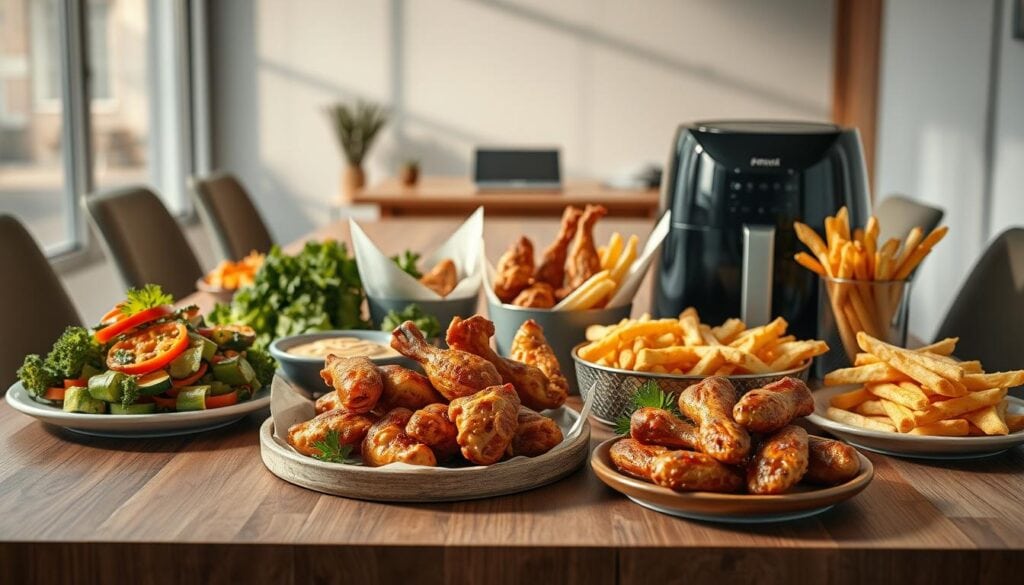
This technology achieves the crispy satisfaction of deep frying using 70-80% less oil. The calorie reduction is dramatic while maintaining texture and flavor integrity.
Air Fryer Tips for Crispy Goodness
Transform soft chickpeas into crunchy delights in about 15 minutes. Season them with chili powder or cumin for variety without significant calorie addition.
Avocado fries demonstrate the air fryer’s versatility. Coat wedges with breadcrumbs and everything bagel seasoning. Achieve golden perfection in 8-10 minutes.
Batch preparation maximizes your air fryer investment. Cook multiple trays of roasted chickpeas simultaneously. Store them airtight for 5-7 days of ready-to-eat options.
Kitchen Shortcuts to Save Time
Pre-washed veggies eliminate tedious preparation. Combine them with pre-cooked proteins for instant meal assembly. This reduces active kitchen time substantially.
Veggie chips require patience but minimal hands-on effort. Thinly slice sweet potatoes or zucchini using a mandoline. Bake at 225°F for approximately 2 hours while you handle other tasks.
We recommend investing in a quality air fryer (4-6 quart capacity). This one-time $80-120 purchase pays for itself quickly. It eliminates expensive packaged snacks and restaurant takeout.
Innovative Snacks Inspired by Global Cuisines
Monotonous eating habits create predictable failure points; international flavor profiles offer the strategic diversity needed for long-term adherence. We’re importing culinary principles from Mediterranean, Asian, and Latin American traditions to prevent palate burnout.
Mediterranean and Asian Flavors
Mediterranean approaches leverage olive oil, oregano, and lemon for complexity without sugar dependency. Asian inspiration brings umami depth through ingredients like dried seaweed and soy.
Seaweed snacks address a critical micronutrient gap: iodine for thyroid health. These crispy squares deliver satisfaction with minimal calories. They represent smart food engineering.
Fusion Snacks That Excite Your Palate
Sushi popcorn demonstrates fusion innovation. Air-popped corn gets seasoned with togarashi and crumbled nori seaweed. This creates an umami-packed savory snack that feels special yet approachable.
Curry-lime cashews show how spice combinations transform basics. The curry adds warmth while lime provides brightness. Cashews contribute creamy richness to the mix.
We recommend exploring one new global-inspired option monthly. Apple slices with unique spice blends can refresh your routine. This prevents the boredom that derails most nutrition efforts after 4-6 weeks.
Smart Swaps: Upgrading Your Snack Game
The secret to sustainable dietary improvement lies not in elimination, but in strategic substitution. We provide direct upgrades that maintain satisfaction while dramatically improving nutritional profiles.
Replacing Sugary Treats
Instead of potato chips, choose brown rice cakes with avocado. This swap delivers healthy fats and fiber instead of empty calories. The cardiovascular benefits are measurable—eating two avocado servings weekly reduces heart disease risk by 16-21%.
Dark chocolate-covered nuts replace candy bars effectively. They provide antioxidants from cocoa and protein from nuts. Look for 70%+ cacao content with minimal added sugars.
Frozen yogurt bark eliminates the added sugars in commercial desserts. Greek yogurt provides protein while fresh fruit adds natural sweetness. This creates the same cold satisfaction as ice cream.
Boosting Nutritional Value with Simple Changes
Upgrade regular butter to nut butter for similar richness with added protein. Peanut and almond varieties deliver 3-4 grams per tablespoon versus zero from dairy options.
Cheese choices matter significantly for efficiency. String cheese and cottage varieties offer higher protein-to-fat ratios than cream cheese. This maximizes satiety per calorie consumed.
These strategic substitutions create a positive feedback loop. You enjoy the same psychological satisfaction while receiving superior nutritional returns. This approach prevents the deprivation that leads to binge behavior.
Maintaining Energy Levels Throughout the Workday
Timing represents the most overlooked variable in workplace nutrition—get it wrong, and even the best food choices underperform. We’re establishing evidence-based protocols that bridge meal gaps effectively.
Timing Your Snacks for Maximum Productivity
Strategic consumption means aligning with your body’s natural rhythms. The optimal schedule targets mid-morning (10-10:30 AM) and mid-afternoon (2:30-3 PM). This prevents the blood sugar dips that sabotage afternoon output.
A mid-morning choice prevents the 11:30 AM crash that leads to poor lunch decisions. When you arrive ravenous, you’ll choose the fastest, most calorie-dense option available.
Mid-afternoon timing is critical—it’s your circadian rhythm low point. Body temperature drops slightly, and alertness decreases. A protein-rich selection here counteracts this natural dip without caffeine dependency.
| Time Slot | Purpose | Optimal Composition | Strategic Benefit |
|---|---|---|---|
| 10-10:30 AM | Prevent pre-lunch crash | Protein + complex carbs | Stabilizes lunch choices |
| 2:30-3 PM | Counter circadian dip | Protein-focused | Sustains afternoon focus |
| Pre-meeting (1-2 hrs prior) | Peak cognitive support | Balanced macronutrients | Optimizes performance timing |
“The most effective nutrition strategy synchronizes fuel delivery with cognitive demand—timing becomes your performance multiplier.”
Avoid consumption within 90 minutes of main meals. This prevents overlapping digestion and maintains proper hunger signals. Evening sessions demand lighter options like vegetables to protect sleep quality.
Set phone reminders during your first 2-3 weeks. This trains your body to expect fuel at consistent intervals, stabilizing hunger hormones and eliminating erratic cravings.
Conclusion
Your nutritional ROI is now quantifiable: the choices outlined here deliver measurable improvements in focus, energy, and output.
We’ve transformed workplace eating from a productivity drain into a strategic advantage. The evidence is clear—maintaining smart nutrition habits correlates with 66% less productivity loss and enhanced cognitive function.
You now possess 33+ specific options spanning every preference. From protein-packed Greek yogurt to fresh apple slices with nut butter, these choices eliminate guesswork.
The practical framework—batch preparation, strategic timing, and proper storage—removes common implementation barriers. Stock key ingredients like rice cakes, dried fruit, cashews, and chia seeds for versatile combinations.
Implementation starts this weekend. Choose 3-5 snack ideas, dedicate 30 minutes to preparation, and solve your nutritional challenges for the week ahead. This isn’t theory—it’s your competitive edge.
FAQ
What makes a good snack for sustained energy at the office?
We prioritize options rich in plant-based protein and healthy fats, like an apple with peanut butter. These combinations provide a steady release of energy, keeping you full longer and preventing the mid-afternoon crash associated with sugary treats.
Can you suggest a high-fiber, low-calorie option that’s easy to pack?
Absolutely. Air-popped popcorn seasoned with a dash of sea salt is a fantastic choice. It’s a whole grain that offers high fiber content for very low calories. For a savory twist, try roasted chickpeas with lime juice.
I’m short on time. What are your best minimal-prep ideas?
We advocate for strategic simplicity. Pre-portioned nuts like cashews, single-serving Greek yogurt cups, or pre-sliced veggies with a small container of hummus are lifesavers. These require almost no effort but deliver a powerful, nutritious punch.
Are there any creative, homemade recipes that are office-friendly?
Yes. Energy balls made with oats, chia seeds, and a touch of honey can be made in batches on Sunday. For a savory option, egg muffins with cheese and spinach are portable and protein-packed. Both store well and beat vending machine fare hands down.
How can I use an air fryer to upgrade my snack game?
Your air fryer is a secret weapon for crispy, healthy snacks. It can transform slices of sweet potato into chips or turn tofu cubes into a high-protein, savory bite in minutes. It’s a quick kitchen fix that maximizes flavor without deep-frying.
What are some smart swaps to make my current snacks more nutritious?
Instead of rice cakes with sugary jam, top them with avocado and a sprinkle of sea salt. Swap dried fruit mixes (often high in sugar) for a handful of raw nuts and seeds. These small changes significantly boost nutritional value with healthy fats and fiber.