The podcasting landscape has evolved dramatically. Many creators follow outdated advice, leading to generic content that fails to connect. We believe launching a successful show requires a modern, strategic approach.
Since 2009, our team has supported over 400,000 podcasters. This experience provides a unique data-backed perspective. The opportunity for new voices remains immense. Projections indicate 584 million global listeners by 2025, with nearly half of Americans aged 12 and older tuning in regularly.
This guide cuts through the noise. We focus on what truly works today, not vanity metrics. Our recommendations are built on proven systems from thousands of successful launches. You will learn to avoid common, costly mistakes.
We prioritize efficiency and measurable ROI. Every piece of advice aims to accelerate your path to a professional, audience-building show. This framework helps you make smart decisions about equipment, format, and distribution.
Key Takeaways
- The podcast audience is massive and growing, creating significant opportunity for strategic creators.
- Success hinges on differentiation and a data-informed approach, not just following trends.
- Equipment and hosting choices directly impact your show’s quality and potential for growth.
- This guide provides actionable steps based on insights from hundreds of thousands of launches.
- Avoiding common beginner mistakes saves valuable time and resources.
- The goal is to build a sustainable, revenue-generating show that compounds value.
Setting the Stage: The 2025 Podcasting Landscape
Current listener metrics shatter the myth of an oversaturated market. The data reveals a media environment ripe with strategic openings for creators who understand the new dynamics.
Expanding Audience Trends in the United States
In 2025, nearly half of Americans aged 12 and older will be regular podcast listeners. This translates to 135 million people in the United States alone. The potential audience for your show is larger and more accessible than ever before.
Globally, this trend amplifies, with projections reaching 584 million listeners. This isn’t a fleeting trend but a permanent shift in how people consume information and entertainment.
Technological and Cultural Shifts
Technology has seamlessly integrated audio into daily life. Smart speakers and mobile apps have made listening a habitual activity. This creates consistent demand for high-quality content across all niches.
Culturally, people increasingly favor intimate, voice-driven media. This gives podcasters a distinct advantage in building trust and connection compared to text-based formats.
The competitive landscape has evolved. Generic shows struggle, while niche-focused podcasts thrive. Listeners now use sophisticated discovery tools, rewarding targeted, high-value programming. This is the optimal time to establish a unique presence in your specific field.
Major platforms have matured. Their refined algorithms mean well-executed content with clear positioning can gain traction faster than in years past.
Understanding Your Podcast Niche and Audience
We’ve observed that undefined objectives represent the primary failure point for new audio creators. Without clear direction, most shows fade before reaching episode 50. Strategic clarity separates sustainable projects from abandoned experiments.
Your topic must align with genuine interests and sustain long-term commitment. Test your concept’s viability by immediately generating 25 episodes ideas. If this proves difficult, reconsider your focus area.
Defining Your Goals and Concept
Specificity drives engagement. A hyper-targeted niche attracts dedicated listeners who consume every episode. Generic content struggles in today’s crowded landscape.
Understand your audience beyond demographics. Identify their challenges, aspirations, and content consumption habits. This precision creates personally relevant content that builds loyalty.
For business-focused shows, ensure strategic alignment with revenue goals. Your niche should directly support client acquisition or authority building. Every episode should serve a measurable purpose.
Research competitors to identify content gaps. Differentiation isn’t optional—it’s essential for standing out and attracting your ideal people. Your unique perspective becomes your competitive advantage.
how to start a podcast 2025: Essential Planning Steps
The most critical investment you make isn’t in equipment; it’s in meticulous pre-production planning. This upfront work prevents the podfade that kills 90% of new shows. We advocate for establishing your publishing schedule, format, and content pipeline before recording a single episode.
Test your concept’s viability immediately. If you struggle to generate ten episode ideas, reconsider your topic. Build a robust episode bank in a phone note. List solo topics, interview targets, and specific conversation angles.
Aim for 25-30 ideas before launch. This provides six months of weekly content. It’s the sustainable way to build audience trust.
Your publishing frequency is a key step. Consistency matters more than volume for long-term growth.
| Schedule | Discovery Potential | Sustainability for Creators | Ideal For |
|---|---|---|---|
| Daily | High | Low | News or highly niche topics |
| Weekly | Strong | High | Most creators and topics |
| Bi-Weekly | Moderate | Very High | In-depth interviews or complex production |
Choose a format that energizes you. Interviews offer variety, while solo shows provide control. Episode length should follow function, not arbitrary rules. Establish a general range so listeners know what to expect.
The final step involves technical preparation. Identify your equipment needs and editing workflow early. This comprehensive planning guide offers deeper insights. Smart planning is the one thing that guarantees you use your time effectively.
Selecting the Right Podcast Format
Format choice represents a strategic decision with profound implications for content creation. Your selection determines operational complexity, scalability, and audience connection. We advocate for aligning format with your natural strengths and available resources.
Interview vs. Solo Shows
Interview-based programming offers networking opportunities and built-in variety. However, standing out requires exceptional questioning skills. Simply booking guests isn’t enough when they answer identical questions across multiple shows.
Solo episodes demonstrate authority directly. You position yourself as the primary expert, accelerating trust-building. This format demands stronger individual presentation skills but offers complete creative control.
Neither approach is inherently superior. The optimal choice depends on your workflow preferences and audience-building strategy. Many successful creators blend both formats strategically.
Determining Episode Length and Schedule
Listener data reveals clear preferences for duration and frequency. The 20-40 minute range captures 31% of all episodes, serving as a sweet spot for most content types. Your actual length should prioritize value delivery over arbitrary time targets.
Publishing consistency outweighs raw frequency. Reliable timing builds listener habits, while sporadic releases train your audience to forget about your show. Data shows 39% of successful programs publish every 8-14 days.
| Publishing Frequency | Percentage of Shows | Audience Retention |
|---|---|---|
| Every 3-7 days | 36% | High with consistent quality |
| Every 8-14 days | 39% | Excellent for most creators |
| Every 15-29 days | 17% | Moderate with strong content |
Flexibility remains crucial. Start with one format but evolve based on download data and listener feedback. The best structure serves your people while fitting your production capabilities.
Creating a Compelling Podcast Name and Branding
Your podcast name functions as its primary marketing asset. It’s the first impression potential listeners encounter across directories and social platforms. We’ve observed naming mistakes that permanently limit discovery potential.
Apple’s guidelines emphasize clarity: “Make your title specific. A show titled Our Community Bulletin is too vague to attract many subscribers.” This advice reflects how directory algorithms prioritize descriptive titles.
Name Selection, Availability, and Uniqueness
Your podcast name must balance several strategic considerations. Discovery depends on this balance.
- Search optimization comes first: Specific, descriptive titles outperform clever but vague names. “Nutrition for Diabetics” ranks higher than abstract alternatives in relevant searches.
- Avoid keyword stuffing: Including your core topic improves visibility. However, cramming multiple terms violates platform policies and appears unprofessional.
- Check availability comprehensively: Verify matching social handles, domains, and directory listings before finalizing. Fragmented branding creates unnecessary friction for people trying to find your show.
For business-focused programs, align your title with existing brand identity. Listeners should immediately recognize the connection to your company.
Test potential names with target audience members. If they cannot instantly grasp your content focus, continue refining. The ideal podcast name achieves both clarity and memorability.
Crafting Podcast Artwork and Visual Identity
Visual identity represents your podcast‘s silent ambassador in crowded directories. We observe that 62% of potential listeners judge content quality by cover artwork alone. This makes your visual presentation a critical conversion point.
Amateur designs suggest amateur content regardless of actual production value. Your artwork must communicate professionalism at thumbnail size.
Design Best Practices for Eye-Catching Covers
Design for mobile discovery first. While Apple Podcasts requires 3000×3000 pixels, most people encounter your show at 55×55 pixels. Test legibility at miniature sizes.
Visual clarity defeats creative complexity. Limit text to four words maximum. Use two complementary fonts. Overcomplicated designs reduce click-through rates.
Avoid cliché imagery like microphones and headphones. Thousands of podcasts use identical visual metaphors. Instead, communicate your specific topic for immediate niche recognition.
Consistent branding extends across all platforms. Your cover should align with website design and social graphics. This cohesion reinforces recognition wherever listeners encounter your content.
Professional design investment pays dividends. While DIY tools like Canva work, trained designers understand visual hierarchy and platform optimization. This expertise often justifies the $50-500 investment.
Essential Podcast Recording Equipment
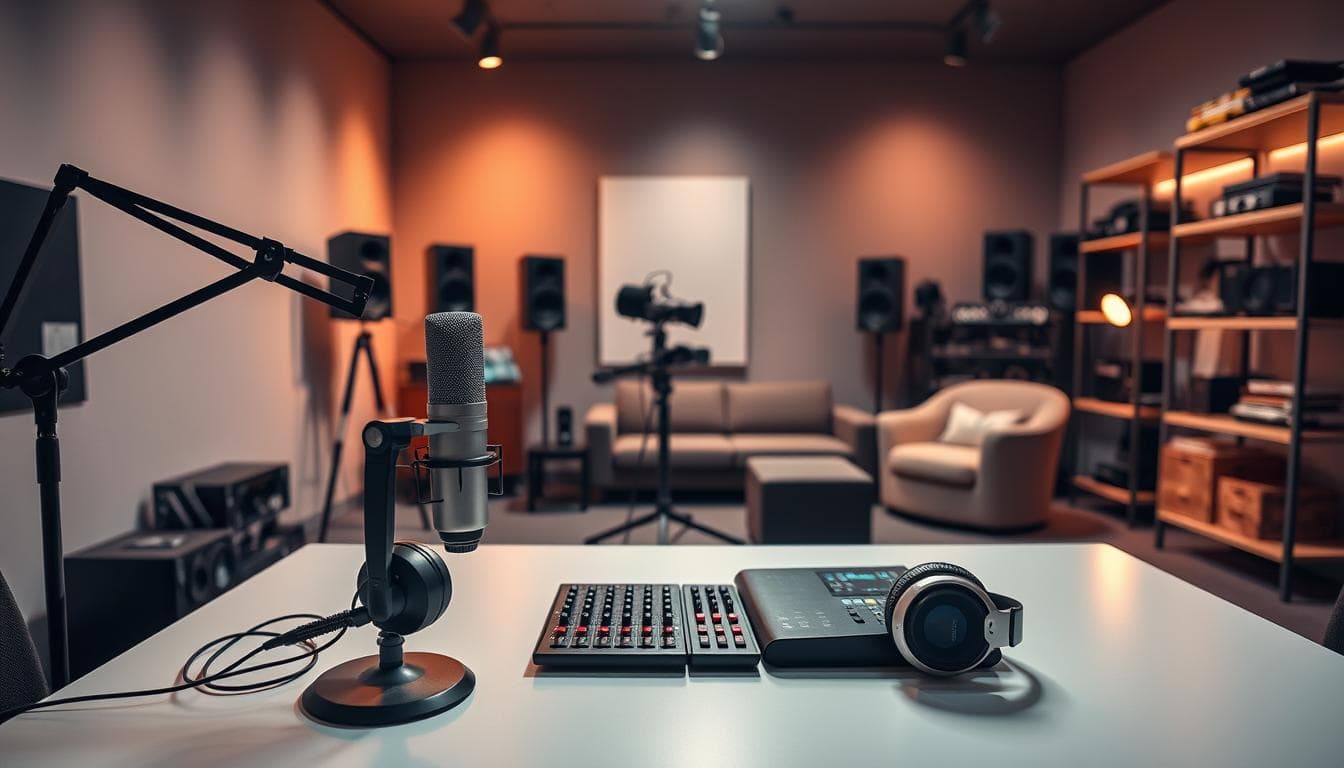
We challenge the notion that professional-grade audio requires a massive upfront financial commitment. Smart equipment selection focuses on ROI and proven performance, not impressive spec sheets.
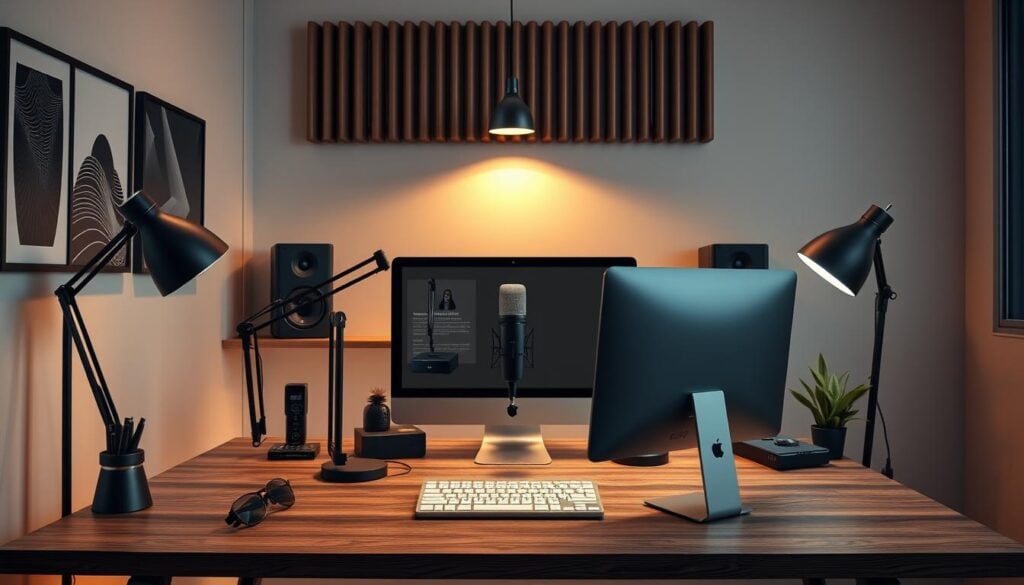
Your mic is your most critical purchase. It defines your audio signature. Our data from supporting 400,000+ creators confirms one consistent winner for beginners and pros alike.
Microphone Options and Key Recommendations
Dynamic microphones provide a strategic advantage. They excel at rejecting background noise, a common plague for new recording sessions. This focus on lower frequencies delivers warmer voice quality with less editing.
Our top recommendation remains the Samson Q2U. Priced around $70, it offers both USB and XLR connectivity. This flexibility supports solo work today and studio upgrades tomorrow.
Real-world testing with thousands of creators beats theoretical specifications every time. The Q2U delivers professional results that remove financial excuses.
USB connectivity eliminates technical barriers. Plug directly into your computer for a simple, effective one-person setup. This pragmatic approach gets you recording faster.
Vital Accessories for Improved Audio
Accessories are not optional; they are force multipliers for audio consistency. A boom arm positions your mic optimally, preventing fatigue. A shock mount isolates vibrations.
A basic pop filter is a $10 investment that saves hours of editing plosive sounds. These tools significantly enhance your final quality.
Investment should scale with proven commitment. Start simple, then expand your equipment arsenal as your show grows.
| Setup Scenario | Core Components | Estimated Investment | Best For |
|---|---|---|---|
| Solo Creator | Samson Q2U, Headphones | $70 | Beginners, solo formats |
| Two-Person | 2x Q2U, Focusrite Scarlett 2i2 | $400 | Interviews, co-hosted shows |
| Three-to-Four Person | 3-4x Q2U, RODECaster Pro | $960-$1,080 | Panel discussions, studio production |
Choosing Podcast Hosting Services and RSS Feed Setup
Technical infrastructure forms the backbone of your audio project’s distribution. We reject the misconception that platforms like Apple Podcasts host your files directly. Specialized podcast hosting services provide the essential storage and distribution framework.
Your RSS feed acts as the communication bridge. It automatically pushes new episodes to all major platforms simultaneously. Manual distribution across dozens of directories is operationally impractical.
Integrating with Apple Podcasts and Directories
Services like Buzzsprout eliminate technical barriers. They automatically add ID3 tags and convert files to correct formats. This ensures compatibility across all listening applications.
Integrated websites provide crucial ownership advantages. Buzzsprout’s customizable sites offer a home for transcripts and host information. You maintain control independent of third-party algorithm changes.
Directory submission is a one-time process. After submitting your RSS feed, subsequent episodes appear automatically across Apple Podcasts, Spotify, and other platforms. This efficiency enables consistent publishing.
Cost structures reflect storage and bandwidth needs. Entry-level plans typically range from $12-24 monthly for weekly publishers. These are non-negotiable infrastructure investments for reliable distribution.
Leveraging Podcast Software and Editing Tools
Software selection directly impacts your operational capacity and content quality. We reject the myth that complex tools guarantee better results. Instead, we prioritize solutions that streamline workflow while maintaining professional standards.
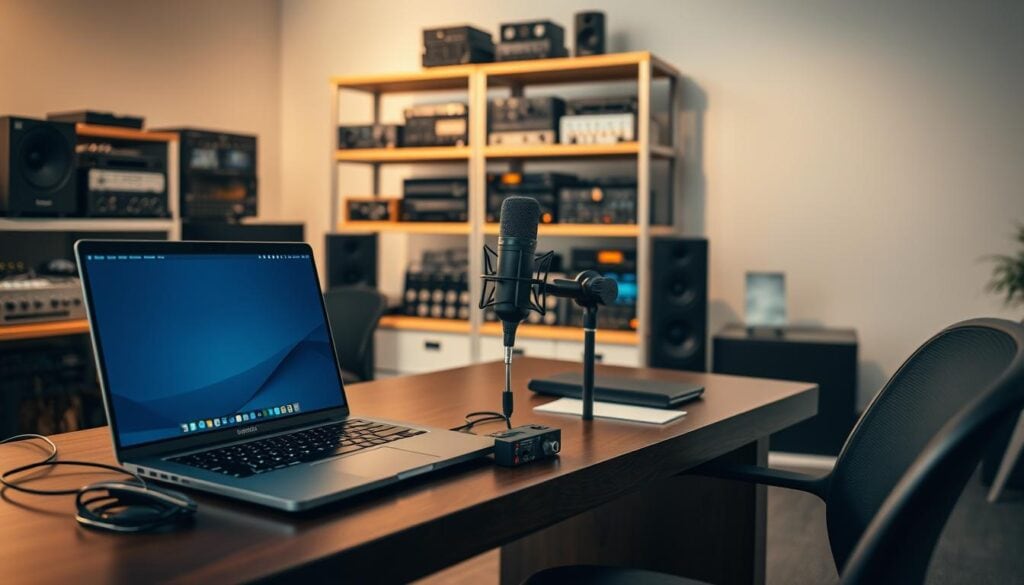
The right digital ecosystem accelerates production. It eliminates technical barriers that often derail new creators. Our approach focuses on practical integration over feature overload.
Remote Recording and Collaboration Solutions
Remote recording quality determines interview viability. Platforms like Riverside.fm record local audio files on each participant’s device. This prevents internet streaming compression artifacts.
SquadCast offers similar studio-quality recordings at competitive pricing. While Zoom remains familiar to most guests, its average recording quality suits casual conversations better than professional productions.
Editing software should match your skill level. GarageBand provides the lowest learning curve for Apple users. Audacity delivers powerful free options across all operating systems.
Descript revolutionizes workflow with text-based editing. It automatically removes filler words and can clone voices. This dramatically reduces production time for creators preferring written interfaces.
AI-powered tools like Cohost AI generate titles, descriptions, and promotional content. Magic Mastering applies professional audio engineering standards automatically. These solutions level the technical playing field for non-experts.
Tool consolidation improves efficiency dramatically. Select integrated platforms that handle multiple functions within one ecosystem. Fewer subscriptions mean lower costs and simplified technical management.
Recording Your First Podcast Episode
First-episode execution separates theoretical planners from actual content creators. We reject the perfectionist paralysis that prevents many launches. Your initial recording serves as a learning platform, not a final masterpiece.
Preparation defines professional results. A simple bullet-point outline prevents rambling—the most common new creator mistake. This structure ensures your episode maintains forward momentum and listener engagement.
Your recording environment dramatically impacts audio quality. Choose a quiet room with soft furnishings like carpets and curtains. These materials absorb sound reflections that create amateurish echo.
Equipment setup should become routine. USB microphones plug directly into your computer. XLR models require an interface. Consistent mic position and software settings eliminate variables between episodes.
Master microphone technique for optimal sound. Position your mouth 2-4 inches from the mic. If plosives persist, angle the microphone slightly off-axis. This simple adjustment reduces harsh sounds without post-production.
Always record a test track first. Two minutes of testing identifies technical issues before committing to a full recording. This preventative way of working saves hours of editing time.
Embrace imperfection in early episodes. Awkward pacing and mistakes are universal. Focus on completing your show rather than achieving unattainable perfection. Real audience feedback provides the best improvement data.
Enhancing Audio Quality and Production Value
We reject the perfectionist trap that derails many creators’ audio production. Professional sound emerges from systematic workflows, not endless tweaking. Your editing process directly shapes the listener experience.
Implement a two-pass editing strategy for maximum efficiency. First, edit for content structure and flow. Remove unnecessary sections before polishing audio. This prevents wasted effort on segments you will cut.
Second, address technical distractions. Use fade tools to eliminate pops between clips. Create a punch-list for consistent volume and background noise. This systematic approach reduces total editing time by 30-40%.
Your intro establishes credibility within seconds. Incorporate royalty-free music from Soundstripe or Audio Jungle. Clearly state your episode’s value proposition. This convinces new listeners to continue rather than skip.
| Editing Approach | Time Investment | Final Quality | Best For |
|---|---|---|---|
| Single-Pass Polish | High | Variable | Simple, short episodes |
| Two-Pass Strategy | 30-40% Less | Consistently High | All content types |
| Content-First Editing | Most Efficient | Professional | Interviews, complex shows |
Export your final file as a WAV format. This preserves maximum audio quality. Platforms like Buzzsprout automatically add ID3 tags and convert files correctly.
Production value compounds with each episode. Your 50th show will sound dramatically better than your fifth. Consistency delivers more improvement than perfectionism early on.
Monetizing Your Podcast in 2025
We challenge the misconception that significant audience size precedes meaningful income generation. Strategic revenue planning should begin during your initial concept development phase.
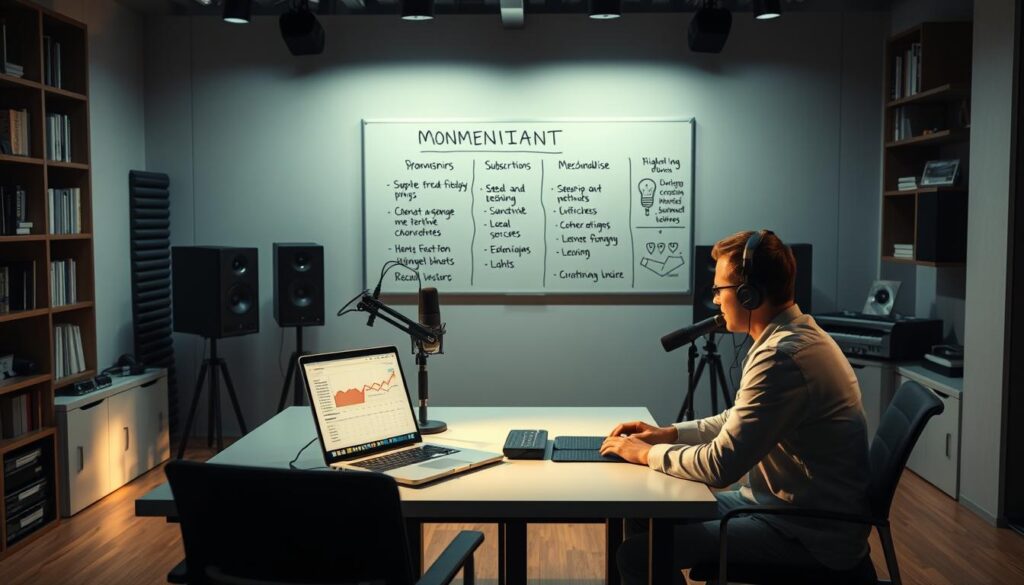
Your approach to making money defines whether this remains a hobby or becomes a sustainable business. We advocate for intentional monetization planning from day one.
Sponsorship and Affiliate Income Strategies
Niche specificity dramatically increases sponsorship value. Advertisers pay premium rates for targeted audiences with proven conversion potential.
Self-managed sponsorship deals deliver superior economics. Networks typically take 30-50% of advertising revenue, while direct management retains full profit margins.
Affiliate marketing provides immediate revenue opportunities without large listener bases. Strategic promotion to 500 engaged followers often outperforms ads served to 10,000 passive listeners.
Product-based monetization scales with audience trust. Creators can generate substantial money selling courses or services to dedicated followers. This approach transforms your podcast into a legitimate business asset.
Multiple revenue streams create resilience against market volatility. Combining sponsorships, affiliate income, and product sales protects your show‘s financial stability.
Marketing Your Podcast for Growth
Exceptional content remains invisible without deliberate promotional architecture. We reject the passive approach that relies solely on directory algorithms. Strategic marketing generates your initial traction.
Social Media Engagement and Listener Outreach
Generic episode announcements fail to capture attention. Instead, extract compelling moments from your episodes. Create native media that provides standalone value.
Video expansion multiplies your discovery potential. Recording visual assets transforms single sessions into platform-specific content. This dramatically increases your surface area without extra production time.
Email lists deliver superior conversion rates. Building an owned audience protects against algorithm changes. Regular updates generate 3-5x higher download rates than directory subscriptions alone.
Cross-promotion with complementary podcasts accelerates growth. Guest appearances drive qualified listeners who already value your topic. Strategic collaborations often outperform months of social media effort.
Active engagement transforms people into advocates. Responding to every message during your first 50 episodes builds loyal relationships. Word-of-mouth remains the most powerful discovery method for any show.
Overcoming Common Podcasting Challenges
Many creators encounter predictable obstacles that derail their momentum. We reject the notion that these hurdles signal failure. Instead, they represent predictable growth phases requiring pragmatic solutions.
Operational consistency proves more valuable than flawless production. Listeners prioritize reliable publishing over perfect audio. This mindset shift prevents unnecessary delays.
Troubleshooting Technical Hurdles
Technical problems rarely justify postponed launches. Most issues have documented fixes available through platform support or online tutorials. Extended troubleshooting often masks publishing anxiety.
Spending weeks on minor audio glitches represents misallocated effort. Community forums provide immediate answers for common setup problems. A functional show with minor imperfections outperforms a silent, “perfect” project.
Podfade stems from unrealistic early expectations. Most creators quit between episodes seven and twelve. Sustainable audience building requires thirty to fifty episodes over six to twelve months.
Managing Guest Interviews Effectively
Interview preparation determines episode quality. Dedicate thirty to sixty minutes researching your guest. Review their previous appearances to craft unique questions.
Avoid rehashing standard media talking points. Ask what your audience genuinely wants to know. This approach transforms generic conversations into compelling content.
Active listening beats performative hosting. Constant interjections like “yeah” and “right” interrupt guest flow. Silence during responses signals confidence and allows complete thoughts to develop.
Systematic guest coordination prevents scheduling headaches. Tools like Calendly streamline appointments. Send technical guides and confirm meetings twenty-four hours in advance.
This professional approach reduces no-shows and technical difficulties. It saves valuable time while building strong relationships for future collaborations.
Conclusion
Launching a successful audio series now requires strategic execution more than technical perfection. Since 2009, we’ve helped over 400,000 creators build sustainable shows.
This guide provides the framework, but your action determines outcomes. Your first fifty episodes serve as learning laboratories. Embrace early awkwardness as universal experience.
Equipment investment should match commitment. A $70-400 setup delivers professional results for most podcasters. Expensive gear cannot compensate for poor planning.
Monetization extends beyond advertising. Combining sponsorships, affiliate promotions, and product sales creates multiple revenue streams. Building genuine trust with your audience generates meaningful income.
The difference between reading this information and building a successful show is simply starting today. Perfect conditions will never arrive.
FAQ
What is the single most important piece of podcast equipment for beginners?
We prioritize the microphone above all else. A quality USB microphone like the Blue Yeti or Rode NT-USB significantly boosts audio quality immediately. Your audience will forgive many things, but poor sound is rarely one of them. Invest here first.
How do I choose the best podcast hosting platform?
Look for a service that provides a reliable, automatically updating RSS feed. This feed is your show’s backbone, distributing content to Apple Podcasts, Spotify, and other directories. We recommend platforms like Buzzsprout or Captivate for their robust analytics and seamless integration.
Can I use music in my podcast episodes?
Yes, but you must have the proper licenses. Using copyrighted music without permission risks removal and legal issues. Instead, use royalty-free music from libraries like Epidemic Sound or Artlist. This ensures your content remains safe on all media platforms.
How long should my first episode be?
Episode length should serve your content, not an arbitrary rule. For a debut, aim for 20-30 minutes. This is long enough to establish value but short enough to keep new listeners engaged. Consistency in your release schedule matters more than a specific runtime.
What’s the biggest mistake new podcasters make with branding?
Neglecting professional artwork. Your cover art is the first visual cue potential listeners get in Apple Podcasts. A cluttered or amateurish design suggests low production quality. Use a tool like Canva or hire a designer; it’s a critical investment in your show’s perceived value.
Is video necessary for podcasting in 2025?
While not essential, video podcasts are a powerful growth tool. Platforms like YouTube are massive discovery engines. We suggest starting with audio to master the basics, then adding video to repurpose content and expand your audience reach effectively.
How do I effectively market my new show with no budget?
Leverage your own network first. Share episodes consistently on your personal social media. Engage authentically in online communities related to your niche. Smart, organic marketing through listener outreach and genuine conversations often outperforms paid ads early on.