

Short workouts can move the needle—if they’re structured correctly. Research comparing sprint intervals with steady jogging found that repeated 30-second sprints can produce similar calorie burn and aerobic gains to longer runs (see Gibala et al., J Physiol 2006: https://pubmed.ncbi.nlm.nih.gov/16888058/).
Your calendar is full; the solution is not longer sessions but smarter sessions. Focused 15-minute workouts that combine HIIT and compound strength moves let you train major muscle groups twice per week, which supports better strength and muscle gains than once-weekly sessions (see Schoenfeld et al., Sports Med 2016).
We recommend scheduling three 15-minute workouts this week: pick one HIIT session, one strength circuit, and one mobility/flow session. That small commitment removes the “no time” barrier and fits around work and travel without needing a full gym.
Understanding the Power of a Quick Workout
The advantage of a condensed session comes from focused intensity, not just brevity—short, well-structured efforts produce measurable adaptations in far less time than traditional long sessions.
Benefits of a Short, Intense Session
High-intensity intervals trigger an afterburn effect (EPOC), which can keep metabolism elevated after the session; the magnitude varies by protocol and intensity (see LaForgia et al., Sports Med 2006: https://pubmed.ncbi.nlm.nih.gov/16776703/).
Research also shows short sprint-interval protocols can yield similar improvements in aerobic capacity as longer steady-state training—one commonly cited study is Gibala et al., J Physiol 2006 (https://pubmed.ncbi.nlm.nih.gov/16888058/), which compared interval sprints to continuous cycling.

Mental and Physical Health Gains
Brief, intense exercise can improve mental health and lift mood within minutes, in part due to endorphin and neurotransmitter responses (see Harvard Health: https://www.health.harvard.edu/staying-healthy/exercising-to-relax).
Physical benefits include improved insulin sensitivity, progressive bone loading that supports density, and better cardiovascular capacity when sessions are repeated across the week.
Example micro-protocol: 4 rounds — 30 seconds all-out sprint or burpees, 3 minutes easy recovery; repeat for ~15 minutes total. That kind of interval training delivers intensity without a large time cost (protocol comparable to sprint-interval research noted above).
Try this 15-minute workout once this week to test the approach: warm up 2 minutes, do the micro-protocol, then cool down 2 minutes. Track heart rate or perceived exertion to gauge intensity for future sessions.
Fitness Routine for Busy People: Expert-Approved Strategies
Short, targeted sessions win when they combine intensity with smart exercise selection. Below are expert-backed approaches you can mix across the week so each 15-minute workout has clear purpose.
High-Intensity Interval Training and Tabata Insights
HIIT is an efficient form of interval training that compresses cardiovascular and metabolic stimulus into less time—meta-analyses show HIIT often matches longer steady-state programs for improving aerobic capacity and fitness (see Weston et al., Sports Med 2014: https://pubmed.ncbi.nlm.nih.gov/24479247/).
Coach Sarah Gawron (Solace New York) stresses maximal effort during work intervals: “Give everything during those twenty seconds—there’s no time for loafing if you want metabolic impact” (attributed coach quote; check trainer source for exact wording).
The Tabata protocol (8 × 20s work / 10s rest) is the classic micro-session, originally described by Tabata et al., 1996, and is useful when time is extremely limited (4-minute active time) — see Tabata I., et al., 1996 (PubMed).
Rest intervals have strategy: controlled breathing and partial active recovery lower heart rate enough to allow repeated high-intensity efforts. For pure time efficiency, Tabata wins; for sustainable metabolic stimulus across a session, HIIT often wins.
Incorporating Yoga and Weightlifting for Balance
Fast vinyasa flows and short strength circuits add mobility and injury resilience to your program. Alex Silver-Fagan (Nike master trainer) recommends dynamic flows to maintain mobility, while strength coach Denzel Allen emphasizes compound lifts—goblet squats and kettlebell swings—that hit multiple muscle groups in one move.
For overall weekly balance, combine modalities: aim for 2 HIIT or interval training workouts, 1–2 focused strength workouts, and 1 short mobility or yoga flow across the week—this mix supports cardiovascular health, muscle maintenance, and recovery.
| Approach | Time Commitment | Primary Benefits Expert | Recommendation |
| HIIT | 15-20 minutes | Metabolic boost, cardiovascular health (winner for metabolic stimulus) | 2-3 times weekly |
| Tabata | 4 minutes active | Maximum efficiency, EPOC effect (winner for shortest time) | 1-2 times weekly |
| Yoga & Strength | 20 minutes | Mobility, injury prevention, balance (winner for recovery and longevity) | 2 times weekly |
Sample 15-minute combined routine (mix of HIIT + strength): 1) 2-minute warm-up; 2) 3 rounds of 40s work / 20s rest — goblet squat, push-up (or elevated push-up), kettlebell swing; 3) 2-minute cooldown. Use moderate load and focus on form.
Practical tip: pick a clear winner for each training goal—want metabolic efficiency choose HIIT; want shortest active time choose Tabata; want longevity and injury prevention choose yoga & strength. Then schedule your week around those priorities and the available equipment or gym access.
For further reading on protocols and safety, consult the Tabata 1996 study and the HIIT meta-review linked above before trying maximal efforts.
Building Strength and Endurance in Minutes
Meaningful muscle and endurance gains come from the quality of the stimulus, not how long you spend in the gym. Focus on compound moves and controlled tempo to make each 15-minute session count.
Efficient Strength Training Techniques
Compound exercises such as squats and lunges recruit multiple muscle groups at once, so a short circuit hits more muscles per minute than isolated moves. Research shows hypertrophy can occur with lighter loads when total effort and time-under-tension are sufficient (see Schoenfeld et al., Sports Med 2016: https://pubmed.ncbi.nlm.nih.gov/26853913/).
Denzel Allen’s coaching cue is worth remembering:
“Technique trumps the amount of weight.”
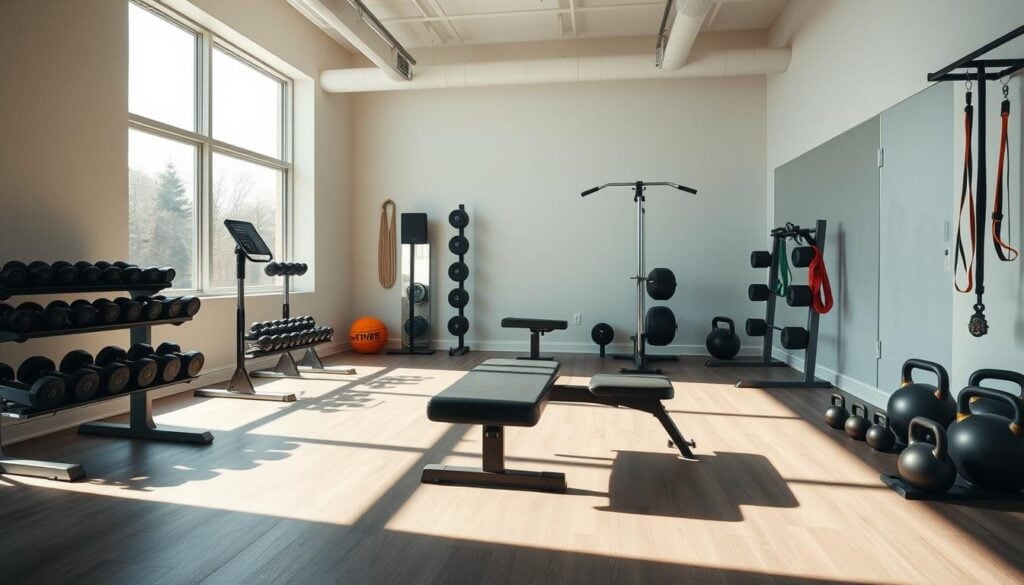
Katherine Mason’s time-under-tension guidance—roughly 8–16 counts per rep—helps you maintain intensity even with moderate weight. That tempo increases muscular fatigue per rep and supports growth when repeated across workouts.
Prioritizing Form to Prevent Injury
Movement quality is non-negotiable. Prioritize a short warm-up (dynamic hip hinges, shoulder circles), a neutral spine during loaded lifts, and hinge cues before adding load. If you’re returning from injury, consult a clinician before trying maximal efforts.
Core movement patterns to include regularly:
- Squats and deadlifts for lower-body strength and posterior-chain development
- Push-ups and rows for upper-body pushing and pulling balance
- Lunges for single-leg strength and stability
15-minute strength circuit (example): 3 rounds — 45 seconds work / 15 seconds rest per station: goblet squats, push-up (or elevated push-up), kettlebell swing (or dumbbell hinge), plank. Progress by adding reps, reducing rest, or increasing load week to week.
Quick safety checklist: breathe through reps, maintain neutral spine, stop if pain (not effort) occurs. Log one metric each week (e.g., reps at a set weight) to track progress over time; small, consistent gains add up and support recovery planning.
Adapting Your Workout to Fit Your Busy Schedule
The most sustainable routine is the one that fits your day, not the one that demands you rearrange your life. Build flexible 15-minute sessions that work in a hotel room, home office, or gym so you keep training even when time is tight.
Environmental flexibility removes a major barrier to consistency: when a workout travels with you, missed sessions drop sharply. Brief, high-effort bodyweight routines can preserve strength and fitness when gym access is limited (see ACSM guidance on home-based programs: https://www.acsm.org/).
Home, Gym, and Outdoor Alternatives
Home workouts cut out commute time. Simple bodyweight moves—push-ups, squats, and lunges—deliver serious stimulus using only floor space and no extra equipment.
Gym access expands your options (heavier loads, machines, and varied equipment), but it’s not required for progress; treat the gym as an upgrade, not a requirement.
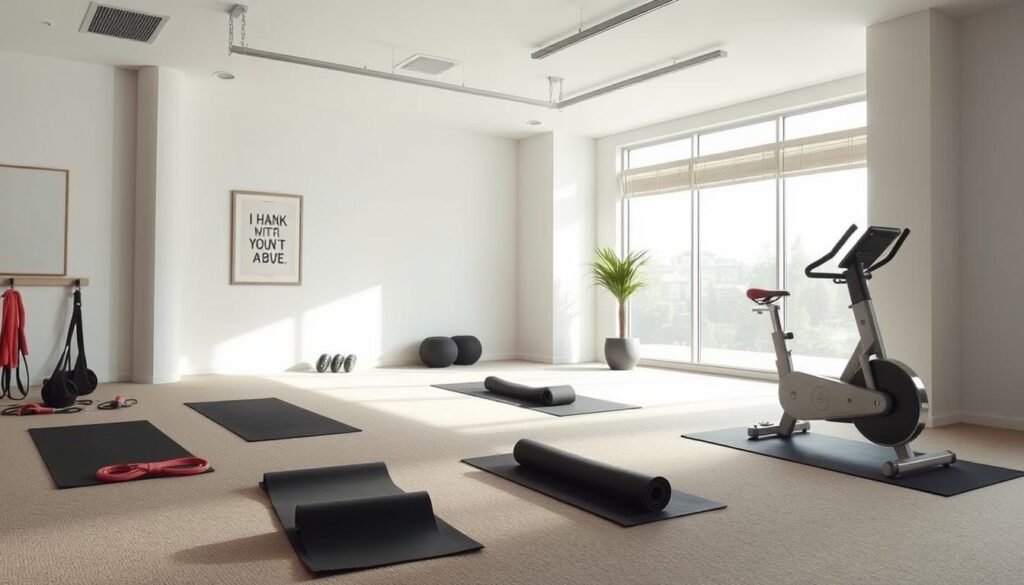
Outdoor sessions add mental benefits: nature exposure lowers stress and can boost mood during a short workout. Terrain variability also challenges balance and functional strength.
Travel fitness should assume zero equipment. Pack one resistance band and a compact dumbbell if you like, but master bodyweight progressions so you can maintain workouts on the road.
Sample routines (time-limited):
- 10-minute hotel routine: 4 rounds — 30s squat jumps, 30s push-ups, 30s plank, 30s rest.
- 15-minute home routine: 3 rounds — 40s goblet squat (or bodyweight squat), 40s push-up, 40s reverse lunges, 20s rest.
- 15-minute outdoor routine: 3 rounds — 40s hill sprints or fast stair climbs, 40s walking lunges, 40s bodyweight rows (or inverted rows), 20s rest.
Scheduling hacks: block three 15-minute sessions on your calendar each week and set reminders; pair workouts with a daily anchor (morning coffee, end of workday) to reduce friction. If a 15-minute slot shrinks to 10 minutes, shorten the routine but keep intensity—do one round instead of three.
Quick equipment checklist for travel: resistance band, one adjustable dumbbell or kettlebell (optional). Substitutes: backpack filled with books for added load, park bench for step-ups.
Practical tip: pick the environment that matches your energy patterns—morning sessions if you’re freshest early, afternoon if that’s when energy spikes—and schedule accordingly. Small, consistent training beats sporadic long sessions for long-term progress.
Conclusion
Schedule three 15-minute workouts this week and treat them as non-negotiable calendar blocks.
For most people, 3 sessions per week of structured resistance or aerobic work provides a good balance of stimulus and recovery (see ACSM guidelines).
Pick one sample routine, log a single performance metric (reps or time), and review progress in four weeks—small, consistent steps produce lasting results.